THE ADVENTURE COLLECTIVE® · Independent discovery and booking for outdoor travel

Drive the Golden Circle at your own pace with a location-triggered audio guide that explains geology, Viking law, and geothermal quirks as you go. Perfect for travelers who want context and flexibility — download the tour, follow the cues, and explore Gullfoss, Geysir, Thingvellir and more without a fixed schedule.
Drive the Golden Circle at your own pace with a location-triggered audio guide that explains geology, Viking law, and geothermal quirks as you go. Perfect for travelers who want context and flexibility — download the tour, follow the cues, and explore Gullfoss, Geysir, Thingvellir and more without a fixed schedule.
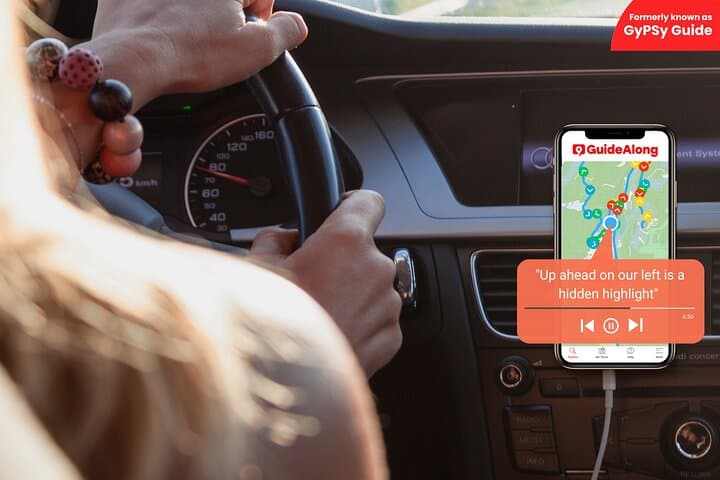
You ease out of Reykjavík just after breakfast, mountains folding away to the east and an ocean of low cloud ahead. The narrator on your phone clicks on as you merge onto Route 1 — local folklore, geology and practical parking tips arriving in calm, well-timed bursts as the road opens into lava fields and steam-plumed geothermal basins.
Verified experiences and guided adventures in the surrounding area.
Operated by GuideAlong (GyPSy Guide) · Reykjavík, Capital Region
You ease out of Reykjavík just after breakfast, mountains folding away to the east and an ocean of low cloud ahead. The narrator on your phone clicks on as you merge onto Route 1 — local folklore, geology and practical parking tips arriving in calm, well-timed bursts as the road opens into lava fields and steam-plumed geothermal basins.
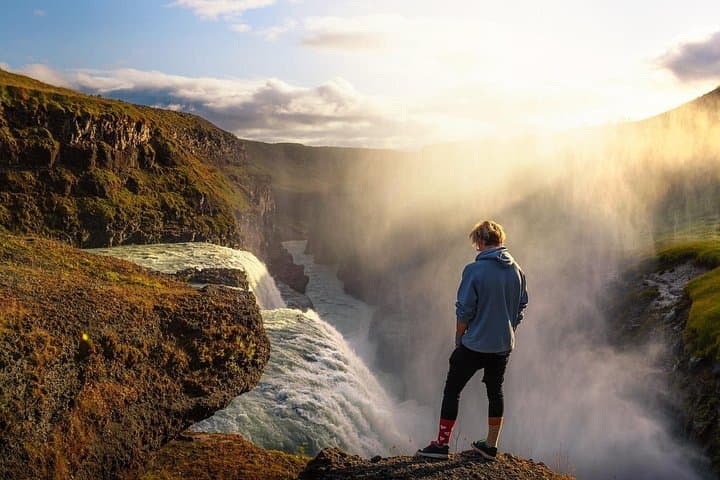
The Golden Circle is less a single place than a route that gathers Iceland’s big themes: tectonic motion, freshwater power, and human law. Thingvellir National Park sits where the Eurasian and North American plates pull apart; the cracks and fissures are literal signage of an island still forming. Gullfoss is raw hydrology — glacial rivers daring gravity into a two-stage plunge — while the Haukadalur valley, home to Geysir and Strokkur, wears its subterranean heat openly: mud pots, fumaroles, and sudden water jets.
History and modern life overlap here. Thingvellir hosted the Alþingi from 930 AD, Europe’s earliest parliamentary site; nearby farms still grow tomatoes in geothermal greenhouses at Fridheimar, showing how Icelanders have learned to coax warmth from the ground. Kerid crater and the volcanic plumbing beneath the surface are reminders that this landscape is recent and active; look closely and you’ll see mosses that reclaim fresh lava like a slow carpet laying claim to new land.
Practical guide: the route is flexible — you can do a tight 2–3 hour loop that hits the main viewpoints, but a full day gives time to walk the rift at Thingvellir, watch Strokkur erupt repeatedly, and explore the Gullfoss trails. Expect roughly 200–250 km of driving with short paved walks at each stop; elevation changes are modest, but paths at waterfalls get slippery in spray and winter ice can be treacherous.
The product’s strength is timing and context: the audio cues that trigger by GPS tell you where to park, which viewpoint offers the best line, and the history behind what you’re seeing so you don’t need a guidebook. Download the GuideAlong app and the tour over reliable Wi‑Fi before you leave Reykjavík; once loaded the commentary runs offline, freeing you from spotty cell coverage.
Safety and etiquette matter: stay on marked paths, respect geothermal areas (they’re fragile and dangerous), and carry a charged phone plus a car charger. If you visit in winter, factor in low daylight and variable roads; in summer, aim for early morning or late afternoon light to avoid bus crowds. With a bit of planning this self‑guided driving tour hands you the maps, stories and flexibility to shape your own Golden Circle day, and leaves you with the vivid taste of Iceland — wind on the face, water in motion, and rock that remembers being molten.
No — you must download the GuideAlong app and the tour over Wi‑Fi before leaving; the GPS triggers commentary offline.
One purchase covers everyone in a single vehicle — buy one tour per car, not per person.
Yes — you can join at any point along the loop and the app will play location-based stories as you arrive.
Yes, but roads can be icy and daylight limited; check road conditions, rent a car with winter tires, and allow extra time.
Yes — main stops like Thingvellir, Geysir, and Gullfoss have facilities and nearby cafés; smaller sites may not.
Check your email for messages titled “Download Audio Tour,” search texts from +17817732638, or contact GuideAlong support via toll‑free phone or email.
GuideAlong (GyPSy Guide) operates guided outdoor trips and adventures with an emphasis on safety, stewardship, and memorable experiences.
You ease out of Reykjavík just after breakfast, mountains folding away to the east and an ocean of low cloud ahead. The narrator on your phone clicks on as you merge onto Route 1 — local folklore, geology and practical parking tips arriving in calm, well-timed bursts as the road opens into lava fields and steam-plumed geothermal basins.
You ease out of Reykjavík just after breakfast, mountains folding away to the east and an ocean of low cloud ahead. The narrator on your phone clicks on as you merge onto Route 1 — local folklore, geology and practical parking tips arriving in calm, well-timed bursts as the road opens into lava fields and steam-plumed geothermal basins.
The Golden Circle is less a single place than a route that gathers Iceland’s big themes: tectonic motion, freshwater power, and human law. Thingvellir National Park sits where the Eurasian and North American plates pull apart; the cracks and fissures are literal signage of an island still forming. Gullfoss is raw hydrology — glacial rivers daring gravity into a two-stage plunge — while the Haukadalur valley, home to Geysir and Strokkur, wears its subterranean heat openly: mud pots, fumaroles, and sudden water jets.
History and modern life overlap here. Thingvellir hosted the Alþingi from 930 AD, Europe’s earliest parliamentary site; nearby farms still grow tomatoes in geothermal greenhouses at Fridheimar, showing how Icelanders have learned to coax warmth from the ground. Kerid crater and the volcanic plumbing beneath the surface are reminders that this landscape is recent and active; look closely and you’ll see mosses that reclaim fresh lava like a slow carpet laying claim to new land.
Practical guide: the route is flexible — you can do a tight 2–3 hour loop that hits the main viewpoints, but a full day gives time to walk the rift at Thingvellir, watch Strokkur erupt repeatedly, and explore the Gullfoss trails. Expect roughly 200–250 km of driving with short paved walks at each stop; elevation changes are modest, but paths at waterfalls get slippery in spray and winter ice can be treacherous.
The product’s strength is timing and context: the audio cues that trigger by GPS tell you where to park, which viewpoint offers the best line, and the history behind what you’re seeing so you don’t need a guidebook. Download the GuideAlong app and the tour over reliable Wi‑Fi before you leave Reykjavík; once loaded the commentary runs offline, freeing you from spotty cell coverage.
Safety and etiquette matter: stay on marked paths, respect geothermal areas (they’re fragile and dangerous), and carry a charged phone plus a car charger. If you visit in winter, factor in low daylight and variable roads; in summer, aim for early morning or late afternoon light to avoid bus crowds. With a bit of planning this self‑guided driving tour hands you the maps, stories and flexibility to shape your own Golden Circle day, and leaves you with the vivid taste of Iceland — wind on the face, water in motion, and rock that remembers being molten.