THE ADVENTURE COLLECTIVE® · Independent discovery and booking for outdoor travel

Circle the King Leopold Range and peer into Bell Gorge from the air on a three‑hour private helicopter tour out of Mount Hart. Expect waterfalls, croc‑scouting over Walcott Inlet, and the kind of perspectives only a low-level flight can deliver.
Circle the King Leopold Range and peer into Bell Gorge from the air on a three‑hour private helicopter tour out of Mount Hart. Expect waterfalls, croc‑scouting over Walcott Inlet, and the kind of perspectives only a low-level flight can deliver.
The helicopter lifts with a soft, mechanical sigh and the Kimberley opens beneath you: sharp sandstone ridges serrating the horizon, ribbon gorges cutting dark veins into ochre country, and waterfalls throwing silver into the sun. From the skids at Mount Hart Wilderness Lodge, the pilot arcs the machine toward Bell Gorge, and suddenly the scale of the West Kimberley is undeniable—cliffs the color of rust, plunge pools black as onyx, and a coastline that seems to have been sketched by a bolder hand.
Verified experiences and guided adventures in the surrounding area.
Operated by Ventur Atlas · Mount Hart Wilderness Lodge, Western Australia
The helicopter lifts with a soft, mechanical sigh and the Kimberley opens beneath you: sharp sandstone ridges serrating the horizon, ribbon gorges cutting dark veins into ochre country, and waterfalls throwing silver into the sun. From the skids at Mount Hart Wilderness Lodge, the pilot arcs the machine toward Bell Gorge, and suddenly the scale of the West Kimberley is undeniable—cliffs the color of rust, plunge pools black as onyx, and a coastline that seems to have been sketched by a bolder hand.
This three-hour Golden Goose flight stitches together the region’s major geological chapters. You’ll fly over the King Leopold Range where ancient rocks fold and fracture into deep cuttings; below, Lennard and Charnley River gorges reveal layered sandstone carved over millions of years. The Twin Flame Falls drop roughly 300 feet—two concurrent streams that flame white against the red rock—and Walcott Inlet is a broad, tidal basin where saltwater and riverine systems meet, making it a prime spot for saltwater crocodiles to sun themselves.
The Kimberley holds living history: Indigenous communities have occupied these ranges for tens of thousands of years, leaving rock art sites and cultural connections to watercourses and highlands. European pastoral and pearling incursions reshaped access and settlement in the 19th and 20th centuries, but here the land still follows its own calendar—monsoonal wet seasons that rework rivers and dry seasons that tighten the landscape into dusty clarity.
Practical matters are straightforward. The departure point is Mount Hart Wilderness Lodge; the full experience runs about three hours and is listed as physically easy—most passengers remain seated, but operators require passenger weights and basic health info. This is a private tour with manual confirmation; book early in the dry season (May–September) for the clearest skies. The operator enforces a 24-hour cancellation window and will cancel for bad weather.
What to bring: a small daypack, your camera with extra battery, a windproof layer (it’s windy in the cabin), sunscreen and a hat for pre- and post-flight time at the lodge, and insect repellent if you’re connecting to ground excursions. Expect low-altitude passes that give spectacular photographic opportunity, but also significant rotor wash—secure hats and loose items.
Timing makes the difference: morning light sculpts the gorges and reduces haze; late afternoon can catch the falls in backlight but might introduce more dust. Keep your camera ready when the pilot banks—the chance to spot a crocodile in a tidal inlet or a rare wallaroo on a ledge often appears in a single quick moment. For travelers eager to understand the Kimberley beyond the air, combine this flight with a guided walk at Bell Gorge or a cultural visit—seeing the land from both air and ground reveals why this region refuses to be neatly mapped.
The full experience lasts about three hours from the lodge, with roughly 60–90 minutes of actual flight time depending on routing.
Infants are allowed but must sit on an adult’s lap; notify the operator at booking.
The tour is rated easy physically, but you need to be able to step into and out of the helicopter and follow crew safety instructions.
Walcott Inlet is a known croc habitat; sightings are common but not guaranteed—operators will point out likely spots during the flight.
Full refund if cancelled at least 24 hours before departure; trips may be cancelled by the operator for bad weather.
Passenger weight is collected at booking; limits vary by aircraft and seating configuration—check with the operator if you have concerns.
Ventur Atlas operates guided outdoor trips and adventures with an emphasis on safety, stewardship, and memorable experiences.
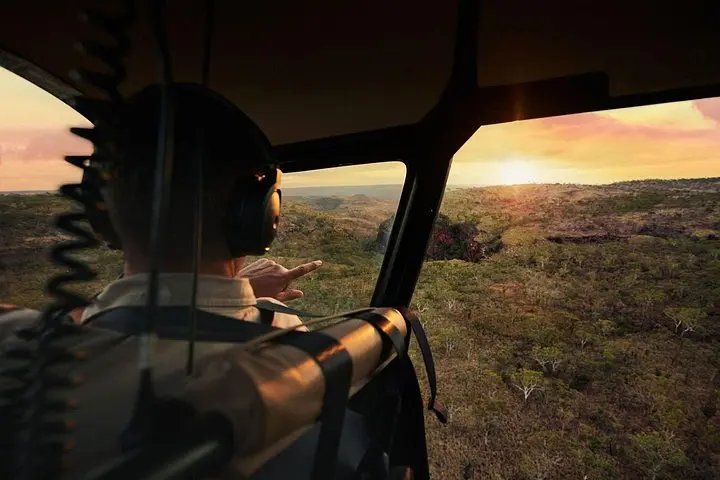
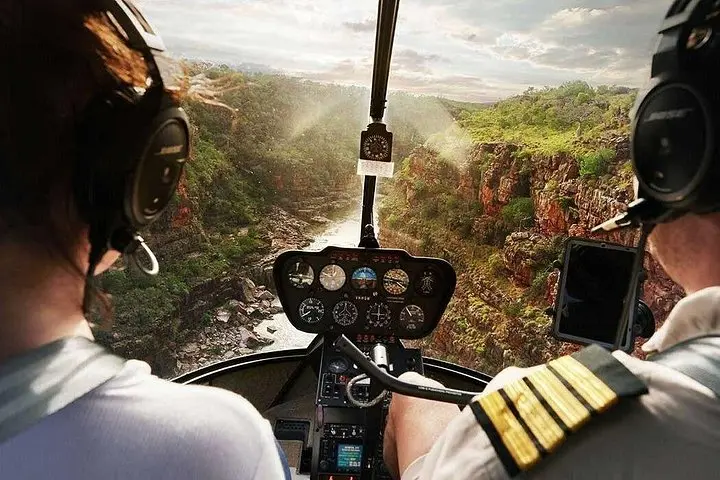
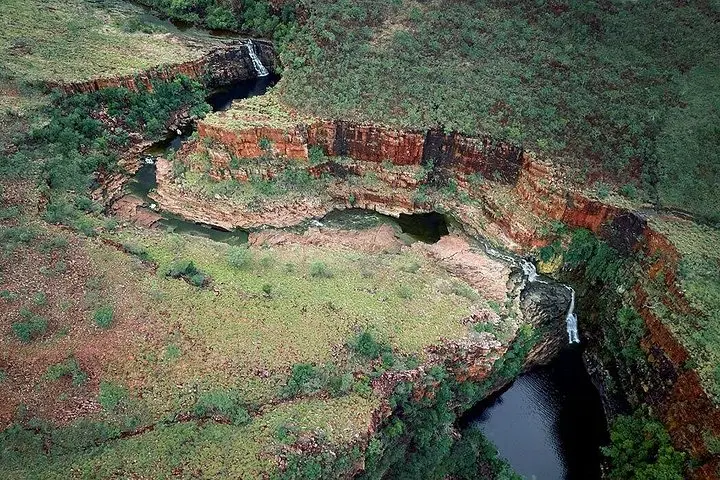
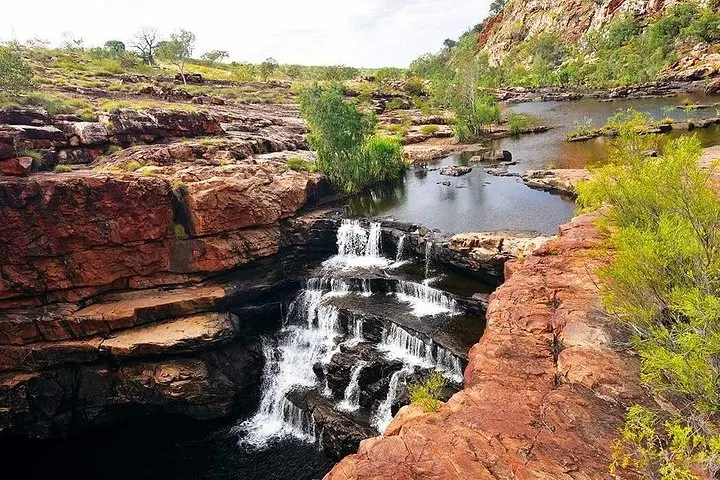
The helicopter lifts with a soft, mechanical sigh and the Kimberley opens beneath you: sharp sandstone ridges serrating the horizon, ribbon gorges cutting dark veins into ochre country, and waterfalls throwing silver into the sun. From the skids at Mount Hart Wilderness Lodge, the pilot arcs the machine toward Bell Gorge, and suddenly the scale of the West Kimberley is undeniable—cliffs the color of rust, plunge pools black as onyx, and a coastline that seems to have been sketched by a bolder hand.
The helicopter lifts with a soft, mechanical sigh and the Kimberley opens beneath you: sharp sandstone ridges serrating the horizon, ribbon gorges cutting dark veins into ochre country, and waterfalls throwing silver into the sun. From the skids at Mount Hart Wilderness Lodge, the pilot arcs the machine toward Bell Gorge, and suddenly the scale of the West Kimberley is undeniable—cliffs the color of rust, plunge pools black as onyx, and a coastline that seems to have been sketched by a bolder hand.
This three-hour Golden Goose flight stitches together the region’s major geological chapters. You’ll fly over the King Leopold Range where ancient rocks fold and fracture into deep cuttings; below, Lennard and Charnley River gorges reveal layered sandstone carved over millions of years. The Twin Flame Falls drop roughly 300 feet—two concurrent streams that flame white against the red rock—and Walcott Inlet is a broad, tidal basin where saltwater and riverine systems meet, making it a prime spot for saltwater crocodiles to sun themselves.
The Kimberley holds living history: Indigenous communities have occupied these ranges for tens of thousands of years, leaving rock art sites and cultural connections to watercourses and highlands. European pastoral and pearling incursions reshaped access and settlement in the 19th and 20th centuries, but here the land still follows its own calendar—monsoonal wet seasons that rework rivers and dry seasons that tighten the landscape into dusty clarity.
Practical matters are straightforward. The departure point is Mount Hart Wilderness Lodge; the full experience runs about three hours and is listed as physically easy—most passengers remain seated, but operators require passenger weights and basic health info. This is a private tour with manual confirmation; book early in the dry season (May–September) for the clearest skies. The operator enforces a 24-hour cancellation window and will cancel for bad weather.
What to bring: a small daypack, your camera with extra battery, a windproof layer (it’s windy in the cabin), sunscreen and a hat for pre- and post-flight time at the lodge, and insect repellent if you’re connecting to ground excursions. Expect low-altitude passes that give spectacular photographic opportunity, but also significant rotor wash—secure hats and loose items.
Timing makes the difference: morning light sculpts the gorges and reduces haze; late afternoon can catch the falls in backlight but might introduce more dust. Keep your camera ready when the pilot banks—the chance to spot a crocodile in a tidal inlet or a rare wallaroo on a ledge often appears in a single quick moment. For travelers eager to understand the Kimberley beyond the air, combine this flight with a guided walk at Bell Gorge or a cultural visit—seeing the land from both air and ground reveals why this region refuses to be neatly mapped.