THE ADVENTURE COLLECTIVE® · Independent discovery and booking for outdoor travel

A private, four-day loop through Delhi, Agra and Jaipur that pairs premodern monuments with practical logistics—sunrise at the Taj, red sandstone forts and planned-city Jaipur. Ideal for travelers who want cultural depth on a compact schedule.
A private, four-day loop through Delhi, Agra and Jaipur that pairs premodern monuments with practical logistics—sunrise at the Taj, red sandstone forts and planned-city Jaipur. Ideal for travelers who want cultural depth on a compact schedule.
Dawn in Agra arrives cool and clear; the Taj Mahal’s marble shifts from a soft pink to pale white as the sun rises over the Yamuna. A private car pulls away from a New Delhi hotel, threading through wide boulevards and the honking river of traffic, carrying visitors toward forts hewn from red sandstone and an observatory that reads the sky.
Verified experiences and guided adventures in the surrounding area.
Operated by Joyful Holidays · New Delhi, Delhi
Dawn in Agra arrives cool and clear; the Taj Mahal’s marble shifts from a soft pink to pale white as the sun rises over the Yamuna. A private car pulls away from a New Delhi hotel, threading through wide boulevards and the honking river of traffic, carrying visitors toward forts hewn from red sandstone and an observatory that reads the sky.
This four-day loop ties three distinct chapters of northern India’s history. Delhi stitches Mughal and colonial layers—Qutub Minar (1192) and the Lutyens-era government buildings—while Agra concentrates imperial Mughal ambition in the Taj Mahal and Agra Fort (16th century). Jaipur, founded as a planned capital in the 18th century, shows Rajput stonework and the honeycombed Hawa Mahal that gives the city its signature pink face.
Geology is literal here: sandstone ramparts, alluvial plains of the Yamuna, and cityscapes built from locally quarried stone shape how these places look and feel. Culture is equally tactile—guided tours, local cuisine, and bazaars filled with block-printed textiles and brassware.
Practical guidance: expect long driving stretches—Delhi to Agra ≈ 3–4 hours (about 200 km), Agra to Jaipur ≈ 4–5 hours (≈240 km). Dawn visits to the Taj reduce crowds; carry ID for monument entry. Wear comfortable walking shoes for uneven fort floors and bring sun protection—Rajasthan heat can be intense in summer. The itinerary is low in technical difficulty but dense in logistics: keep water, a lightweight daypack, and flexible expectations for traffic and timing. With a local guide and private transport, this tour concentrates cultural highlights into four efficient, memorable days.
Admission is not automatically included unless specified; plan to buy tickets at the gate or prebook online—timed-entry is enforced for sunrise visits.
Typical driving times are Delhi–Agra ~3–4 hours (≈200 km) and Agra–Jaipur ~4–5 hours (≈240 km); traffic and road conditions can change durations.
Yes—this private tour includes professional, government-approved guides in the featured cities to cover historical and cultural highlights.
Private tours are usually flexible—notify the operator in advance to arrange dietary requests, wheelchair-accessible transport, or modified sightseeing.
Joyful Holidays operates guided outdoor trips and adventures with an emphasis on safety, stewardship, and memorable experiences.


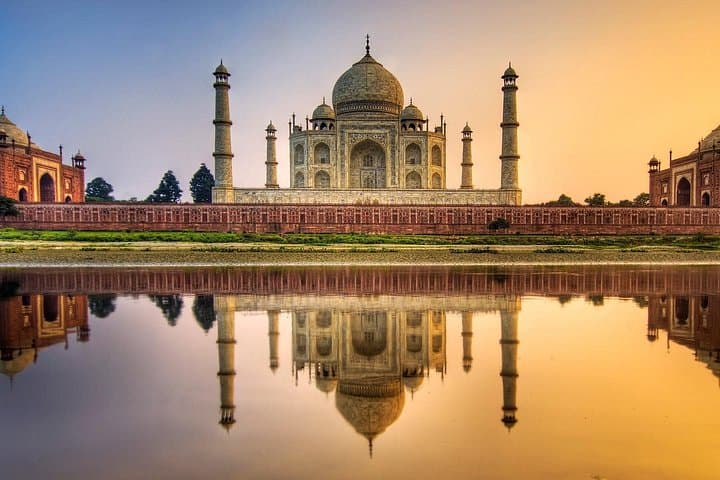
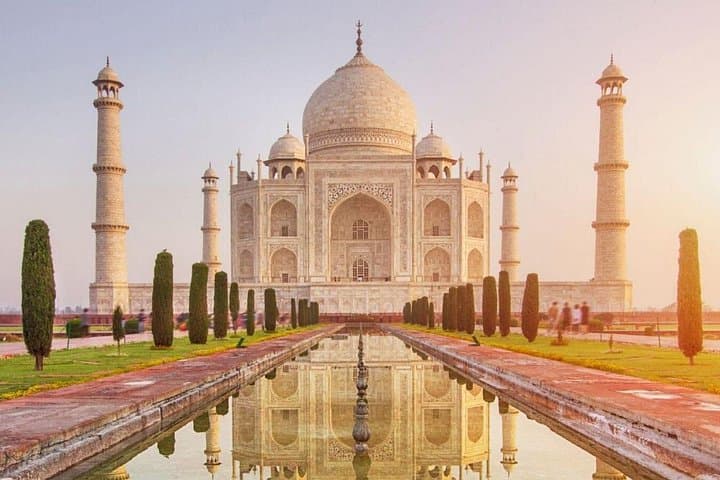
Dawn in Agra arrives cool and clear; the Taj Mahal’s marble shifts from a soft pink to pale white as the sun rises over the Yamuna. A private car pulls away from a New Delhi hotel, threading through wide boulevards and the honking river of traffic, carrying visitors toward forts hewn from red sandstone and an observatory that reads the sky.
Dawn in Agra arrives cool and clear; the Taj Mahal’s marble shifts from a soft pink to pale white as the sun rises over the Yamuna. A private car pulls away from a New Delhi hotel, threading through wide boulevards and the honking river of traffic, carrying visitors toward forts hewn from red sandstone and an observatory that reads the sky.
This four-day loop ties three distinct chapters of northern India’s history. Delhi stitches Mughal and colonial layers—Qutub Minar (1192) and the Lutyens-era government buildings—while Agra concentrates imperial Mughal ambition in the Taj Mahal and Agra Fort (16th century). Jaipur, founded as a planned capital in the 18th century, shows Rajput stonework and the honeycombed Hawa Mahal that gives the city its signature pink face.
Geology is literal here: sandstone ramparts, alluvial plains of the Yamuna, and cityscapes built from locally quarried stone shape how these places look and feel. Culture is equally tactile—guided tours, local cuisine, and bazaars filled with block-printed textiles and brassware.
Practical guidance: expect long driving stretches—Delhi to Agra ≈ 3–4 hours (about 200 km), Agra to Jaipur ≈ 4–5 hours (≈240 km). Dawn visits to the Taj reduce crowds; carry ID for monument entry. Wear comfortable walking shoes for uneven fort floors and bring sun protection—Rajasthan heat can be intense in summer. The itinerary is low in technical difficulty but dense in logistics: keep water, a lightweight daypack, and flexible expectations for traffic and timing. With a local guide and private transport, this tour concentrates cultural highlights into four efficient, memorable days.