THE ADVENTURE COLLECTIVE® · Independent discovery and booking for outdoor travel

A focused five-day circuit through New Delhi, Agra and Jaipur that pairs sunrise visits to the Taj Mahal with Mughal forts and Rajasthani palaces. Practical, guided, and paced for travelers who want depth without the logistics hassle.
A focused five-day circuit through New Delhi, Agra and Jaipur that pairs sunrise visits to the Taj Mahal with Mughal forts and Rajasthani palaces. Practical, guided, and paced for travelers who want depth without the logistics hassle.
You step out of a Delhi hotel into a wash of early light and the city greets you with curry-scented air, tuk-tuk horns and the distant silhouette of domes and minarets. Over the next five days the route tightens into a clear line: New Delhi’s imperial avenues, Agra’s river-kissed marble, Jaipur’s pink stone and hilltop forts. Each city moves at its own tempo — Delhi’s layered history, Agra’s Mughal precision, Jaipur’s Rajput theatre — and the tour stitches them together into an immersive cultural sweep.
Verified experiences and guided adventures in the surrounding area.
Operated by Taj Journey · New Delhi, Delhi
You step out of a Delhi hotel into a wash of early light and the city greets you with curry-scented air, tuk-tuk horns and the distant silhouette of domes and minarets. Over the next five days the route tightens into a clear line: New Delhi’s imperial avenues, Agra’s river-kissed marble, Jaipur’s pink stone and hilltop forts. Each city moves at its own tempo — Delhi’s layered history, Agra’s Mughal precision, Jaipur’s Rajput theatre — and the tour stitches them together into an immersive cultural sweep.
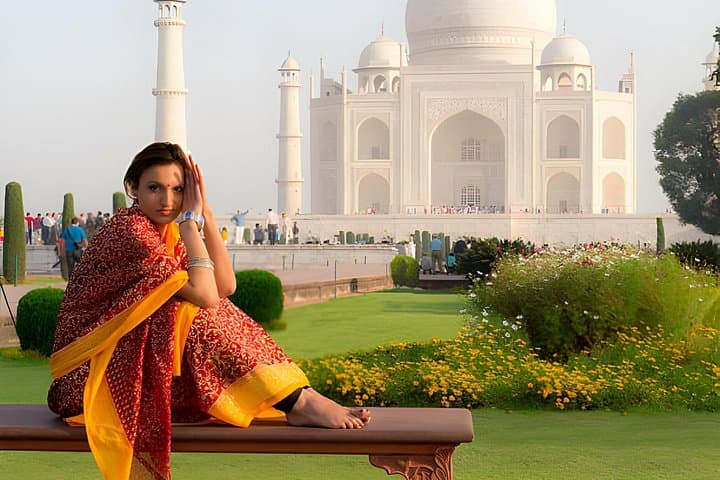
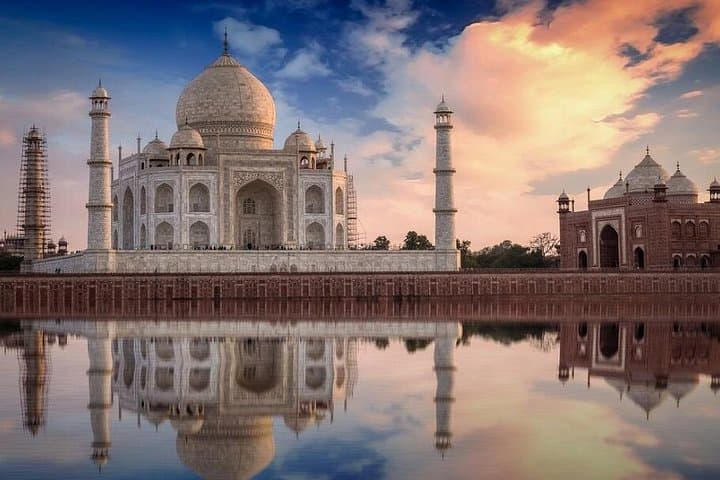
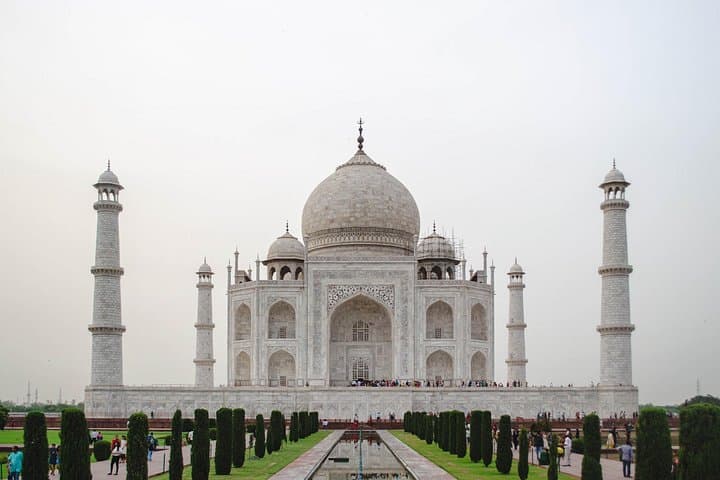
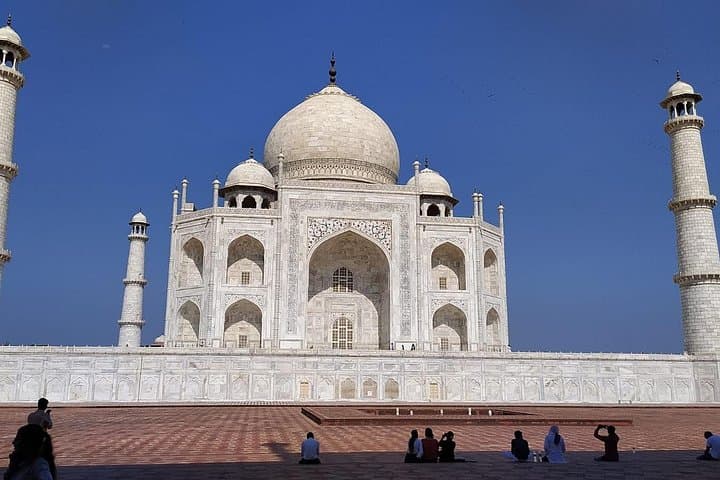
History here is physical: Mughal gardens, Shah Jahan’s symmetry at the Taj Mahal, Akbar’s red-sandstone courts at Fatehpur Sikri and the Kachwaha palaces of Jaipur. Geology plays a quieter role — the Yamuna’s floodplain shaped Agra’s setting and Rajasthan’s sandstone built Jaipur’s façades. Local life threads through bazaars, stepwells and roadside tea stalls; artisans still dye textiles and hammer jewelry in alleys off the main squares.
Practical guidance: expect long days with guided visits, private vehicle transfers and hotel stays included. The Taj is best seen at sunrise for softer light and fewer crowds; pack for heat in summer and chilly mornings in winter. Wear comfortable shoes — many sites have uneven stone and stairs — and carry ID for monument entrances. Hydration and modest clothing are essential when visiting religious sites.
This itinerary is a compact primer on Northern India’s architecture, civic life and culinary variety — designed to move steadily, revealing sites with context and enough time to breathe between drives.
Entrance fees are not automatically included in every tour price; check the booking details — this itinerary includes guided access and private transport but confirm which admissions are covered.
Yes — the tour includes hotel pickup and drop-off in the designated pickup area as specified at booking.
Expect several short walking segments at each site (30–90 minutes), including stairs and uneven surfaces; the tour is suitable for most fitness levels but not recommended for serious spinal or cardiovascular conditions.
October–March offers cooler, clearer weather ideal for sightseeing; summer months can be very hot and dusty, while monsoon brings intermittent downpours.
Taj Journey operates guided outdoor trips and adventures with an emphasis on safety, stewardship, and memorable experiences.
You step out of a Delhi hotel into a wash of early light and the city greets you with curry-scented air, tuk-tuk horns and the distant silhouette of domes and minarets. Over the next five days the route tightens into a clear line: New Delhi’s imperial avenues, Agra’s river-kissed marble, Jaipur’s pink stone and hilltop forts. Each city moves at its own tempo — Delhi’s layered history, Agra’s Mughal precision, Jaipur’s Rajput theatre — and the tour stitches them together into an immersive cultural sweep.
You step out of a Delhi hotel into a wash of early light and the city greets you with curry-scented air, tuk-tuk horns and the distant silhouette of domes and minarets. Over the next five days the route tightens into a clear line: New Delhi’s imperial avenues, Agra’s river-kissed marble, Jaipur’s pink stone and hilltop forts. Each city moves at its own tempo — Delhi’s layered history, Agra’s Mughal precision, Jaipur’s Rajput theatre — and the tour stitches them together into an immersive cultural sweep.
History here is physical: Mughal gardens, Shah Jahan’s symmetry at the Taj Mahal, Akbar’s red-sandstone courts at Fatehpur Sikri and the Kachwaha palaces of Jaipur. Geology plays a quieter role — the Yamuna’s floodplain shaped Agra’s setting and Rajasthan’s sandstone built Jaipur’s façades. Local life threads through bazaars, stepwells and roadside tea stalls; artisans still dye textiles and hammer jewelry in alleys off the main squares.
Practical guidance: expect long days with guided visits, private vehicle transfers and hotel stays included. The Taj is best seen at sunrise for softer light and fewer crowds; pack for heat in summer and chilly mornings in winter. Wear comfortable shoes — many sites have uneven stone and stairs — and carry ID for monument entrances. Hydration and modest clothing are essential when visiting religious sites.
This itinerary is a compact primer on Northern India’s architecture, civic life and culinary variety — designed to move steadily, revealing sites with context and enough time to breathe between drives.