THE ADVENTURE COLLECTIVE® · Independent discovery and booking for outdoor travel

Move fast through India's Golden Triangle on a compact, private four-day circuit from Delhi to Agra and Jaipur. Expect guided monument visits, long drives between cities, and practical tips for beating the heat and beating the crowds.
Move fast through India's Golden Triangle on a compact, private four-day circuit from Delhi to Agra and Jaipur. Expect guided monument visits, long drives between cities, and practical tips for beating the heat and beating the crowds.
Early morning in Old Delhi feels immediate: bicycle rickshaws thread through lanes, spice stalls steam, and the stone silhouettes of Jama Masjid rise as the city wakes. Over four days you move between three very different historic landscapes — the imperial avenues of New Delhi, the marble hush of Agra, and the pink sandstone ramparts of Jaipur — each with its own rhythm and architectural language.
Verified experiences and guided adventures in the surrounding area.
Operated by India Car Rentals · New Delhi, Delhi
Early morning in Old Delhi feels immediate: bicycle rickshaws thread through lanes, spice stalls steam, and the stone silhouettes of Jama Masjid rise as the city wakes. Over four days you move between three very different historic landscapes — the imperial avenues of New Delhi, the marble hush of Agra, and the pink sandstone ramparts of Jaipur — each with its own rhythm and architectural language.
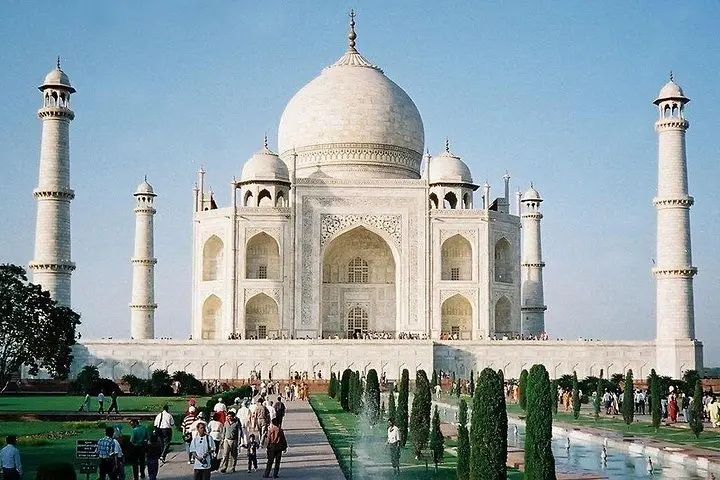
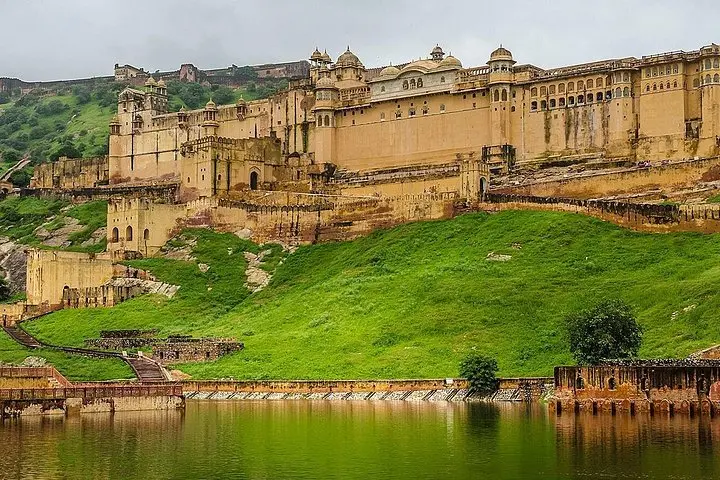
The route follows the arc of Mughal and Rajput power: Qutub Minar and Humayun’s Tomb in Delhi reflect evolving Indo-Islamic geometry; the Taj Mahal in Agra is Shah Jahan’s mausoleum of white marble and precise inlay work; Fatehpur Sikri shows Mughal urban planning; Jaipur’s Amber Fort and Jantar Mantar reveal Rajput court life and astronomical ambition. The plains here are alluvial, the Yamuna a steady presence near Agra, while Rajasthan’s dry, scrubby soils give way to fortified hills framing Jaipur.
Expect guided visits, hotel pick-up, a private AC vehicle, and time for photos and regional meals. Days involve substantial driving — Delhi to Agra ~220 km (3.5–4 hours) and Agra to Jaipur ~250 km (about 5 hours) — plus walking at monuments on mostly paved paths and uneven stone steps at forts.
Practical: carry a daypack with water, wear firm walking shoes for cobbled fort approaches, and bring a hat and sunscreen. Taj is closed Friday and passport/ID is required for entry; smart-casual dress is recommended in many sites. Travel early to avoid midday heat and to see monuments in the softer morning light.
The Taj Mahal is closed on Fridays for prayers; plan your visit on another day and check hours as they vary seasonally.
Foreign visitors must carry a valid passport and an appropriate Indian visa; guides may check ID at monument entrances.
Breakfast at the hotel is included; other meals are typically not included unless specified — ask about vegetarian options when booking.
Expect long drives: Delhi–Agra ~220 km (~3.5–4 hours) and Agra–Jaipur ~250 km (~4.5–5.5 hours), with stops en route such as Fatehpur Sikri.
India Car Rentals operates guided outdoor trips and adventures with an emphasis on safety, stewardship, and memorable experiences.

Early morning in Old Delhi feels immediate: bicycle rickshaws thread through lanes, spice stalls steam, and the stone silhouettes of Jama Masjid rise as the city wakes. Over four days you move between three very different historic landscapes — the imperial avenues of New Delhi, the marble hush of Agra, and the pink sandstone ramparts of Jaipur — each with its own rhythm and architectural language.
Early morning in Old Delhi feels immediate: bicycle rickshaws thread through lanes, spice stalls steam, and the stone silhouettes of Jama Masjid rise as the city wakes. Over four days you move between three very different historic landscapes — the imperial avenues of New Delhi, the marble hush of Agra, and the pink sandstone ramparts of Jaipur — each with its own rhythm and architectural language.
The route follows the arc of Mughal and Rajput power: Qutub Minar and Humayun’s Tomb in Delhi reflect evolving Indo-Islamic geometry; the Taj Mahal in Agra is Shah Jahan’s mausoleum of white marble and precise inlay work; Fatehpur Sikri shows Mughal urban planning; Jaipur’s Amber Fort and Jantar Mantar reveal Rajput court life and astronomical ambition. The plains here are alluvial, the Yamuna a steady presence near Agra, while Rajasthan’s dry, scrubby soils give way to fortified hills framing Jaipur.
Expect guided visits, hotel pick-up, a private AC vehicle, and time for photos and regional meals. Days involve substantial driving — Delhi to Agra ~220 km (3.5–4 hours) and Agra to Jaipur ~250 km (about 5 hours) — plus walking at monuments on mostly paved paths and uneven stone steps at forts.
Practical: carry a daypack with water, wear firm walking shoes for cobbled fort approaches, and bring a hat and sunscreen. Taj is closed Friday and passport/ID is required for entry; smart-casual dress is recommended in many sites. Travel early to avoid midday heat and to see monuments in the softer morning light.