THE ADVENTURE COLLECTIVE® · Independent discovery and booking for outdoor travel

Stand where Thailand, Laos and Myanmar meet and let the Mae Khong River set the pace. This guided day trip blends a river cruise with visits to Chiang Saen’s ancient ruins and a compact regional museum.
Stand where Thailand, Laos and Myanmar meet and let the Mae Khong River set the pace. This guided day trip blends a river cruise with visits to Chiang Saen’s ancient ruins and a compact regional museum.
Morning light lifts off the Mae Khong River and the water dares you forward—slow, broad, and edged by low, cultivated hills. You arrive at Sop Ruak to stand where three countries meet: Thailand, Laos and Myanmar fold together at the confluence of the Ruak and Mekong rivers. The viewpoint looks out over the sweeping curve of the river; boats spool away downstream with local fishermen and day-trippers.
Verified experiences and guided adventures in the surrounding area.
Operated by I Asia Thailand · Chiang Rai, Chiang Rai Province
Morning light lifts off the Mae Khong River and the water dares you forward—slow, broad, and edged by low, cultivated hills. You arrive at Sop Ruak to stand where three countries meet: Thailand, Laos and Myanmar fold together at the confluence of the Ruak and Mekong rivers. The viewpoint looks out over the sweeping curve of the river; boats spool away downstream with local fishermen and day-trippers.
This route threads natural geography with layered history. Chiang Saen, founded around A.D. 1260, was an early Lanna capital whose ruined walls and temples—Wat Pa Sak Ngarm and Wat Phra That Jom Kitti—show Buddhist architecture shaped by Hariphunchai, Sukhothai and Bagan influences. The Golden Triangle’s modern identity was shaped by the opium trade of the 20th century; today small museums and interpretive signs reframe that past around tourism and local life.
Expect a relaxed but full day: a guided river cruise on the Mae Khong, a stop at the Chiang Saen National Museum (closed Mondays), and lookout time at Thailand’s northernmost point. Terrain is mostly flat riverside walks and short temple steps; comfortable walking shoes and sun protection are essential. Bring water, a light rain layer during the monsoon, and a camera with a polarizer for river glare. Timing mid-morning or late afternoon gives the best light for photos and cooler temperatures. Respect temple etiquette—covered shoulders and quiet behavior—and ask guides about local customs and conservation efforts along the river.
The excursion runs about 3 to 4 hours on most schedules, combining a river cruise with temple and museum stops.
No cross-border immigration is required for this standard boat loop and viewpoint stops—you remain on the Thai side and on guided boats.
Yes; the tour is suitable for families and is rated easy, though children should be supervised near river edges and temple steps.
The museum is generally closed on Mondays; check with your operator in advance to confirm daily opening times.
I Asia Thailand operates guided outdoor trips and adventures with an emphasis on safety, stewardship, and memorable experiences.
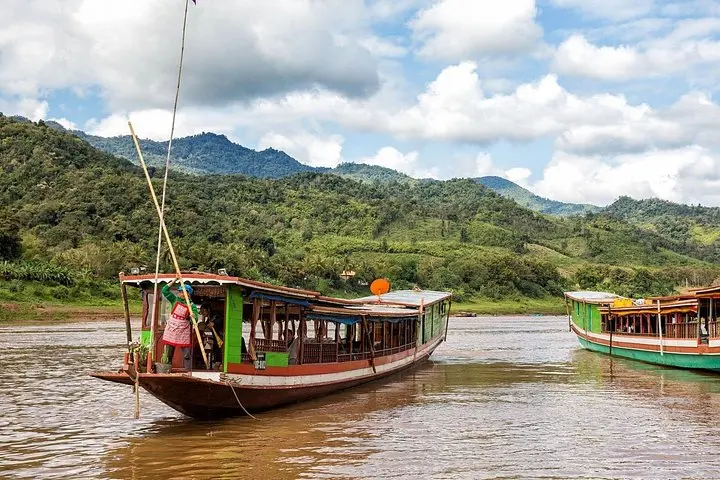
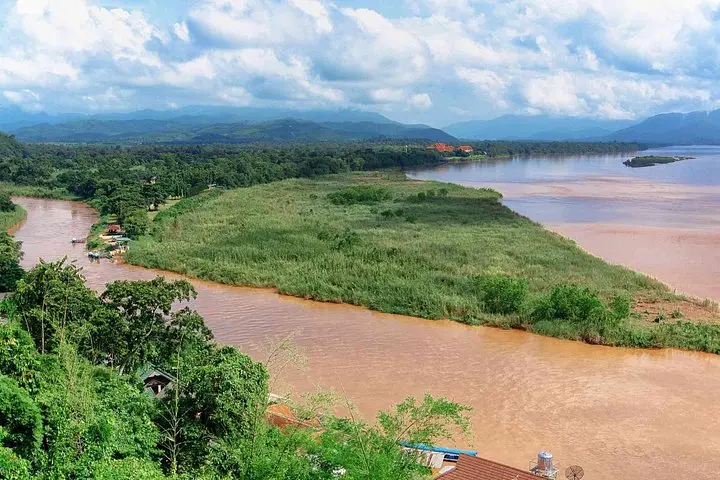
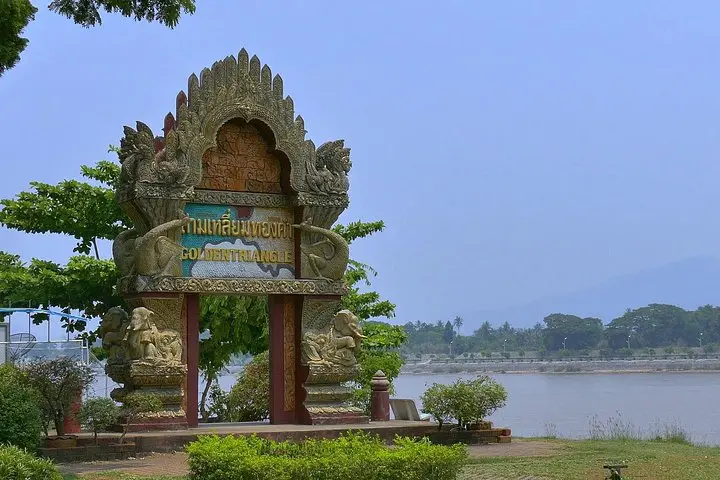
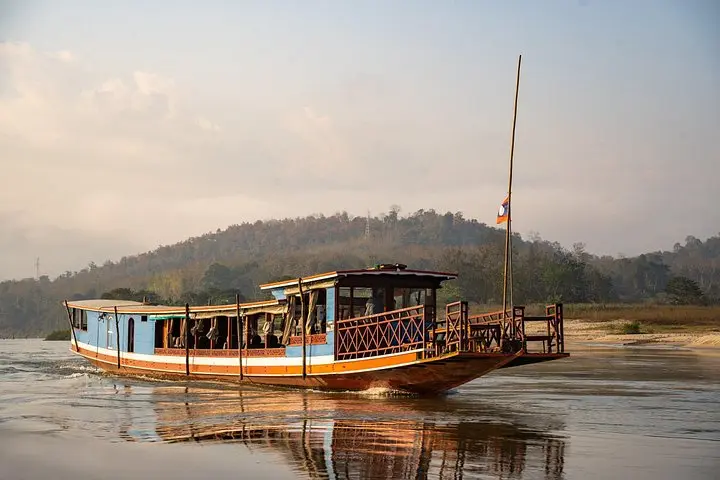
Morning light lifts off the Mae Khong River and the water dares you forward—slow, broad, and edged by low, cultivated hills. You arrive at Sop Ruak to stand where three countries meet: Thailand, Laos and Myanmar fold together at the confluence of the Ruak and Mekong rivers. The viewpoint looks out over the sweeping curve of the river; boats spool away downstream with local fishermen and day-trippers.
Morning light lifts off the Mae Khong River and the water dares you forward—slow, broad, and edged by low, cultivated hills. You arrive at Sop Ruak to stand where three countries meet: Thailand, Laos and Myanmar fold together at the confluence of the Ruak and Mekong rivers. The viewpoint looks out over the sweeping curve of the river; boats spool away downstream with local fishermen and day-trippers.
This route threads natural geography with layered history. Chiang Saen, founded around A.D. 1260, was an early Lanna capital whose ruined walls and temples—Wat Pa Sak Ngarm and Wat Phra That Jom Kitti—show Buddhist architecture shaped by Hariphunchai, Sukhothai and Bagan influences. The Golden Triangle’s modern identity was shaped by the opium trade of the 20th century; today small museums and interpretive signs reframe that past around tourism and local life.
Expect a relaxed but full day: a guided river cruise on the Mae Khong, a stop at the Chiang Saen National Museum (closed Mondays), and lookout time at Thailand’s northernmost point. Terrain is mostly flat riverside walks and short temple steps; comfortable walking shoes and sun protection are essential. Bring water, a light rain layer during the monsoon, and a camera with a polarizer for river glare. Timing mid-morning or late afternoon gives the best light for photos and cooler temperatures. Respect temple etiquette—covered shoulders and quiet behavior—and ask guides about local customs and conservation efforts along the river.