THE ADVENTURE COLLECTIVE® · Independent discovery and booking for outdoor travel

Five days of private transport, guided visits and comfortable hotels take you from Delhi’s bustling monuments to the Taj Mahal’s marble calm and Jaipur’s hilltop forts. Practical routing and sunrise timing mean more time exploring and less time in queues.
Five days of private transport, guided visits and comfortable hotels take you from Delhi’s bustling monuments to the Taj Mahal’s marble calm and Jaipur’s hilltop forts. Practical routing and sunrise timing mean more time exploring and less time in queues.
Morning in Old Delhi arrives as a neon sari of sound and steam — tea vendors calling, bicycle rickshaws threading narrow lanes, and the Qutub Minar cutting a clean silhouette against the sky. This five‑day private Golden Triangle circuit moves at a steady pace between that urban hum, the quiet marble of the Taj Mahal at sunrise, and the sandstone fortresses and bazaars of Jaipur.
Verified experiences and guided adventures in the surrounding area.
Operated by Heritage India Holidays · New Delhi, Delhi
Morning in Old Delhi arrives as a neon sari of sound and steam — tea vendors calling, bicycle rickshaws threading narrow lanes, and the Qutub Minar cutting a clean silhouette against the sky. This five‑day private Golden Triangle circuit moves at a steady pace between that urban hum, the quiet marble of the Taj Mahal at sunrise, and the sandstone fortresses and bazaars of Jaipur.
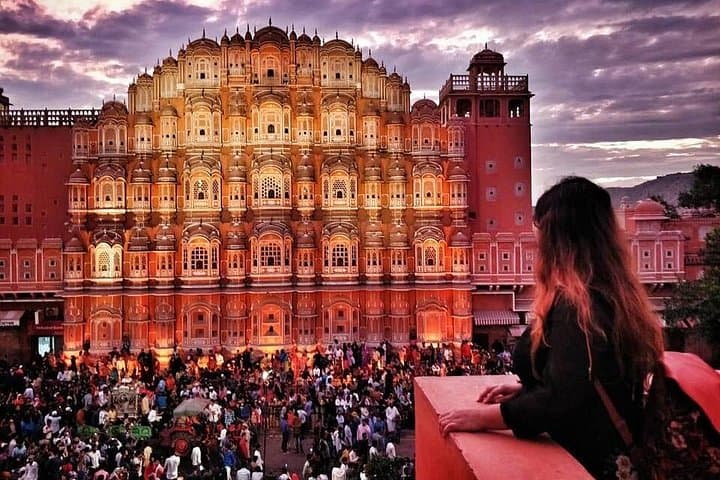
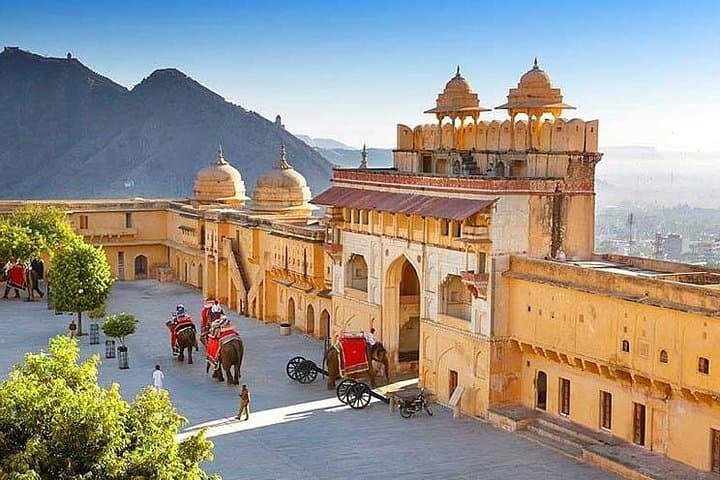
The route stitches together Mughal and Rajput history: Delhi’s Red Fort and Jantar Mantar speak to imperial administration and astronomy, Agra’s Taj Mahal is a 17th‑century mausoleum on the Yamuna floodplain, and Jaipur’s Amber Fort and City Palace reveal Rajput defensive architecture and court life set against the low Aravalli ridgeline. Geology matters here too — the plains around Agra are alluvial, while Jaipur’s forts sit on older Aravalli outcrops that lent stone and strategic height to hilltop defenses.
Practically, expect long but comfortable transfer days by air‑conditioned private car (Delhi–Agra ≈ 230 km, 3.5–4.5 hours; Agra–Jaipur ≈ 240 km, 4–5 hours) with guided sightseeing stops. Sunrise at the Taj minimizes crowds and heat; mid‑day in Delhi and Jaipur is best for museums and air‑conditioned breaks. Wear supportive walking shoes for uneven fort ramps and tiled palace floors, carry a refillable water bottle, and dress respectfully in temples and mosques. The operator typically includes hotel accommodation, a private guide, bottled water, and vehicle transport — confirm which monument entrance fees are covered when you book.
This itinerary is ideal for travelers who want concentrated cultural history with predictable logistics and the flexibility of a private tour.
The listing notes fees and taxes are included, but policies vary by operator — confirm whether specific entrance tickets (Taj Mahal, Amber Fort) are covered at booking.
The operator indicates accessibility in transport and some sites, but many monuments have steps and uneven surfaces; request details and advance arrangements if you need full accessibility.
October–March offers cooler, clearer weather; winter mornings can be foggy near Agra, while summers are very hot and best avoided if you dislike high temperatures.
Expect several hours of walking at each site—courtyards, ramps and short climbs—balanced with vehicle transfers; choose comfortable shoes and moderate fitness.
Heritage India Holidays operates guided outdoor trips and adventures with an emphasis on safety, stewardship, and memorable experiences.
Morning in Old Delhi arrives as a neon sari of sound and steam — tea vendors calling, bicycle rickshaws threading narrow lanes, and the Qutub Minar cutting a clean silhouette against the sky. This five‑day private Golden Triangle circuit moves at a steady pace between that urban hum, the quiet marble of the Taj Mahal at sunrise, and the sandstone fortresses and bazaars of Jaipur.
Morning in Old Delhi arrives as a neon sari of sound and steam — tea vendors calling, bicycle rickshaws threading narrow lanes, and the Qutub Minar cutting a clean silhouette against the sky. This five‑day private Golden Triangle circuit moves at a steady pace between that urban hum, the quiet marble of the Taj Mahal at sunrise, and the sandstone fortresses and bazaars of Jaipur.
The route stitches together Mughal and Rajput history: Delhi’s Red Fort and Jantar Mantar speak to imperial administration and astronomy, Agra’s Taj Mahal is a 17th‑century mausoleum on the Yamuna floodplain, and Jaipur’s Amber Fort and City Palace reveal Rajput defensive architecture and court life set against the low Aravalli ridgeline. Geology matters here too — the plains around Agra are alluvial, while Jaipur’s forts sit on older Aravalli outcrops that lent stone and strategic height to hilltop defenses.
Practically, expect long but comfortable transfer days by air‑conditioned private car (Delhi–Agra ≈ 230 km, 3.5–4.5 hours; Agra–Jaipur ≈ 240 km, 4–5 hours) with guided sightseeing stops. Sunrise at the Taj minimizes crowds and heat; mid‑day in Delhi and Jaipur is best for museums and air‑conditioned breaks. Wear supportive walking shoes for uneven fort ramps and tiled palace floors, carry a refillable water bottle, and dress respectfully in temples and mosques. The operator typically includes hotel accommodation, a private guide, bottled water, and vehicle transport — confirm which monument entrance fees are covered when you book.
This itinerary is ideal for travelers who want concentrated cultural history with predictable logistics and the flexibility of a private tour.