THE ADVENTURE COLLECTIVE® · Independent discovery and booking for outdoor travel

A private 7-day loop from New Delhi through Agra, Jaipur and Udaipur that pairs Mughal monuments with Rajput palaces. Expect long scenic drives, early-morning Taj visits and guided walks through bazaars and forts.
A private 7-day loop from New Delhi through Agra, Jaipur and Udaipur that pairs Mughal monuments with Rajput palaces. Expect long scenic drives, early-morning Taj visits and guided walks through bazaars and forts.
You step out of the car at dawn and the heat of Old Delhi already hums around you: rickshaws weaving, spice stalls opening, the city’s pulse pushing you forward. Over the next seven days that pulse becomes a route — 210 km down the expressway to Agra’s white-marble silence, through the red-sandstone gates of Fatehpur Sikri, across Jaipur’s fortified hills, and finally to Udaipur’s reflective lakes.
Verified experiences and guided adventures in the surrounding area.
Operated by Travel Creators Of India · New Delhi, Delhi
You step out of the car at dawn and the heat of Old Delhi already hums around you: rickshaws weaving, spice stalls opening, the city’s pulse pushing you forward. Over the next seven days that pulse becomes a route — 210 km down the expressway to Agra’s white-marble silence, through the red-sandstone gates of Fatehpur Sikri, across Jaipur’s fortified hills, and finally to Udaipur’s reflective lakes.
This is the classic Golden Triangle extended to include Udaipur — a loop of Mughal and Rajput history. In Delhi and Agra you’ll trace Mughal architecture from Jama Masjid to the Taj Mahal and Agra Fort. Fatehpur Sikri shows a 16th-century planned capital carved in red sandstone; Jaipur displays Rajput city planning and observatories such as Jantar Mantar; Udaipur adds lakeside palaces and boat rides on Lake Pichola. Geologically the region sits on alluvial plains rising to the Aravalli foothills; sandstone and marble dominate the built landscape.
Cultural notes: bargaining is expected in bazaars, and many heritage sites close on specific days (the Taj is closed Fridays). Practical guidance: plan early-morning Taj visits for cooler light and smaller crowds, carry comfortable shoes for cobbled ramps and palace stairs, and keep a reusable water bottle — bottled water is usually provided but tap water should be avoided.
Expect long drives punctuated by guided walks, short boat rides, and moments of standing-room-only in busy markets. The trip is private and flexible: you can slow the pace to linger at a fort rampart or speed it up to catch sunset at Mehtab Bagh. Pack sun protection, comfortable layers for cool desert nights, and leave room in your schedule for unexpected alleyway discoveries.
The itinerary includes a visit to the Taj Mahal; entrance fees are typically covered by the tour but confirm at booking and note the site is closed on Fridays.
Most visitors need a valid visa or e-Visa before arrival — check your nationality’s requirements and obtain it prior to travel.
Drives vary: Delhi–Agra is about 210 km (~2h45 on the expressway); Jaipur–Udaipur is longer (around 6 hours depending on stops and traffic).
Yes — the private format allows customization of pace, hotel nights and extra stops; discuss specific requests with the operator when booking.
Travel Creators Of India operates guided outdoor trips and adventures with an emphasis on safety, stewardship, and memorable experiences.

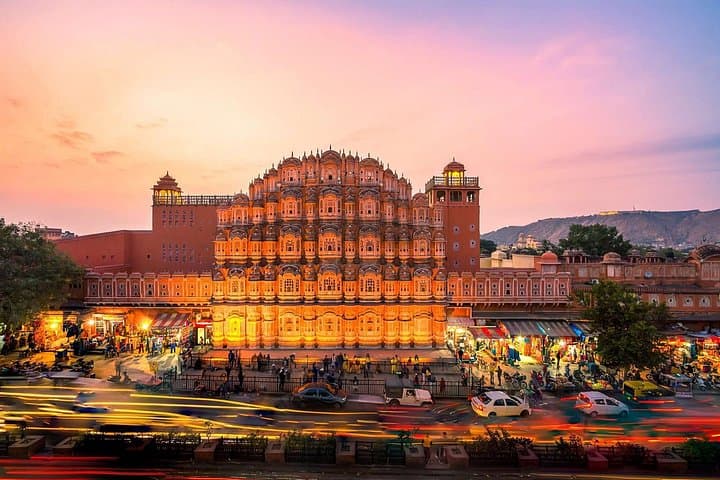


You step out of the car at dawn and the heat of Old Delhi already hums around you: rickshaws weaving, spice stalls opening, the city’s pulse pushing you forward. Over the next seven days that pulse becomes a route — 210 km down the expressway to Agra’s white-marble silence, through the red-sandstone gates of Fatehpur Sikri, across Jaipur’s fortified hills, and finally to Udaipur’s reflective lakes.
You step out of the car at dawn and the heat of Old Delhi already hums around you: rickshaws weaving, spice stalls opening, the city’s pulse pushing you forward. Over the next seven days that pulse becomes a route — 210 km down the expressway to Agra’s white-marble silence, through the red-sandstone gates of Fatehpur Sikri, across Jaipur’s fortified hills, and finally to Udaipur’s reflective lakes.
This is the classic Golden Triangle extended to include Udaipur — a loop of Mughal and Rajput history. In Delhi and Agra you’ll trace Mughal architecture from Jama Masjid to the Taj Mahal and Agra Fort. Fatehpur Sikri shows a 16th-century planned capital carved in red sandstone; Jaipur displays Rajput city planning and observatories such as Jantar Mantar; Udaipur adds lakeside palaces and boat rides on Lake Pichola. Geologically the region sits on alluvial plains rising to the Aravalli foothills; sandstone and marble dominate the built landscape.
Cultural notes: bargaining is expected in bazaars, and many heritage sites close on specific days (the Taj is closed Fridays). Practical guidance: plan early-morning Taj visits for cooler light and smaller crowds, carry comfortable shoes for cobbled ramps and palace stairs, and keep a reusable water bottle — bottled water is usually provided but tap water should be avoided.
Expect long drives punctuated by guided walks, short boat rides, and moments of standing-room-only in busy markets. The trip is private and flexible: you can slow the pace to linger at a fort rampart or speed it up to catch sunset at Mehtab Bagh. Pack sun protection, comfortable layers for cool desert nights, and leave room in your schedule for unexpected alleyway discoveries.