THE ADVENTURE COLLECTIVE® · Independent discovery and booking for outdoor travel

A week that pairs India’s iconic monuments with the pulse of the jungle: sunrise at the Taj, Rajput forts in Jaipur and two Ranthambore safaris in search of Bengal tigers. Expect long drives, early starts and vivid contrasts between cities and dry-forest wilderness.
A week that pairs India’s iconic monuments with the pulse of the jungle: sunrise at the Taj, Rajput forts in Jaipur and two Ranthambore safaris in search of Bengal tigers. Expect long drives, early starts and vivid contrasts between cities and dry-forest wilderness.
You arrive in New Delhi at first light, the city already pulsing with honking rickshaws and a heady mix of spice and diesel. Over seven days the route tightens and loosens—broad avenues of New Delhi give way to the marble hush of the Taj at sunrise, then to pink sandstone palaces and the dry, scrubby forests that conceal Ranthambore’s tigers.
Verified experiences and guided adventures in the surrounding area.
Operated by Jaipur Trip · Sawai Madhopur, Rajasthan
You arrive in New Delhi at first light, the city already pulsing with honking rickshaws and a heady mix of spice and diesel. Over seven days the route tightens and loosens—broad avenues of New Delhi give way to the marble hush of the Taj at sunrise, then to pink sandstone palaces and the dry, scrubby forests that conceal Ranthambore’s tigers.
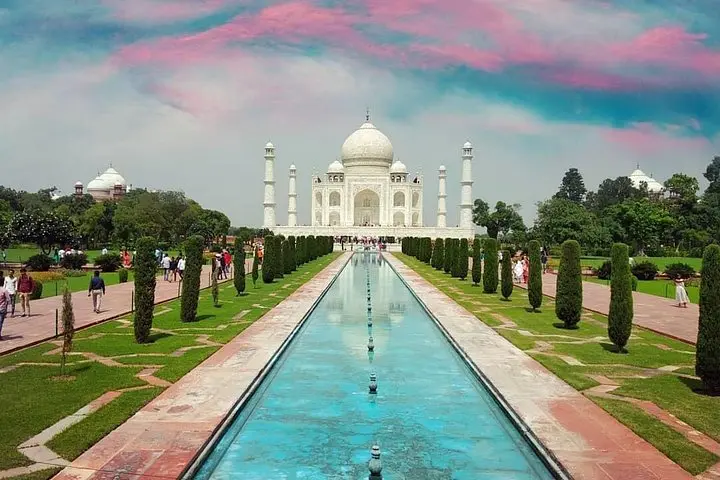
The Golden Triangle—Delhi, Agra and Jaipur—charts two great chapters of north Indian history: Mughal ambition expressed in the Taj Mahal and Agra Fort; Rajput pride and astronomy in Jaipur’s City Palace and Jantar Mantar. Geologically the region shifts from alluvial plains around the Yamuna to the rocky outcrops and seasonal reservoirs of eastern Rajasthan; Abhaneri’s stepped well is a functional medieval response to that precise climate.
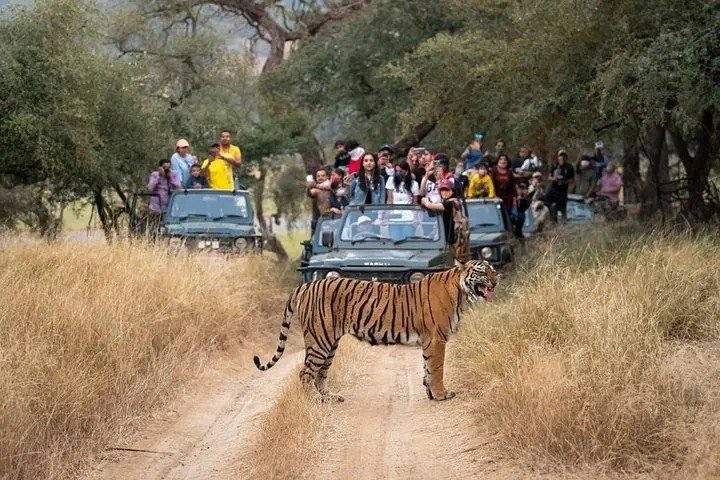
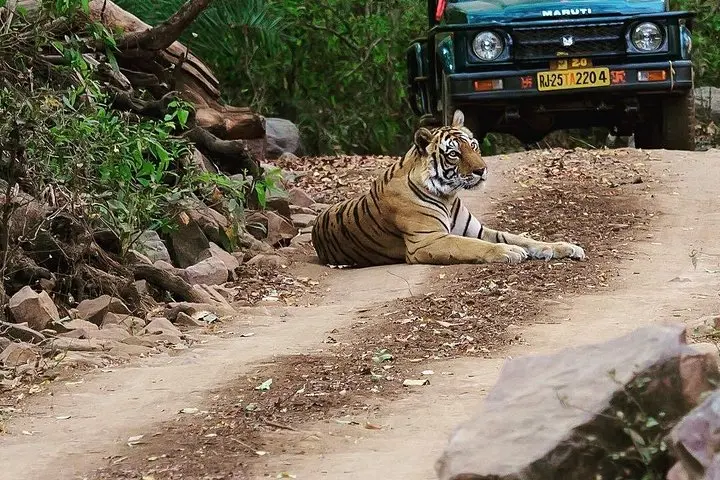
In Ranthambore expect teak and acacia stands, granite outcrops and seasonal lakes that draw chital, langur and the park’s apex predator. Game drives in shared jeeps move at the pace of the park—quiet, patient, alert—and sightings depend on timing and luck.
Practical guidance: book park permits and early-morning safaris well in advance; plan Taj Mahal at sunrise to avoid crowds; carry reusable water, sun protection and light layers for cool early mornings. Comfortable walking shoes are adequate—most touring is by vehicle with short walks. Respect park rules, keep noise low on drives and follow your naturalist guide’s instructions. This itinerary blends major monuments with wildlife rhythm—prepare for long drives, early wake-ups and the distinct possibility that one moment you’ll be watching a palace, the next listening for a tiger’s rustle.
No—sightings depend on animal movement, season and luck; booking both morning and evening safaris improves odds.
Most international travelers need an Indian visa; check current vaccination and entry requirements before travel.
Yes—tour pacing is gentle with vehicle transfers, but safaris require quick jeep movements; inform the operator of mobility needs.
Local operators typically can accommodate common dietary needs if notified at booking; carry snacks for long transfers.
Jaipur Trip operates guided outdoor trips and adventures with an emphasis on safety, stewardship, and memorable experiences.

You arrive in New Delhi at first light, the city already pulsing with honking rickshaws and a heady mix of spice and diesel. Over seven days the route tightens and loosens—broad avenues of New Delhi give way to the marble hush of the Taj at sunrise, then to pink sandstone palaces and the dry, scrubby forests that conceal Ranthambore’s tigers.
You arrive in New Delhi at first light, the city already pulsing with honking rickshaws and a heady mix of spice and diesel. Over seven days the route tightens and loosens—broad avenues of New Delhi give way to the marble hush of the Taj at sunrise, then to pink sandstone palaces and the dry, scrubby forests that conceal Ranthambore’s tigers.
The Golden Triangle—Delhi, Agra and Jaipur—charts two great chapters of north Indian history: Mughal ambition expressed in the Taj Mahal and Agra Fort; Rajput pride and astronomy in Jaipur’s City Palace and Jantar Mantar. Geologically the region shifts from alluvial plains around the Yamuna to the rocky outcrops and seasonal reservoirs of eastern Rajasthan; Abhaneri’s stepped well is a functional medieval response to that precise climate.
In Ranthambore expect teak and acacia stands, granite outcrops and seasonal lakes that draw chital, langur and the park’s apex predator. Game drives in shared jeeps move at the pace of the park—quiet, patient, alert—and sightings depend on timing and luck.
Practical guidance: book park permits and early-morning safaris well in advance; plan Taj Mahal at sunrise to avoid crowds; carry reusable water, sun protection and light layers for cool early mornings. Comfortable walking shoes are adequate—most touring is by vehicle with short walks. Respect park rules, keep noise low on drives and follow your naturalist guide’s instructions. This itinerary blends major monuments with wildlife rhythm—prepare for long drives, early wake-ups and the distinct possibility that one moment you’ll be watching a palace, the next listening for a tiger’s rustle.