
Golden Triangle & Ranthambore: 5-Day Delhi, Agra, Jaipur Tour with Tiger Safari
A compact five-day loop from Delhi through Agra and Jaipur ending with a Ranthambore tiger safari. Expect iconic monuments, bustling markets, and early-morning safaris across varied terrain—ideal for first-time visitors who want a concentrated taste of northern India.
An Adventure In New Delhi.
A compact five-day loop from Delhi through Agra and Jaipur ending with a Ranthambore tiger safari. Expect iconic monuments, bustling markets, and early-morning safaris across varied terrain—ideal for first-time visitors who want a concentrated taste of northern India.
Read the full experience
Morning light grazes the white marble of the Taj Mahal as your guide leads you through symmetric gardens; later the road opens to Rajasthan’s scrub and the low, rocky hills around Ranthambore where the forest waits with patient watchfulness.
Morning light grazes the white marble of the Taj Mahal as your guide leads you through symmetric gardens; later the road opens to Rajasthan’s scrub and the low, rocky hills around Ranthambore where the forest waits with patient watchfulness.
This five-day circuit stitches together the Mughal and Rajput chapters of northern India’s history: imperial Delhi’s monuments and bazaars, Agra’s funerary art culminating in the Taj, and Jaipur’s palaces and fortified citadels. Geologically, you move from the alluvial Indo-Gangetic plain into the Vindhya fringe—the soils change, the vegetation thins, and wildlife becomes visible at dawn and dusk.
Culturally the trip is hands-on: spice markets in Chandni Chowk, the latticed viewing of Hawa Mahal, and the living forts where royal ceremony meets busy street life. Ranthambore’s fort ruins are a reminder that these forests were once royal hunting grounds now managed for conservation and tourism.
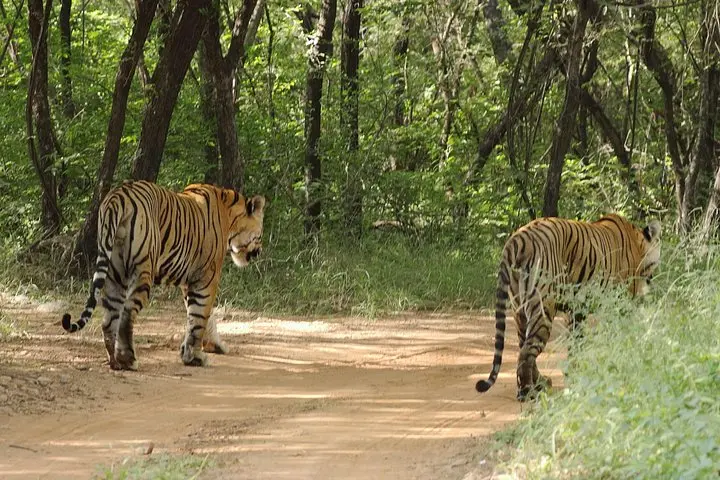
Practical guidance: expect long drives (two to six hours between cities), early starts for sunrise visits and the best tigers sightings in Ranthambore. Wear sturdy walking shoes for uneven palace courtyards and dusty safari tracks, pack sun protection, and keep a refillable water bottle. Binoculars and a telephoto lens improve wildlife viewing but follow park rules—stay in the vehicle during safaris and respect local customs in temples and markets.
Logistics are straightforward: private AC transfers are typical on this itinerary, entrance fees may be included depending on your booking option, and travel is easiest from October to March when weather and wildlife activity align for the best experience.
Frequently asked questions
The tour offers options; some packages include entrance fees and 4–5 star Agra accommodation—confirm your booking selection for exact inclusions.
October to March is the best window—cooler weather concentrates wildlife around water and foliage is sparser for easier spotting.
Many operators offer wheelchair-accessible vehicles and some sites have accessible paths, but accessibility can vary—confirm needs during booking.
Rules are strict: remain in the vehicle, follow the guide’s instructions, and avoid loud noises or flash photography to minimize disturbance to wildlife.
About This Experience
SAMI WORLD TRAVELS operates guided outdoor trips and adventures with an emphasis on safety, stewardship, and memorable experiences.
Adventure tips
Recommended gear
- Comfortable walking shoes: Support for cobbled palace courtyards, market alleys, and short hikes in Ranthambore.
- Binoculars: Helps spot tigers and other wildlife from the safari jeep without relying only on camera zoom.
- Sun protection (hat, sunscreen): Protects against intense sun during midday city visits and open safaris.
- Lightweight layers: Early-morning safaris can be cool—pack a fleece or windbreaker for comfort.
Photos of the experience

Related adventures & guides
Read the full experience
Morning light grazes the white marble of the Taj Mahal as your guide leads you through symmetric gardens; later the road opens to Rajasthan’s scrub and the low, rocky hills around Ranthambore where the forest waits with patient watchfulness.
Morning light grazes the white marble of the Taj Mahal as your guide leads you through symmetric gardens; later the road opens to Rajasthan’s scrub and the low, rocky hills around Ranthambore where the forest waits with patient watchfulness.
This five-day circuit stitches together the Mughal and Rajput chapters of northern India’s history: imperial Delhi’s monuments and bazaars, Agra’s funerary art culminating in the Taj, and Jaipur’s palaces and fortified citadels. Geologically, you move from the alluvial Indo-Gangetic plain into the Vindhya fringe—the soils change, the vegetation thins, and wildlife becomes visible at dawn and dusk.
Culturally the trip is hands-on: spice markets in Chandni Chowk, the latticed viewing of Hawa Mahal, and the living forts where royal ceremony meets busy street life. Ranthambore’s fort ruins are a reminder that these forests were once royal hunting grounds now managed for conservation and tourism.
Practical guidance: expect long drives (two to six hours between cities), early starts for sunrise visits and the best tigers sightings in Ranthambore. Wear sturdy walking shoes for uneven palace courtyards and dusty safari tracks, pack sun protection, and keep a refillable water bottle. Binoculars and a telephoto lens improve wildlife viewing but follow park rules—stay in the vehicle during safaris and respect local customs in temples and markets.
Logistics are straightforward: private AC transfers are typical on this itinerary, entrance fees may be included depending on your booking option, and travel is easiest from October to March when weather and wildlife activity align for the best experience.
Make a day of it nearby.
Verified experiences and guided adventures in the surrounding area.