THE ADVENTURE COLLECTIVE® · Independent discovery and booking for outdoor travel

Combine the Taj Mahal, Jaipur’s forts and two full days of Ranthambore safaris on this private eight-day Golden Triangle circuit. Expect city monuments, guided market walks and early-morning jeep safaris with strong chances of tiger sightings.
Combine the Taj Mahal, Jaipur’s forts and two full days of Ranthambore safaris on this private eight-day Golden Triangle circuit. Expect city monuments, guided market walks and early-morning jeep safaris with strong chances of tiger sightings.
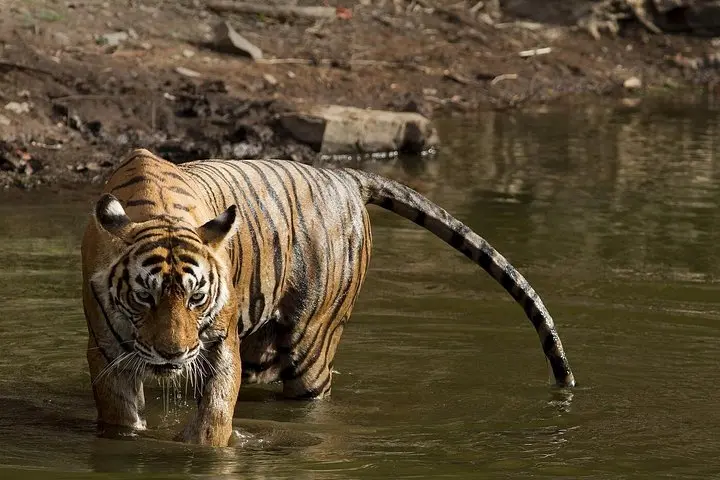
Sunrise at the Taj Mahal frames the start of this eight-day circuit — marble alight, morning air carrying the calls of city vendors — and by day three you’re trading Mughal gardens for the dry teak and scrub of Ranthambore, where the forest dares you to spot its tiger.
Verified experiences and guided adventures in the surrounding area.
Operated by BOUT INDIA TOURS · New Delhi, Delhi
Sunrise at the Taj Mahal frames the start of this eight-day circuit — marble alight, morning air carrying the calls of city vendors — and by day three you’re trading Mughal gardens for the dry teak and scrub of Ranthambore, where the forest dares you to spot its tiger.
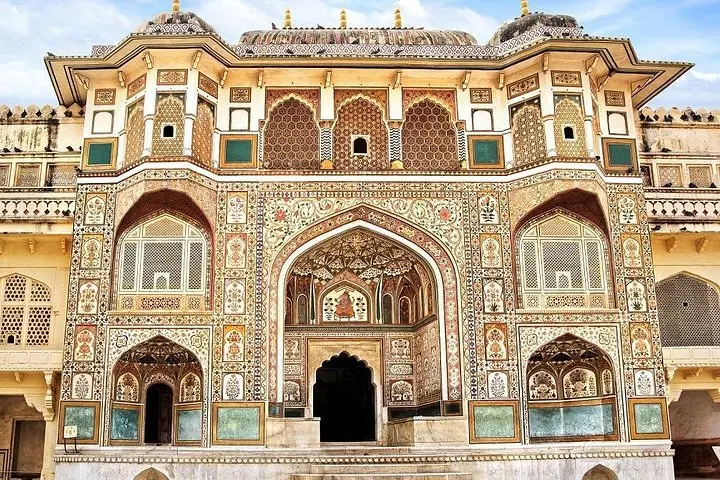
This itinerary threads three historic cities — Delhi, Agra and Jaipur — with two nights of guided safaris in Ranthambore National Park. In Delhi, visits include Red Fort, Jama Masjid, Humayun’s Tomb and Qutub Minar, sites spanning the Delhi Sultanate through the Mughal era. Agra centers on the 17th-century Taj and the red-sandstone Agra Fort. Jaipur’s Amer Fort, City Palace and Jantar Mantar show Rajput architecture and 18th-century astronomy. Geologically, the route moves from alluvial plains around the Yamuna to the low Vindhyan outcrops and rocky ridges that punctuate Ranthambore’s national park.
Practical details: the tour uses a private AC car for intra-city transfers (Delhi–Agra ~230 km, Agra–Ranthambore ~270 km, Ranthambore–Jaipur ~150 km). Ranthambore safaris run at 06:00 and ~15:00 on shared jeeps; bring binoculars and a loaded camera. Expect dry, dusty trails and short walks on uneven stone at forts; comfortable walking shoes are necessary. Dress conservatively at religious sites, carry sun protection and a refillable water bottle, and keep passports/visas handy for monument entries. Wildlife viewing depends on morning activity and guide knowledge — stay in the vehicle, be patient, and follow ranger instructions. Accommodation is 4–5 star across seven nights with English-speaking guides and entry passes included — a culturally rich, wildlife-forward loop that balances city heritage with a real chance of seeing Bengal tigers.
Safari drives in this itinerary are provided as shared-jeep safaris (two per day); private jeep options may be available at extra cost subject to park rules.
Entry passes for the monuments listed are included; Ranthambore park permits and timed jeep slots are arranged as part of the tour.
Children are welcome but kids under 5 are complimentary (sharing bed); wildlife drives can be long and bumpy, so consider your child’s tolerance for early mornings and rough roads.
Cooler months (October–March) concentrate wildlife activity and clear mornings improve sighting chances, but tigers can be seen year-round; summer sightings are possible but heat affects animal movement.
BOUT INDIA TOURS operates guided outdoor trips and adventures with an emphasis on safety, stewardship, and memorable experiences.


Sunrise at the Taj Mahal frames the start of this eight-day circuit — marble alight, morning air carrying the calls of city vendors — and by day three you’re trading Mughal gardens for the dry teak and scrub of Ranthambore, where the forest dares you to spot its tiger.
Sunrise at the Taj Mahal frames the start of this eight-day circuit — marble alight, morning air carrying the calls of city vendors — and by day three you’re trading Mughal gardens for the dry teak and scrub of Ranthambore, where the forest dares you to spot its tiger.
This itinerary threads three historic cities — Delhi, Agra and Jaipur — with two nights of guided safaris in Ranthambore National Park. In Delhi, visits include Red Fort, Jama Masjid, Humayun’s Tomb and Qutub Minar, sites spanning the Delhi Sultanate through the Mughal era. Agra centers on the 17th-century Taj and the red-sandstone Agra Fort. Jaipur’s Amer Fort, City Palace and Jantar Mantar show Rajput architecture and 18th-century astronomy. Geologically, the route moves from alluvial plains around the Yamuna to the low Vindhyan outcrops and rocky ridges that punctuate Ranthambore’s national park.
Practical details: the tour uses a private AC car for intra-city transfers (Delhi–Agra ~230 km, Agra–Ranthambore ~270 km, Ranthambore–Jaipur ~150 km). Ranthambore safaris run at 06:00 and ~15:00 on shared jeeps; bring binoculars and a loaded camera. Expect dry, dusty trails and short walks on uneven stone at forts; comfortable walking shoes are necessary. Dress conservatively at religious sites, carry sun protection and a refillable water bottle, and keep passports/visas handy for monument entries. Wildlife viewing depends on morning activity and guide knowledge — stay in the vehicle, be patient, and follow ranger instructions. Accommodation is 4–5 star across seven nights with English-speaking guides and entry passes included — a culturally rich, wildlife-forward loop that balances city heritage with a real chance of seeing Bengal tigers.