THE ADVENTURE COLLECTIVE® · Independent discovery and booking for outdoor travel

Trace India’s layered past across 17 days: Mughal monuments in the Golden Triangle, sun-soaked beaches in Goa, and Hoysala and Vijayanagara stonework in Karnataka. This guided route balances driven travel with walkable ruins and cultural immersion.
Trace India’s layered past across 17 days: Mughal monuments in the Golden Triangle, sun-soaked beaches in Goa, and Hoysala and Vijayanagara stonework in Karnataka. This guided route balances driven travel with walkable ruins and cultural immersion.
The day begins in Delhi with the city’s layered noises folding around you — honking, prayers, markets — and the Red Fort rising like an old ruler observing the present. Over 17 days you move from the precise symmetry of Mughal gardens to the humid shoreline of Goa, then inland again into Karnataka’s stone country where temples grow from volcanic boulders and rivers dare you to follow their curves.
Verified experiences and guided adventures in the surrounding area.
Operated by Agora Voyages Pvt. Ltd. · New Delhi, Delhi
The day begins in Delhi with the city’s layered noises folding around you — honking, prayers, markets — and the Red Fort rising like an old ruler observing the present. Over 17 days you move from the precise symmetry of Mughal gardens to the humid shoreline of Goa, then inland again into Karnataka’s stone country where temples grow from volcanic boulders and rivers dare you to follow their curves.
This route threads three distinct histories: Mughal north India around Delhi, Agra and Jaipur; Portuguese and coastal Goan culture; and the medieval dynasties of southern Karnataka — Chalukya, Hoysala and Vijayanagara — whose stone carvings and massive ruined cities (Hampi) map a different architectural language. Geologically the Deccan’s volcanic boulder-strewn plains make Hampi’s skyline dramatic, while the Gangetic plains around Agra and Delhi are flat, river-fed, and easy to traverse. Culturally expect temple ritual, bustling bazaars, and regional cuisines that shift from rich Mughlai gravies to coastal seafood and coconut-driven Karnataka fare.
Practical edge: plan for many short drives (3–5 hours typical stretches), two internal flights, and multiple short climbs — Matunga Hill in Hampi and stairways at Badami caves. Carry sun protection, a refillable water bottle, sturdy shoes for uneven rock and temple steps, and modest clothing for religious sites. Early mornings and late afternoons are best for major monuments to avoid heat and crowds. Travel with patience and a sense of rhythm — India moves fast but rewards the traveler who matches its pace.
Yes. It’s an organized, private tour with guides and transfers, designed for international travelers and suitable for those new to India.
Expect moderate walking at monuments, uneven stone surfaces and short stair climbs to viewpoints (e.g., Matunga Hill, cave temple steps). No technical climbing required.
Typical inclusions are accommodations (if option selected), breakfast, private AC transport for transfers and sightseeing, bottled water in car, monument entrances listed in the itinerary, and local English-speaking guides on sightseeing days.
October to February offers the most comfortable weather across north and south. Summers can be very hot and monsoon (June–September) brings heavy rains that affect Goa and parts of Karnataka.
Agora Voyages Pvt. Ltd. operates guided outdoor trips and adventures with an emphasis on safety, stewardship, and memorable experiences.


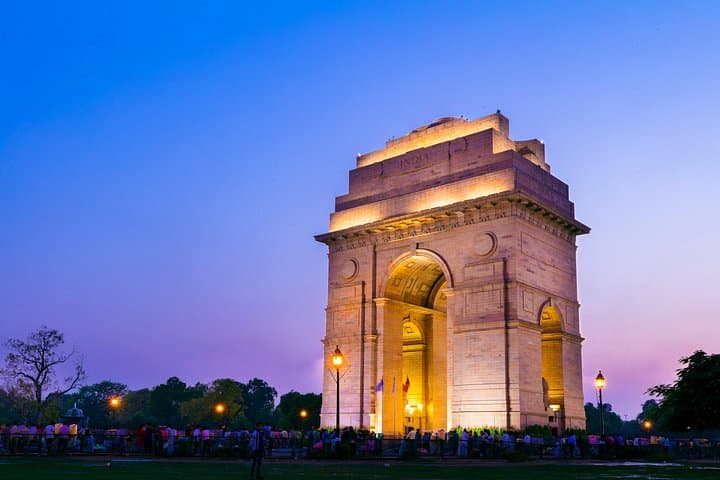

The day begins in Delhi with the city’s layered noises folding around you — honking, prayers, markets — and the Red Fort rising like an old ruler observing the present. Over 17 days you move from the precise symmetry of Mughal gardens to the humid shoreline of Goa, then inland again into Karnataka’s stone country where temples grow from volcanic boulders and rivers dare you to follow their curves.
The day begins in Delhi with the city’s layered noises folding around you — honking, prayers, markets — and the Red Fort rising like an old ruler observing the present. Over 17 days you move from the precise symmetry of Mughal gardens to the humid shoreline of Goa, then inland again into Karnataka’s stone country where temples grow from volcanic boulders and rivers dare you to follow their curves.
This route threads three distinct histories: Mughal north India around Delhi, Agra and Jaipur; Portuguese and coastal Goan culture; and the medieval dynasties of southern Karnataka — Chalukya, Hoysala and Vijayanagara — whose stone carvings and massive ruined cities (Hampi) map a different architectural language. Geologically the Deccan’s volcanic boulder-strewn plains make Hampi’s skyline dramatic, while the Gangetic plains around Agra and Delhi are flat, river-fed, and easy to traverse. Culturally expect temple ritual, bustling bazaars, and regional cuisines that shift from rich Mughlai gravies to coastal seafood and coconut-driven Karnataka fare.
Practical edge: plan for many short drives (3–5 hours typical stretches), two internal flights, and multiple short climbs — Matunga Hill in Hampi and stairways at Badami caves. Carry sun protection, a refillable water bottle, sturdy shoes for uneven rock and temple steps, and modest clothing for religious sites. Early mornings and late afternoons are best for major monuments to avoid heat and crowds. Travel with patience and a sense of rhythm — India moves fast but rewards the traveler who matches its pace.