THE ADVENTURE COLLECTIVE® · Independent discovery and booking for outdoor travel

An 8‑day private loop through Delhi, Agra, Jaipur and Amritsar that pairs Mughal monuments with Sikh heritage. Expect early starts, long drives between cities, and curated access to major sites with a private guide.
An 8‑day private loop through Delhi, Agra, Jaipur and Amritsar that pairs Mughal monuments with Sikh heritage. Expect early starts, long drives between cities, and curated access to major sites with a private guide.
You step from the airport into Delhi's humid evening and the city presses around you — horns, lights, and the distant silhouette of a minaret. Your private vehicle hums away from the airport, giving you a rolling primer: government avenues and colonial facades, the first hint of Mughal domes to come.
Verified experiences and guided adventures in the surrounding area.
Operated by 707 TOURS · New Delhi, Delhi
You step from the airport into Delhi's humid evening and the city presses around you — horns, lights, and the distant silhouette of a minaret. Your private vehicle hums away from the airport, giving you a rolling primer: government avenues and colonial facades, the first hint of Mughal domes to come.
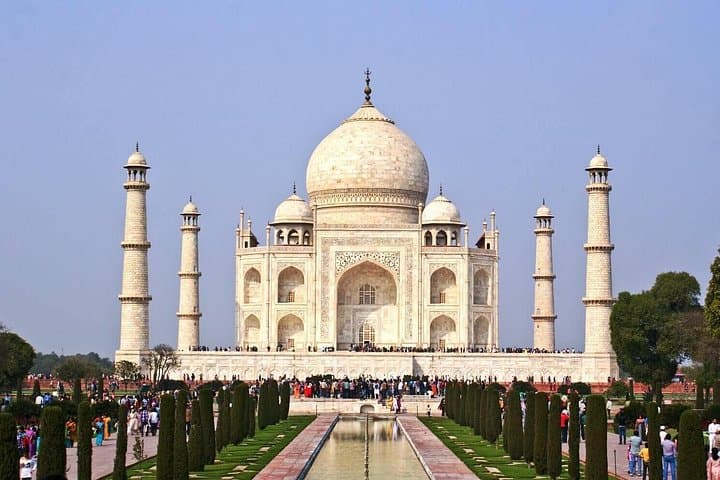
This 8‑day route traces three of northern India’s defining cultural chapters — imperial Delhi, the Taj and Agra’s Mughal mastery, the pink sandstone courts of Jaipur, and the Sikh heart at Amritsar — linked by long, scenic drives and one overnight rail leg. The region sits on the Indo-Gangetic plain; rivers like the Yamuna cut slow, flat corridors that shaped trade and empire, while red sandstone and marble stand as geology made architecture.
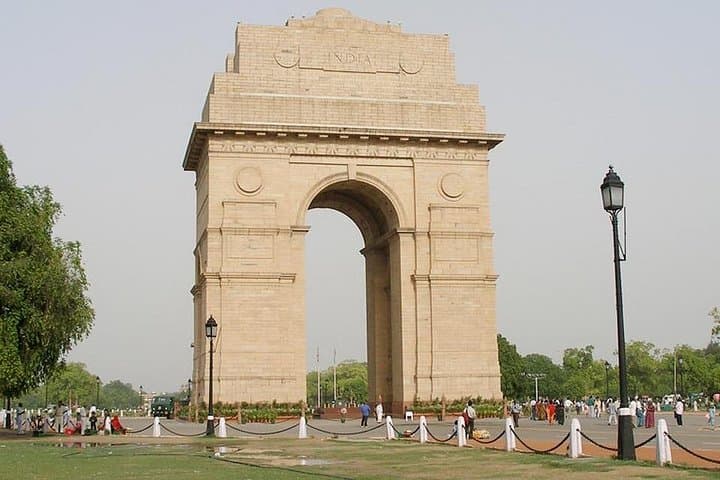
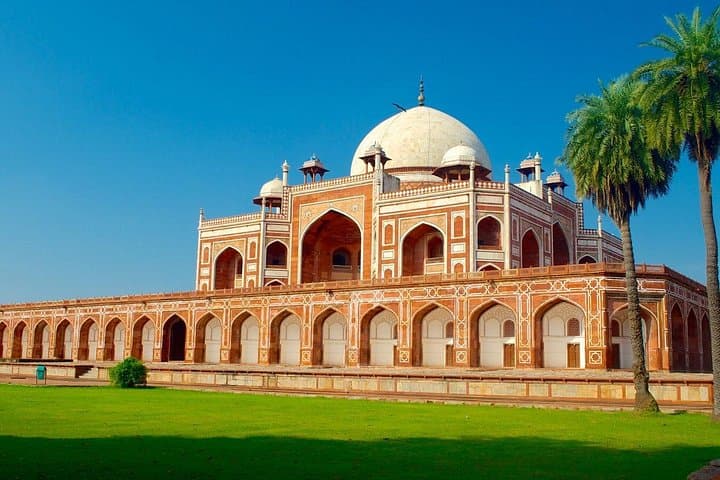
Expect layered history at every stop: imperial tombs commissioned in the 16th–17th centuries, Fatehpur Sikri’s short-lived royal dream, and the 20th‑century weight of Jallianwala Bagh. Evenings bring different rhythms — Jaipur’s bazaars after the sun drops, Wagah’s flag-lowering ceremony where nationalism takes theatrical form.
Practical notes: the tour is low‑impact physically but high in sensory input — plan early starts for major monuments, carry a water bottle and sun protection, and use local cash at small stalls. Modest dress is required at religious sites; comfortable walking shoes are crucial on uneven stone floors. Allow travel windows: Delhi–Agra is ~210 km (roughly 4–5 hours by road), and inner‑city driving can add time. With a private guide and AC transport included, the itinerary balances efficient transfers with time on site — ideal for travelers who want deep cultural exposure without complex logistics.
Entrance fees are typically not included in ground‑level listings; confirm with your operator — popular sites may require separate tickets.
Yes — it’s family‑friendly but can be crowded; arrive early to secure seating and expect loud music and cheering.
Most international visitors require a visa or e‑visa; check your nationality-specific requirements well before travel.
The itinerary notes an AC chair car / 3AC train segment; confirm your ticket class when booking for exact comfort details.
707 TOURS operates guided outdoor trips and adventures with an emphasis on safety, stewardship, and memorable experiences.
You step from the airport into Delhi's humid evening and the city presses around you — horns, lights, and the distant silhouette of a minaret. Your private vehicle hums away from the airport, giving you a rolling primer: government avenues and colonial facades, the first hint of Mughal domes to come.
You step from the airport into Delhi's humid evening and the city presses around you — horns, lights, and the distant silhouette of a minaret. Your private vehicle hums away from the airport, giving you a rolling primer: government avenues and colonial facades, the first hint of Mughal domes to come.
This 8‑day route traces three of northern India’s defining cultural chapters — imperial Delhi, the Taj and Agra’s Mughal mastery, the pink sandstone courts of Jaipur, and the Sikh heart at Amritsar — linked by long, scenic drives and one overnight rail leg. The region sits on the Indo-Gangetic plain; rivers like the Yamuna cut slow, flat corridors that shaped trade and empire, while red sandstone and marble stand as geology made architecture.
Expect layered history at every stop: imperial tombs commissioned in the 16th–17th centuries, Fatehpur Sikri’s short-lived royal dream, and the 20th‑century weight of Jallianwala Bagh. Evenings bring different rhythms — Jaipur’s bazaars after the sun drops, Wagah’s flag-lowering ceremony where nationalism takes theatrical form.
Practical notes: the tour is low‑impact physically but high in sensory input — plan early starts for major monuments, carry a water bottle and sun protection, and use local cash at small stalls. Modest dress is required at religious sites; comfortable walking shoes are crucial on uneven stone floors. Allow travel windows: Delhi–Agra is ~210 km (roughly 4–5 hours by road), and inner‑city driving can add time. With a private guide and AC transport included, the itinerary balances efficient transfers with time on site — ideal for travelers who want deep cultural exposure without complex logistics.