THE ADVENTURE COLLECTIVE® · Independent discovery and booking for outdoor travel

Explore Göreme Open Air Museum with a small-group guide and walk through rock-cut churches, cave dwellings and Byzantine frescoes. This 3.5-hour tour combines a local lunch with guided context on geology, history and art.
Explore Göreme Open Air Museum with a small-group guide and walk through rock-cut churches, cave dwellings and Byzantine frescoes. This 3.5-hour tour combines a local lunch with guided context on geology, history and art.
Morning light spills across chalky towers and honeycombed slopes as small groups thread narrow paths between carved facades — this is the Göreme Open Air Museum, where centuries of monastic life are revealed in frescoed caves and cliffside cells.
Verified experiences and guided adventures in the surrounding area.
Operated by TripGuru · Göreme, Nevşehir
Morning light spills across chalky towers and honeycombed slopes as small groups thread narrow paths between carved facades — this is the Göreme Open Air Museum, where centuries of monastic life are revealed in frescoed caves and cliffside cells.
The site grew from Byzantine-era monastic settlements (9th–13th centuries) that hollowed tuff stone to create churches, refectories and communal quarters. Geologically, the region’s soft volcanic tuff, eroded by wind and water, produced the iconic fairy chimneys and the malleable rock that made cave excavation practical for medieval builders. Culturally, the museum preserves Christian monastic art and daily-life traces from a crossroads of Anatolian and Byzantine influence.
On this small-group guided walk (max 9), expect about 1–2 km of on-foot exploration over uneven stone pathways and short stair sections, with modest elevation changes (roughly 30–80 m total). The guide will explain fresco symbolism, point out notable churches, and place each space in local history. Admission fees are often separate from the tour; the itinerary includes a stop at a neighborhood cafe for lunch before the walking portion.
Practical edge: go early to avoid midday heat and crowds, wear grippy shoes for irregular steps, and bring a refillable water bottle — water is provided but limited. Photography is allowed in many areas but flash is usually prohibited to protect pigments. The route is accessible to most fitness levels but not recommended for guests with serious back or cardiovascular conditions. With clear shoes and a little curiosity, visitors leave with a sharper sense of Cappadocia’s geological drama and the quiet rhythms of monastic life carved directly into the rock.
Admission is often not included; the tour description notes admission may be separate — bring payment for entry if required.
The museum has uneven paths and steps; visitors with serious mobility constraints may find parts of the site difficult to access.
Photography is generally allowed but flash is commonly prohibited to protect historic frescoes — follow guide instructions on restrictions.
This particular tour includes an English-speaking guide; check booking details if you need another language.
TripGuru operates guided outdoor trips and adventures with an emphasis on safety, stewardship, and memorable experiences.
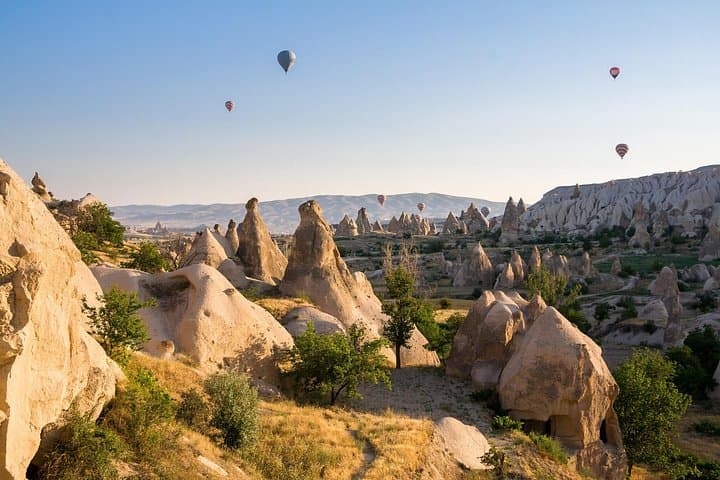


Morning light spills across chalky towers and honeycombed slopes as small groups thread narrow paths between carved facades — this is the Göreme Open Air Museum, where centuries of monastic life are revealed in frescoed caves and cliffside cells.
Morning light spills across chalky towers and honeycombed slopes as small groups thread narrow paths between carved facades — this is the Göreme Open Air Museum, where centuries of monastic life are revealed in frescoed caves and cliffside cells.
The site grew from Byzantine-era monastic settlements (9th–13th centuries) that hollowed tuff stone to create churches, refectories and communal quarters. Geologically, the region’s soft volcanic tuff, eroded by wind and water, produced the iconic fairy chimneys and the malleable rock that made cave excavation practical for medieval builders. Culturally, the museum preserves Christian monastic art and daily-life traces from a crossroads of Anatolian and Byzantine influence.
On this small-group guided walk (max 9), expect about 1–2 km of on-foot exploration over uneven stone pathways and short stair sections, with modest elevation changes (roughly 30–80 m total). The guide will explain fresco symbolism, point out notable churches, and place each space in local history. Admission fees are often separate from the tour; the itinerary includes a stop at a neighborhood cafe for lunch before the walking portion.
Practical edge: go early to avoid midday heat and crowds, wear grippy shoes for irregular steps, and bring a refillable water bottle — water is provided but limited. Photography is allowed in many areas but flash is usually prohibited to protect pigments. The route is accessible to most fitness levels but not recommended for guests with serious back or cardiovascular conditions. With clear shoes and a little curiosity, visitors leave with a sharper sense of Cappadocia’s geological drama and the quiet rhythms of monastic life carved directly into the rock.