THE ADVENTURE COLLECTIVE® · Independent discovery and booking for outdoor travel
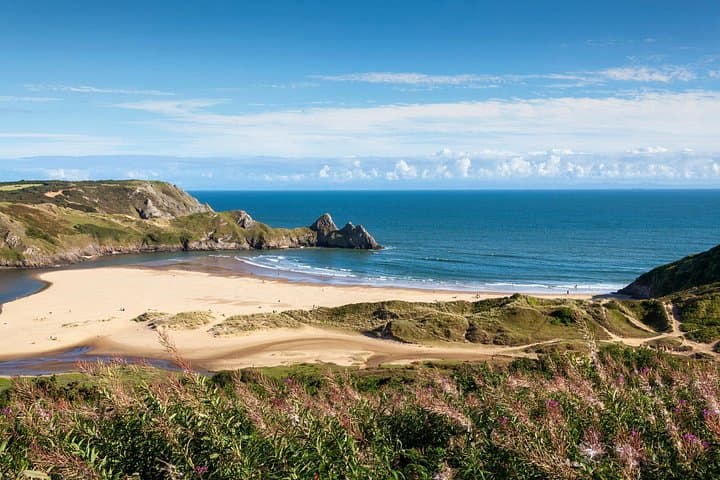
Drive the wild rim of Wales’ Gower Peninsula with short coastal walks to Rhossili, Three Cliffs and the charming Mumbles. This six‑hour tour packs sweeping views, rockpools, and village culture into an accessible day out—perfect for photographers and light hikers.
Drive the wild rim of Wales’ Gower Peninsula with short coastal walks to Rhossili, Three Cliffs and the charming Mumbles. This six‑hour tour packs sweeping views, rockpools, and village culture into an accessible day out—perfect for photographers and light hikers.
You step from the air‑conditioned minivan and the Atlantic breathes salt across the clifftop—sand and surf laid out like a challenge. Rhossili’s broad bay stretches west, Worm’s Head crouches like a lonely guardian, and gulls quarter the wind as if inspecting new arrivals. The tour threads coastal roads and short walks that put dramatic views within reach without demanding a full-day hike.
Verified experiences and guided adventures in the surrounding area.
Operated by Gilky Tours · Swansea, Wales
You step from the air‑conditioned minivan and the Atlantic breathes salt across the clifftop—sand and surf laid out like a challenge. Rhossili’s broad bay stretches west, Worm’s Head crouches like a lonely guardian, and gulls quarter the wind as if inspecting new arrivals. The tour threads coastal roads and short walks that put dramatic views within reach without demanding a full-day hike.
Geology here is blunt and readable: limestone and sandstone cliffs carved by glacial seas, with fossil-rich rocks exposed in rockpools at low tide. The Gower Peninsula earned Britain’s first Area of Outstanding Natural Beauty in 1956, and that protection has preserved both archaeological traces—Neolithic burial chambers—and medieval sites such as Oystermouth Castle that watch over Mumbles village.
Culture on the strand is practical and maritime: working lifeboat stations, seafood cafés, and a Victorian pier that still spins memories on its Ferris wheel. Nature plays a role—seals haul out on rocks, seabirds quarter the sky, and the tide dictates access to Worm’s Head, which “waits” for low tide before admitting walkers.
Practical side: the full itinerary runs roughly six hours with frequent short stops—expect light walking on uneven coastal paths and beach sand. Bring waterproof layers, sturdy shoes, and check tide times if you plan to approach Worm’s Head. Photography windows are broad but lighting shifts fast; mid‑afternoon or late‑day light sharpens cliffs and long shadows. Ask the operator about pickup points and mobility limits; the tour suits travelers with moderate fitness who want maximum coastal scenery on a single, accessible circuit.
The tour lasts about six hours and uses an air‑conditioned vehicle with frequent short stops, including 15–60 minute visits at major viewpoints—expect light walking at each stop.
Worm’s Head is accessible only at low tide via a tidal causeway—check tide times and follow local guidance; if tides don’t permit, you can still view it safely from the clifftop.
Pickup options vary; the operator asks for pickup point details when booking—confirm your pickup location in advance.
Some stops, like Rhossili village and Mumbles, have cafés and toilets; bring water and snacks for shorter stops where facilities are limited.
Gilky Tours operates guided outdoor trips and adventures with an emphasis on safety, stewardship, and memorable experiences.
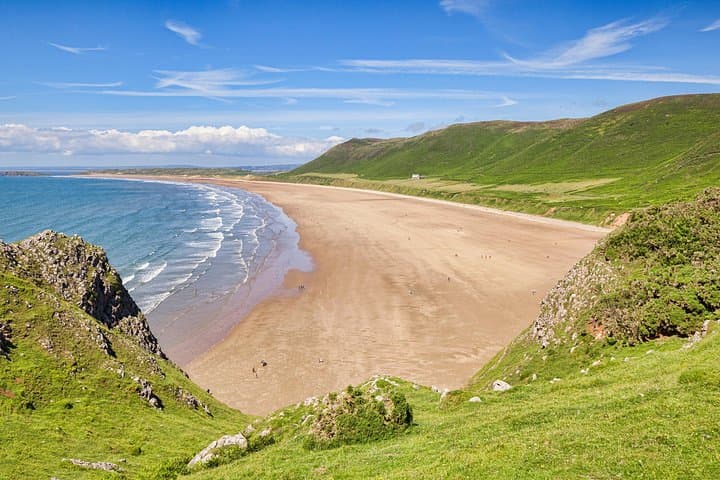
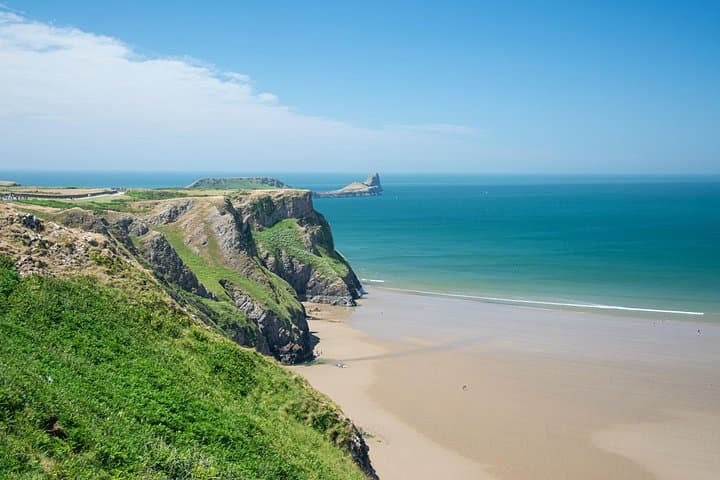
You step from the air‑conditioned minivan and the Atlantic breathes salt across the clifftop—sand and surf laid out like a challenge. Rhossili’s broad bay stretches west, Worm’s Head crouches like a lonely guardian, and gulls quarter the wind as if inspecting new arrivals. The tour threads coastal roads and short walks that put dramatic views within reach without demanding a full-day hike.
You step from the air‑conditioned minivan and the Atlantic breathes salt across the clifftop—sand and surf laid out like a challenge. Rhossili’s broad bay stretches west, Worm’s Head crouches like a lonely guardian, and gulls quarter the wind as if inspecting new arrivals. The tour threads coastal roads and short walks that put dramatic views within reach without demanding a full-day hike.
Geology here is blunt and readable: limestone and sandstone cliffs carved by glacial seas, with fossil-rich rocks exposed in rockpools at low tide. The Gower Peninsula earned Britain’s first Area of Outstanding Natural Beauty in 1956, and that protection has preserved both archaeological traces—Neolithic burial chambers—and medieval sites such as Oystermouth Castle that watch over Mumbles village.
Culture on the strand is practical and maritime: working lifeboat stations, seafood cafés, and a Victorian pier that still spins memories on its Ferris wheel. Nature plays a role—seals haul out on rocks, seabirds quarter the sky, and the tide dictates access to Worm’s Head, which “waits” for low tide before admitting walkers.
Practical side: the full itinerary runs roughly six hours with frequent short stops—expect light walking on uneven coastal paths and beach sand. Bring waterproof layers, sturdy shoes, and check tide times if you plan to approach Worm’s Head. Photography windows are broad but lighting shifts fast; mid‑afternoon or late‑day light sharpens cliffs and long shadows. Ask the operator about pickup points and mobility limits; the tour suits travelers with moderate fitness who want maximum coastal scenery on a single, accessible circuit.
