THE ADVENTURE COLLECTIVE® · Independent discovery and booking for outdoor travel

Run some of the world's most demanding rapids below Victoria Falls in the Batoka Gorge. This full‑day Grade 5 rafting trip combines technical white water, basalt canyon scenery, and a strict safety-first approach.
Run some of the world's most demanding rapids below Victoria Falls in the Batoka Gorge. This full‑day Grade 5 rafting trip combines technical white water, basalt canyon scenery, and a strict safety-first approach.
The river roars before you see the falls. Paddles dip into cold, rushing water as the Zambezi accelerates out of the Victoria Falls plunge and into the Batoka Gorge—this is where Grade 5 rapids carve their reputation.
Verified experiences and guided adventures in the surrounding area.
Operated by To do Africa · Victoria Falls, Matabeleland North
The river roars before you see the falls. Paddles dip into cold, rushing water as the Zambezi accelerates out of the Victoria Falls plunge and into the Batoka Gorge—this is where Grade 5 rapids carve their reputation.
The gorge was first navigated in the early 1980s; the rapids carry names born of those first runs and the geology that shapes them. Basalt cliffs, sliced by the Zambezi over millennia, create tight constrictions and boiling eddies that test boats and bodies. Locally, the river is central to Tonga and other communities—fishing, seasonal floods and the falls themselves shaped livelihoods long before commercial rafting arrived.
Expect a full-day operation: hotel pickup in Victoria Falls, safety briefings, and a demanding climb into the gorge before long stretches of continuous, technical rapids. Guides use precise commands; teamwork is non-negotiable. The scenery alternates between shear rock walls and sudden pockets of calm where fish eagles watch from branches.
Practically: trips run outside the low-flow window of March–August; operators provide helmets, lifejackets and lunch. Bring secure footwear, sun protection and waterproofed essentials. Hydration and a conservative mindset are crucial—this is expert-level white water that requires strong swimming ability and fitness.
If you go, time your run for a clear morning and allow a recovery window afterward—both for fatigue and to watch the spray-lit falls from the gorge rim. Respect guides, follow safety briefings, and you’ll leave with the kind of river-earned stories that don’t feel made up.
Commercial runs operate outside the low-flow window; rafting is typically closed from March through August—book for high-water months when rapids are at Grade 5 intensity.
Minimum age is usually 15; participants should have a high level of physical fitness and be comfortable swimming in strong currents.
Operators supply helmets, lifejackets and safety briefings; guides are professionally trained and lead river rescues if necessary.
Weather rarely cancels—river conditions and safety drive decisions; cancel at least 24 hours beforehand for a full refund per many operators' policies.
To do Africa operates guided outdoor trips and adventures with an emphasis on safety, stewardship, and memorable experiences.


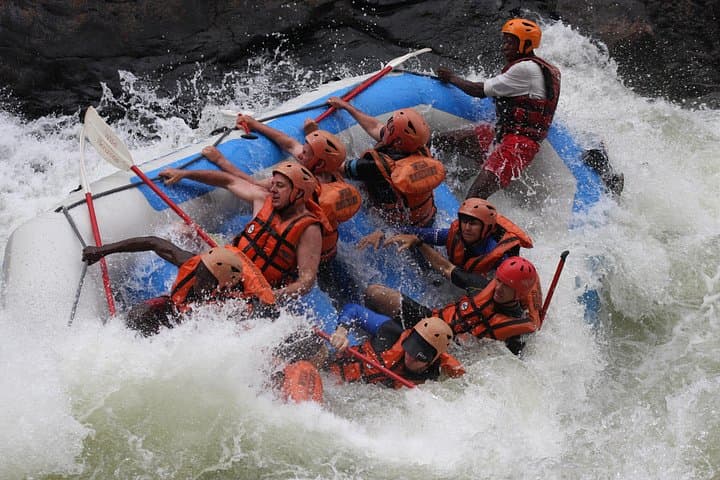

The river roars before you see the falls. Paddles dip into cold, rushing water as the Zambezi accelerates out of the Victoria Falls plunge and into the Batoka Gorge—this is where Grade 5 rapids carve their reputation.
The river roars before you see the falls. Paddles dip into cold, rushing water as the Zambezi accelerates out of the Victoria Falls plunge and into the Batoka Gorge—this is where Grade 5 rapids carve their reputation.
The gorge was first navigated in the early 1980s; the rapids carry names born of those first runs and the geology that shapes them. Basalt cliffs, sliced by the Zambezi over millennia, create tight constrictions and boiling eddies that test boats and bodies. Locally, the river is central to Tonga and other communities—fishing, seasonal floods and the falls themselves shaped livelihoods long before commercial rafting arrived.
Expect a full-day operation: hotel pickup in Victoria Falls, safety briefings, and a demanding climb into the gorge before long stretches of continuous, technical rapids. Guides use precise commands; teamwork is non-negotiable. The scenery alternates between shear rock walls and sudden pockets of calm where fish eagles watch from branches.
Practically: trips run outside the low-flow window of March–August; operators provide helmets, lifejackets and lunch. Bring secure footwear, sun protection and waterproofed essentials. Hydration and a conservative mindset are crucial—this is expert-level white water that requires strong swimming ability and fitness.
If you go, time your run for a clear morning and allow a recovery window afterward—both for fatigue and to watch the spray-lit falls from the gorge rim. Respect guides, follow safety briefings, and you’ll leave with the kind of river-earned stories that don’t feel made up.