THE ADVENTURE COLLECTIVE® · Independent discovery and booking for outdoor travel

Cross Crete to a duo of coastal spectacles: the craggy Venetian fortress of Gramvousa and the shoal-blue lagoon of Balos. This full-day boat-and-bus trip offers swimming, soft sand and a raw coastal landscape — with limited facilities and a full-day time commitment.
Cross Crete to a duo of coastal spectacles: the craggy Venetian fortress of Gramvousa and the shoal-blue lagoon of Balos. This full-day boat-and-bus trip offers swimming, soft sand and a raw coastal landscape — with limited facilities and a full-day time commitment.
On a bright morning the bus eases west across Crete, olive groves and low stone walls sliding by as the road narrows toward the port of Kissamos. The boat pushes off; wind and waves rim the hull, and Gramvousa rises — a rocky isle crowned by a battered Venetian fortress. A short crossing later Balos Bay unfurls: a shallow lagoon of green and blue, a pale sand spit that seems to float on the Aegean.
Verified experiences and guided adventures in the surrounding area.
Operated by PLATANOS TOURS · Kissamos, Crete
On a bright morning the bus eases west across Crete, olive groves and low stone walls sliding by as the road narrows toward the port of Kissamos. The boat pushes off; wind and waves rim the hull, and Gramvousa rises — a rocky isle crowned by a battered Venetian fortress. A short crossing later Balos Bay unfurls: a shallow lagoon of green and blue, a pale sand spit that seems to float on the Aegean.
Gramvousa’s fortress dates to the 16th century, built to watch Ottoman approaches and later used by pirates; its weathered ramparts give human history a hard edge against the island’s limestone crags. Balos is geomorphology in motion — longshore currents depositing sand and shell to form a protected lagoon whose clear shallows shelter Posidonia seagrass beds and marine life. Local culture stays close to the sea: small fishing communities around Kissamos still serve fresh catch and simple, bracing raki.
Facilities are minimal: a few umbrellas and a kiosk during high season, but no developed infrastructure; that’s part of the attraction and the challenge. Plan for sun, salt and uneven walking where rock meets sand. Swim in the shallow lagoon where currents ease, and keep an eye on the tide and wind on the return crossing.
Practical guidance: bring reef-safe sunscreen, plenty of water, sturdy sandals for rocky steps, and cash for rentals. Confirm pickup times with the operator, travel prepared for a 10-hour day, and expect photographs with the late-afternoon light backlit over the lagoon.
The tour departs from Kissamos port with hotel pickups arranged from Heraklion and other central meeting points; confirm your exact pickup time and location after booking.
Facilities are minimal: seasonal umbrellas and a small kiosk may operate in high season; bring cash for rentals and snacks and consider packing lunch if you prefer options.
The short boat crossing can be choppy depending on wind; if you are prone to seasickness take preventive measures and choose morning departures when seas are usually calmer.
Yes — most operators stop at Gramvousa allowing time to climb to the Venetian fortress, but be prepared for steep, rocky steps and bring appropriate footwear.
PLATANOS TOURS operates guided outdoor trips and adventures with an emphasis on safety, stewardship, and memorable experiences.
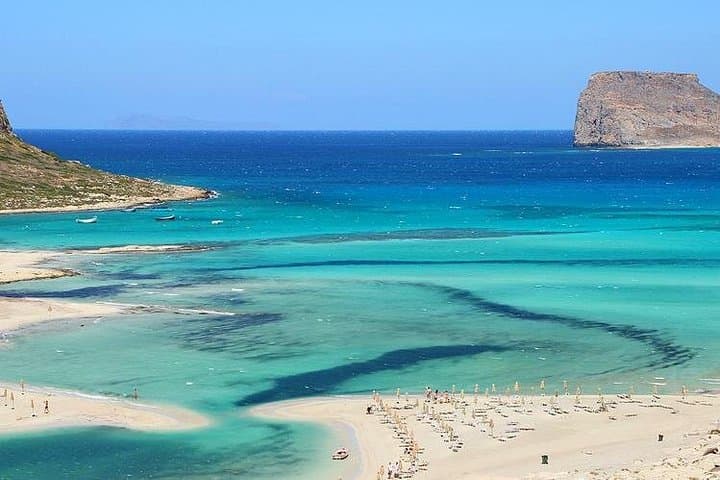


On a bright morning the bus eases west across Crete, olive groves and low stone walls sliding by as the road narrows toward the port of Kissamos. The boat pushes off; wind and waves rim the hull, and Gramvousa rises — a rocky isle crowned by a battered Venetian fortress. A short crossing later Balos Bay unfurls: a shallow lagoon of green and blue, a pale sand spit that seems to float on the Aegean.
On a bright morning the bus eases west across Crete, olive groves and low stone walls sliding by as the road narrows toward the port of Kissamos. The boat pushes off; wind and waves rim the hull, and Gramvousa rises — a rocky isle crowned by a battered Venetian fortress. A short crossing later Balos Bay unfurls: a shallow lagoon of green and blue, a pale sand spit that seems to float on the Aegean.
Gramvousa’s fortress dates to the 16th century, built to watch Ottoman approaches and later used by pirates; its weathered ramparts give human history a hard edge against the island’s limestone crags. Balos is geomorphology in motion — longshore currents depositing sand and shell to form a protected lagoon whose clear shallows shelter Posidonia seagrass beds and marine life. Local culture stays close to the sea: small fishing communities around Kissamos still serve fresh catch and simple, bracing raki.
Facilities are minimal: a few umbrellas and a kiosk during high season, but no developed infrastructure; that’s part of the attraction and the challenge. Plan for sun, salt and uneven walking where rock meets sand. Swim in the shallow lagoon where currents ease, and keep an eye on the tide and wind on the return crossing.
Practical guidance: bring reef-safe sunscreen, plenty of water, sturdy sandals for rocky steps, and cash for rentals. Confirm pickup times with the operator, travel prepared for a 10-hour day, and expect photographs with the late-afternoon light backlit over the lagoon.