THE ADVENTURE COLLECTIVE® · Independent discovery and booking for outdoor travel

Spend a full day tracing Egypt’s oldest stories: first the Grand Egyptian Museum’s curated halls and Tutankhamun’s treasures, then the wind-swept Giza Plateau where the pyramids and Sphinx reign. This private tour pairs expert interpretation with practical pacing to make the most of a single, memorable day.
Spend a full day tracing Egypt’s oldest stories: first the Grand Egyptian Museum’s curated halls and Tutankhamun’s treasures, then the wind-swept Giza Plateau where the pyramids and Sphinx reign. This private tour pairs expert interpretation with practical pacing to make the most of a single, memorable day.
You step out of an air-conditioned car into a pale, sunlit plaza where modern glass and ancient stone meet. At the Grand Egyptian Museum, light falls across rows of artifacts; helmets of pharaohs catch the gleam like small suns. Later, on the Giza Plateau, the desert opens and the three pyramids stand like enormous, patient machines — their edges slicing the sky as sand moves quietly at their feet.
Verified experiences and guided adventures in the surrounding area.
Operated by Travel Gate Tours · Giza, Cairo Governorate
You step out of an air-conditioned car into a pale, sunlit plaza where modern glass and ancient stone meet. At the Grand Egyptian Museum, light falls across rows of artifacts; helmets of pharaohs catch the gleam like small suns. Later, on the Giza Plateau, the desert opens and the three pyramids stand like enormous, patient machines — their edges slicing the sky as sand moves quietly at their feet.
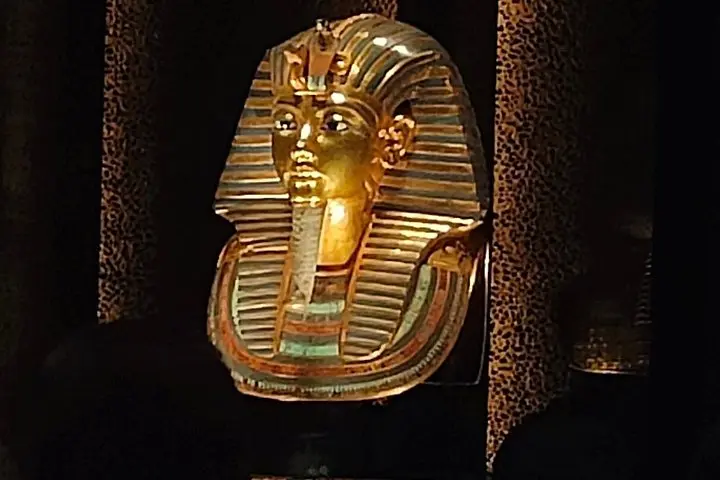
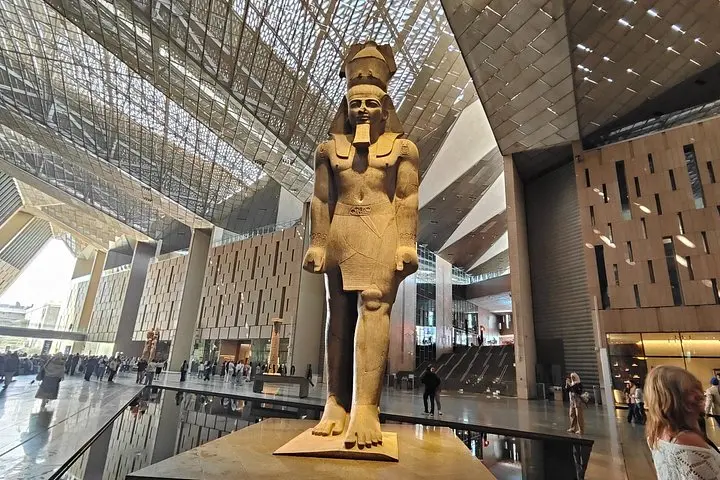
The museum houses thousands of objects, including the Tutankhamun collection and the monumental statue of Ramses II, offering a concentrated lesson in New Kingdom power. The Giza Plateau is built on a bedrock of limestone and ancient quarry scars; Khufu’s pyramid, erected in the 4th Dynasty, still provokes engineering questions 4,500 years on. Culturally, the sites map a continuity between modern Cairo and its pharaonic past — vendors, guides, and local craftsmen form a human thread that connects antiquity to present-day life.
Practical guidance: allow 6–8 hours for pickup in Cairo, museum time, and a measured visit to the Plateau. Start early to avoid midafternoon heat and aim for mornings at the Panoramic Point for photos. Dress conservatively for culturally sensitive sites and bring sun protection — hats, sunscreen, and a refillable water bottle. Tickets for the GEM and pyramid entries can be handled by your guide but confirm inclusions before booking. Expect flat walking surfaces inside the museum and uneven, sandy terrain on the Plateau; comfortable walking shoes are a must. Plan for modest bargaining at photo-ops and optional extras like a short camel ride. With preparation, the day combines interpretive depth in the museum with the raw, open drama of the pyramids.
Some tour options include entrance fees while others charge them as add-ons—confirm with your provider and carry cash or card if needed.
Yes; the itinerary is rated easy and infants may sit on an adult’s lap, but plan for heat and keep a close eye around roadways and the Plateau edges.
Access inside the Great Pyramid is restricted and sometimes limited; entry usually requires an additional ticket and is subject to availability and preservation rules.
Photography for personal use is generally allowed; tripods and professional equipment may require permits—check rules at each site and respect areas where flash or tripods are prohibited.
Travel Gate Tours operates guided outdoor trips and adventures with an emphasis on safety, stewardship, and memorable experiences.
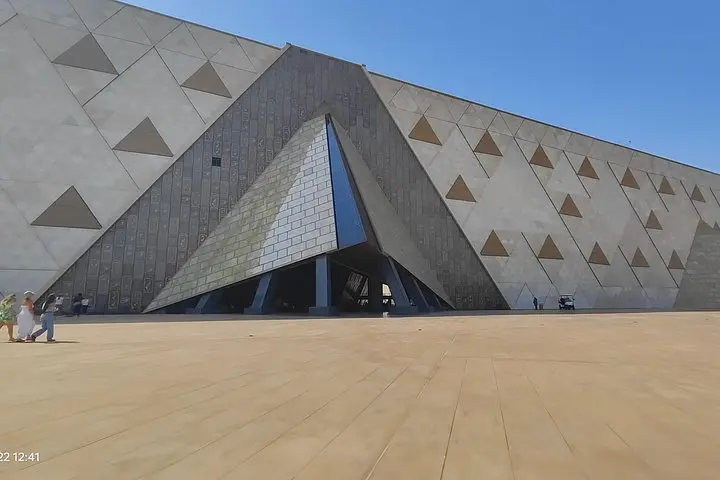
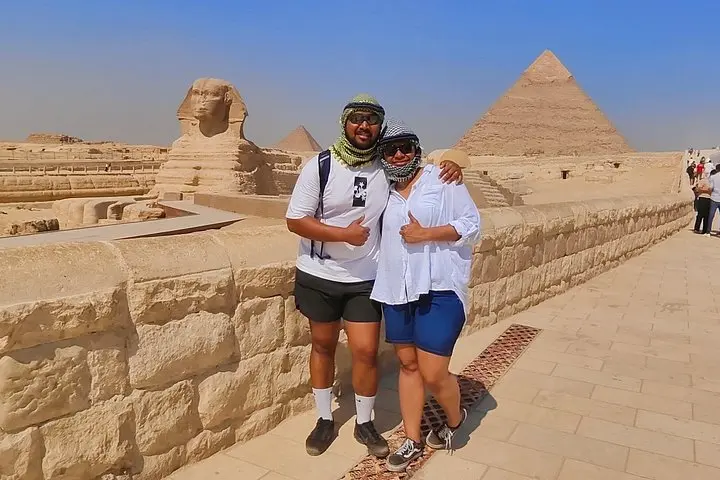
You step out of an air-conditioned car into a pale, sunlit plaza where modern glass and ancient stone meet. At the Grand Egyptian Museum, light falls across rows of artifacts; helmets of pharaohs catch the gleam like small suns. Later, on the Giza Plateau, the desert opens and the three pyramids stand like enormous, patient machines — their edges slicing the sky as sand moves quietly at their feet.
You step out of an air-conditioned car into a pale, sunlit plaza where modern glass and ancient stone meet. At the Grand Egyptian Museum, light falls across rows of artifacts; helmets of pharaohs catch the gleam like small suns. Later, on the Giza Plateau, the desert opens and the three pyramids stand like enormous, patient machines — their edges slicing the sky as sand moves quietly at their feet.
The museum houses thousands of objects, including the Tutankhamun collection and the monumental statue of Ramses II, offering a concentrated lesson in New Kingdom power. The Giza Plateau is built on a bedrock of limestone and ancient quarry scars; Khufu’s pyramid, erected in the 4th Dynasty, still provokes engineering questions 4,500 years on. Culturally, the sites map a continuity between modern Cairo and its pharaonic past — vendors, guides, and local craftsmen form a human thread that connects antiquity to present-day life.
Practical guidance: allow 6–8 hours for pickup in Cairo, museum time, and a measured visit to the Plateau. Start early to avoid midafternoon heat and aim for mornings at the Panoramic Point for photos. Dress conservatively for culturally sensitive sites and bring sun protection — hats, sunscreen, and a refillable water bottle. Tickets for the GEM and pyramid entries can be handled by your guide but confirm inclusions before booking. Expect flat walking surfaces inside the museum and uneven, sandy terrain on the Plateau; comfortable walking shoes are a must. Plan for modest bargaining at photo-ops and optional extras like a short camel ride. With preparation, the day combines interpretive depth in the museum with the raw, open drama of the pyramids.