THE ADVENTURE COLLECTIVE® · Independent discovery and booking for outdoor travel

Pair a world-class museum visit with a short camel ride on the Giza Plateau. This private half-day tour blends climate-controlled galleries of ancient artifacts with a sensory desert ride and sweeping pyramid views.
Pair a world-class museum visit with a short camel ride on the Giza Plateau. This private half-day tour blends climate-controlled galleries of ancient artifacts with a sensory desert ride and sweeping pyramid views.
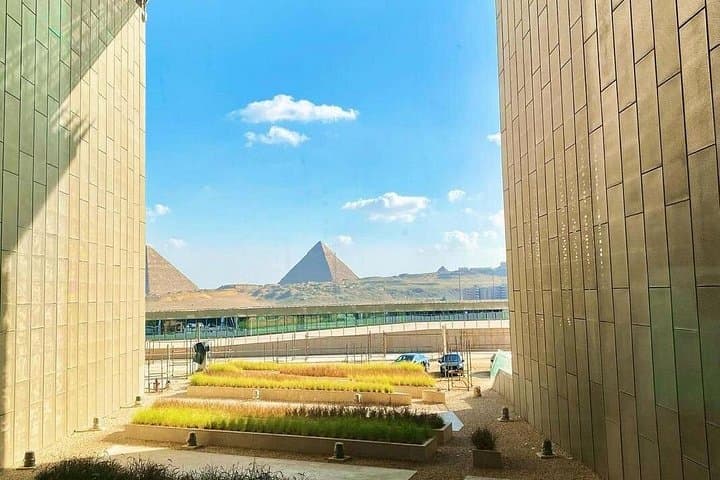
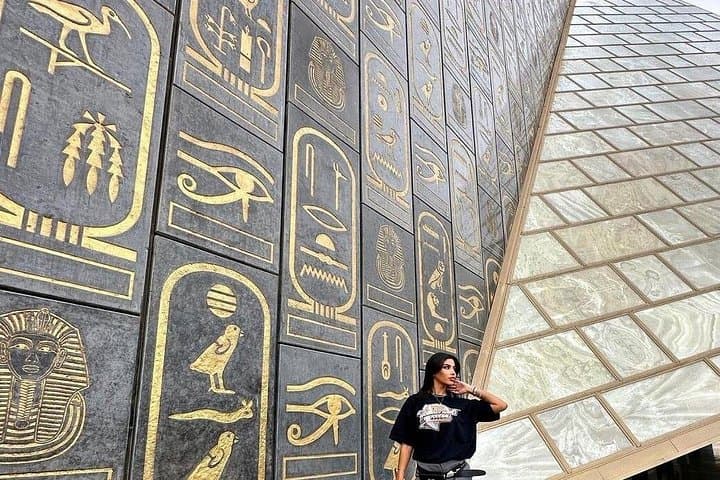
Sand and glass meet at the edge of the desert: a low, modern museum façade frames the silhouette of the Pyramids as the city’s heat hums in the distance. Start inside climate-controlled galleries where limestone, gold and cedar speak in precise labels — corridors of King Tutankhamun’s treasures lead to casts, reliefs and the slow quiet of conservation labs.
Verified experiences and guided adventures in the surrounding area.
Operated by Egypt Royal Tours · Giza, Giza Governorate
Sand and glass meet at the edge of the desert: a low, modern museum façade frames the silhouette of the Pyramids as the city’s heat hums in the distance. Start inside climate-controlled galleries where limestone, gold and cedar speak in precise labels — corridors of King Tutankhamun’s treasures lead to casts, reliefs and the slow quiet of conservation labs.
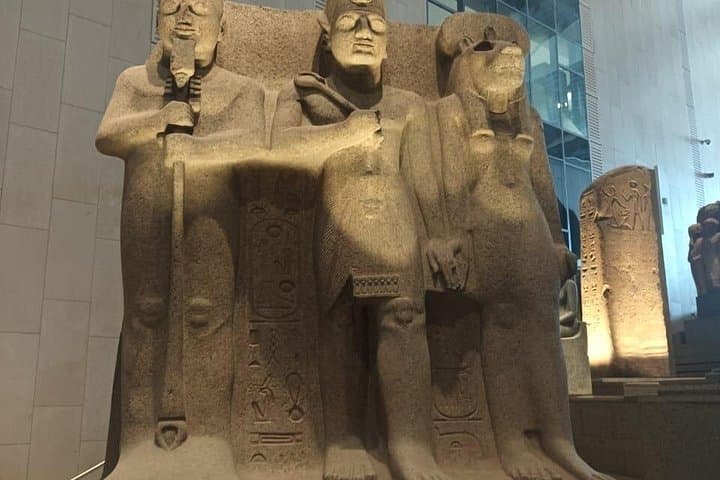
The Grand Egyptian Museum (GEM) is a recent insertion into a landscape dominated by millennia: it collects more than 100,000 artifacts and places the Giza Plateau in a single curated line from Old Kingdom tomb building to New Kingdom opulence. Geologically the plateau is a limestone cap on which the pyramids were quarried; culturally it remains a place of pilgrimage, commerce and daily life around monumental stone.
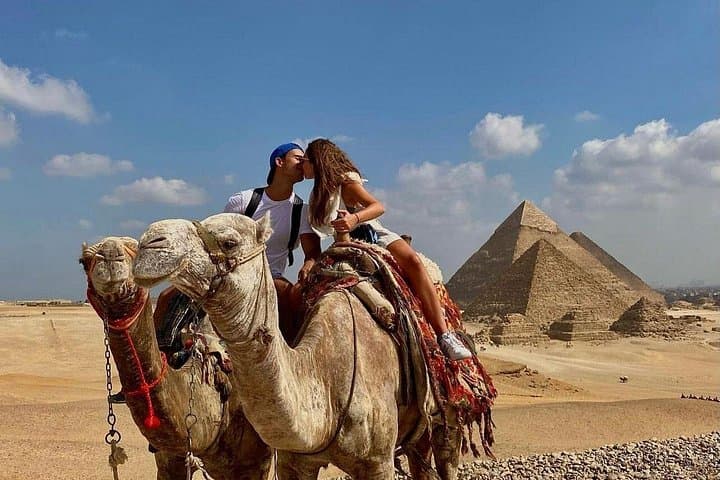
After the museum, the tour moves outdoors: a short drive across the plateau brings riders to camels waiting against wind-swept sand. The camel ride is brief but cinematic — the animal’s steady gait and the slanting light make for distinctive photos and a tactile sense of how transport once moved across this landscape.
Practical guidance: plan for 4–5 hours including transfers, start around midday for the museum’s quieter hours if heat is a concern, and bring sun protection and comfortable shoes for both polished museum floors and uneven desert sand. Allow time to pause on the GEM terrace for pyramid views and keep water accessible — the desert pushes quickly when the sun climbs.
Yes, the tour includes museum admission as part of the itinerary.
Yes; rides are introductory, supervised, and brief—suitable for riders without prior experience.
Yes, private transfers from and to Cairo-area hotels are included in the tour price.
The tour notes wheelchair accessibility for parts of the museum, but the camel ride and some plateau surfaces are not suitable for wheelchairs.
Egypt Royal Tours operates guided outdoor trips and adventures with an emphasis on safety, stewardship, and memorable experiences.
Sand and glass meet at the edge of the desert: a low, modern museum façade frames the silhouette of the Pyramids as the city’s heat hums in the distance. Start inside climate-controlled galleries where limestone, gold and cedar speak in precise labels — corridors of King Tutankhamun’s treasures lead to casts, reliefs and the slow quiet of conservation labs.
Sand and glass meet at the edge of the desert: a low, modern museum façade frames the silhouette of the Pyramids as the city’s heat hums in the distance. Start inside climate-controlled galleries where limestone, gold and cedar speak in precise labels — corridors of King Tutankhamun’s treasures lead to casts, reliefs and the slow quiet of conservation labs.
The Grand Egyptian Museum (GEM) is a recent insertion into a landscape dominated by millennia: it collects more than 100,000 artifacts and places the Giza Plateau in a single curated line from Old Kingdom tomb building to New Kingdom opulence. Geologically the plateau is a limestone cap on which the pyramids were quarried; culturally it remains a place of pilgrimage, commerce and daily life around monumental stone.
After the museum, the tour moves outdoors: a short drive across the plateau brings riders to camels waiting against wind-swept sand. The camel ride is brief but cinematic — the animal’s steady gait and the slanting light make for distinctive photos and a tactile sense of how transport once moved across this landscape.
Practical guidance: plan for 4–5 hours including transfers, start around midday for the museum’s quieter hours if heat is a concern, and bring sun protection and comfortable shoes for both polished museum floors and uneven desert sand. Allow time to pause on the GEM terrace for pyramid views and keep water accessible — the desert pushes quickly when the sun climbs.