THE ADVENTURE COLLECTIVE® · Independent discovery and booking for outdoor travel

Climb aboard a six-hour cruise that threads the treacherous midchannel of Delaware Bay, passing seven offshore lighthouses and the living history behind them. Expect narrated storytelling, close-up views of iron and masonry towers, and regular wildlife sightings.
Climb aboard a six-hour cruise that threads the treacherous midchannel of Delaware Bay, passing seven offshore lighthouses and the living history behind them. Expect narrated storytelling, close-up views of iron and masonry towers, and regular wildlife sightings.
You step onto the salt-slick deck just as Cape May’s breakwater sighs and the harbor lets you out. The boat noses into open water, and the mainland shrinks to a strip of Victorian rooftops and a single, familiar silhouette of Cape May Lighthouse. Ahead, a string of iron and masonry towers rise from sandbars and shoals—distant sentinels that have marked the shifting throat of Delaware Bay for more than a century.
Verified experiences and guided adventures in the surrounding area.
Operated by Cape May Whale Watcher INC · Cape May, New Jersey
You step onto the salt-slick deck just as Cape May’s breakwater sighs and the harbor lets you out. The boat noses into open water, and the mainland shrinks to a strip of Victorian rooftops and a single, familiar silhouette of Cape May Lighthouse. Ahead, a string of iron and masonry towers rise from sandbars and shoals—distant sentinels that have marked the shifting throat of Delaware Bay for more than a century.
The Grand Lighthouse Tour is a six-hour spin across a working estuary where geology and maritime history conspire to keep captains alert. The lighthouses you pass were raised in the 19th and early 20th centuries to warn ships away from the midchannel’s shoals and hazardous bars. Many were originally manned by keepers whose lives were governed by the light’s rotation and the rope-and-winch routine of fuel and maintenance. Automation retired most keepers, but the lights continue doing the job—sturdy, mechanical, uncomplaining.
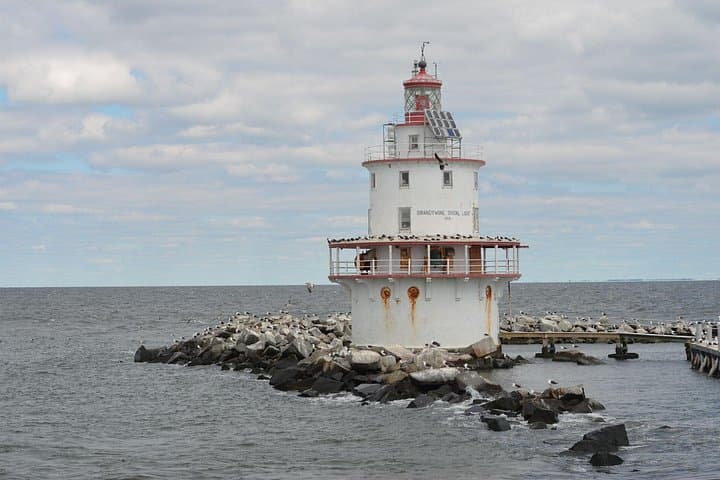
Delaware Bay itself is a place of suspended motion: tidal pulses push and pull sand, carving new shoals and exposing old ones. That geology is why the lights sit off shore on cast-iron caissons, granite foundations, or timber cribs—each one adapted to a particular bottom and current.
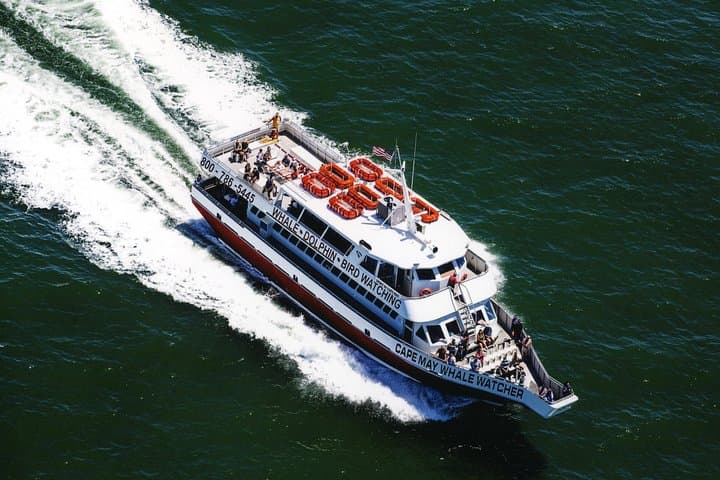
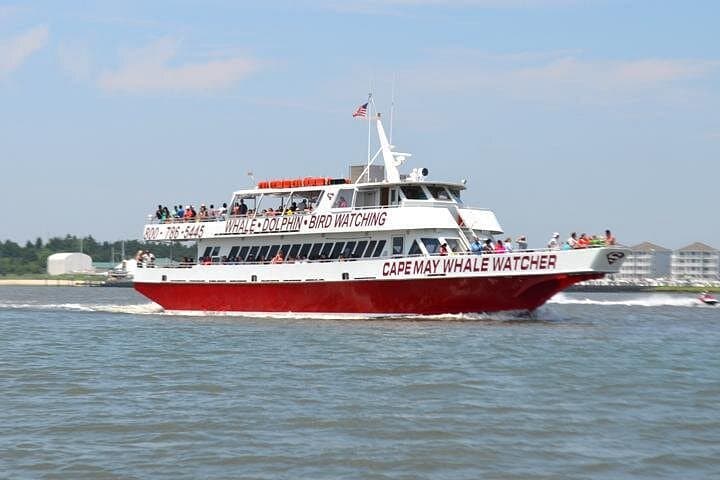
Culturally, the cruise stitches together local stories—maritime commerce that fed Philadelphia, wartime watchfulness during the World Wars, and the almost-romantic stubbornness of lighthouse keepers’ families who lived in tiny houses on exposed spits. The Cape May Whale Watcher company has been making these runs since 1994, layering narration over steel and swell so visitors understand why these lights matter.
Practicalities: the tour runs roughly 6 hours and includes breakfast and lunch. Boarding is at the Cape May harbor ticket booth—bring your voucher to swap for a boarding pass. The vessel is wheelchair accessible and suitable for most fitness levels, but expect sustained open-ocean wind and spray. Seasickness is common for first-timers; take antiemetics or choose a mid-deck seat where motion feels milder.
Photography and wildlife: bring binoculars and a windproof jacket. Dolphins and migratory sea birds are regulars; seasonally you might spot humpback whales beyond the shipping lanes. For photos, the bow delivers drama; the stern deck gives context with Cape May receding in the frame.
Timing and tips: arrive 30 minutes early for boarding, layer clothing (windproof outer, warm mid-layer), and stow valuables in waterproof bags. Narration covers seven lighthouses and local history, but this is also a sensory trip—sea air that insists you pay attention and steel beacons that keep their slow, steady watch.
The cruise lasts approximately six hours, including narrated passages and time spent near multiple offshore lighthouses.
Yes. The operator lists wheelchair-accessible transportation and surfaces; confirm any special assistance needs when booking.
Yes. The tour includes breakfast and lunch as listed in the inclusions.
No—this is a sightseeing cruise that passes offshore lighthouses. There are no shore landings at the offshore lights.
Expect dolphins and a wide variety of seabirds; seasonal whale sightings are possible, particularly in late summer and fall.
Take preventive medication, sit mid-ship, focus on the horizon, and avoid heavy meals immediately before boarding.
Cape May Whale Watcher INC operates guided outdoor trips and adventures with an emphasis on safety, stewardship, and memorable experiences.
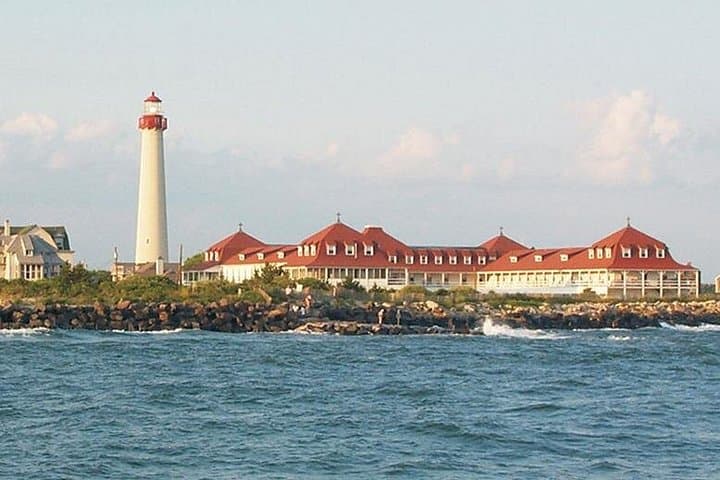
You step onto the salt-slick deck just as Cape May’s breakwater sighs and the harbor lets you out. The boat noses into open water, and the mainland shrinks to a strip of Victorian rooftops and a single, familiar silhouette of Cape May Lighthouse. Ahead, a string of iron and masonry towers rise from sandbars and shoals—distant sentinels that have marked the shifting throat of Delaware Bay for more than a century.
You step onto the salt-slick deck just as Cape May’s breakwater sighs and the harbor lets you out. The boat noses into open water, and the mainland shrinks to a strip of Victorian rooftops and a single, familiar silhouette of Cape May Lighthouse. Ahead, a string of iron and masonry towers rise from sandbars and shoals—distant sentinels that have marked the shifting throat of Delaware Bay for more than a century.
The Grand Lighthouse Tour is a six-hour spin across a working estuary where geology and maritime history conspire to keep captains alert. The lighthouses you pass were raised in the 19th and early 20th centuries to warn ships away from the midchannel’s shoals and hazardous bars. Many were originally manned by keepers whose lives were governed by the light’s rotation and the rope-and-winch routine of fuel and maintenance. Automation retired most keepers, but the lights continue doing the job—sturdy, mechanical, uncomplaining.
Delaware Bay itself is a place of suspended motion: tidal pulses push and pull sand, carving new shoals and exposing old ones. That geology is why the lights sit off shore on cast-iron caissons, granite foundations, or timber cribs—each one adapted to a particular bottom and current.
Culturally, the cruise stitches together local stories—maritime commerce that fed Philadelphia, wartime watchfulness during the World Wars, and the almost-romantic stubbornness of lighthouse keepers’ families who lived in tiny houses on exposed spits. The Cape May Whale Watcher company has been making these runs since 1994, layering narration over steel and swell so visitors understand why these lights matter.
Practicalities: the tour runs roughly 6 hours and includes breakfast and lunch. Boarding is at the Cape May harbor ticket booth—bring your voucher to swap for a boarding pass. The vessel is wheelchair accessible and suitable for most fitness levels, but expect sustained open-ocean wind and spray. Seasickness is common for first-timers; take antiemetics or choose a mid-deck seat where motion feels milder.
Photography and wildlife: bring binoculars and a windproof jacket. Dolphins and migratory sea birds are regulars; seasonally you might spot humpback whales beyond the shipping lanes. For photos, the bow delivers drama; the stern deck gives context with Cape May receding in the frame.
Timing and tips: arrive 30 minutes early for boarding, layer clothing (windproof outer, warm mid-layer), and stow valuables in waterproof bags. Narration covers seven lighthouses and local history, but this is also a sensory trip—sea air that insists you pay attention and steel beacons that keep their slow, steady watch.