THE ADVENTURE COLLECTIVE® · Independent discovery and booking for outdoor travel

Soar over Canyonlands for an hour and see Dead Horse Point, Castleton Tower, Potash Ponds and hidden backcountry features from a helmeted vantage. This 60-minute heli tour blends geology, local history and expert narration—ideal for travelers who want the big-picture view in a single flight.
Soar over Canyonlands for an hour and see Dead Horse Point, Castleton Tower, Potash Ponds and hidden backcountry features from a helmeted vantage. This 60-minute heli tour blends geology, local history and expert narration—ideal for travelers who want the big-picture view in a single flight.
You lift off from a small desert apron and the town of Moab shrinks into a patchwork of red roofs and sage-gray flats. The helicopter climbs with a hush, the valley opening like a map beneath you—rivers cutting silver lines, mesas stacked in stratified bands, and a canyon rim that drops away in heart-stopping relief. For sixty minutes the ground rearranges itself into a sequence of revelations: Dead Horse Point’s 2,000-foot overlook, the pale sweep of Potash Ponds, and the lonely spire of Castleton Tower pushing upward from a sea of rust-colored stone.
Verified experiences and guided adventures in the surrounding area.
Operated by Redtail Air · Moab, Utah
You lift off from a small desert apron and the town of Moab shrinks into a patchwork of red roofs and sage-gray flats. The helicopter climbs with a hush, the valley opening like a map beneath you—rivers cutting silver lines, mesas stacked in stratified bands, and a canyon rim that drops away in heart-stopping relief. For sixty minutes the ground rearranges itself into a sequence of revelations: Dead Horse Point’s 2,000-foot overlook, the pale sweep of Potash Ponds, and the lonely spire of Castleton Tower pushing upward from a sea of rust-colored stone.
This is the Edge of Canyonlands—an arena shaped by deep time. The rock layers you see were deposited by ancient seas, lakes and wind-driven dunes; later uplift and the Colorado River’s patient incision carved the pinnacles and buttes. Human history is a thinner line here: Ute and Paiute peoples traversed these mesas long before Euro-American explorers and miners named features for horses, castles and cities. Today, Moab serves as the gateway city and launch point for aerial tours that see what trails and overlooks only hint at.
The flight stitches together well-known icons with hidden backcountry — Corona Arch’s broad opening seen from above, the Otho Natural Bridge tucked in Mill Creek Canyon, and the Hell’s Revenge jeep trail snaking over slickrock ridges that dare off-roaders below. Live narration via headsets frames each landmark with geology and local lore, so by the time you spiral back toward Canyonlands Field Airport, the landscape feels both new and memorably explained.
Practicalities are straightforward. Tours depart from Canyonlands Field (check in at the Redtail Air desk inside the terminal), last 60 minutes, and guarantee window seats and headsets. The shared flights keep groups small; expect a maximum of three passengers per trip. Bookings require full names, date of birth and passenger weight for safety balance—enter them when reserving. The operator provides complimentary water; ear-covering headsets ensure clear narration over rotor noise.
Timing and packing matter: early morning or late afternoon flights offer low-angle light that sculpts the canyons, while midday flights deliver higher contrast and the brightest views of the Potash Ponds’ vivid salts. Bring a small camera with fast shutter, spare batteries, sunglasses and a lightweight wind layer—the cabin is quiet but can feel cool at altitude. If weather cancels, the tour’s policy allows refunds with at least 24 hours' notice.
For travelers who want the broadest perspective of Canyonlands in the least time, the Grand Moab Scenic Heli Tour is an efficient, exhilarating way to read the desert’s lines from above and come away with a deeper sense of why this landscape both resists and rewards exploration.
Flights depart from Canyonlands Field Airport; check in at the Redtail Air desk inside the terminal.
The tour is a fixed 60-minute flight that covers Canyonlands, Dead Horse Point, Castle Valley and other features.
Yes—headsets are provided so you can hear the live narration clearly over rotor noise.
Passenger weight is required at booking for weight-and-balance; heavier passengers may be restricted depending on conditions—check with the operator if unsure.
Tours may be canceled for unsafe weather; refunds are available if you cancel at least 24 hours prior or if the operator cancels due to weather.
The tour is rated ‘physical easy’ and is suitable for most people, but small children and those with significant mobility limitations should consult the operator before booking.
Redtail Air operates guided outdoor trips and adventures with an emphasis on safety, stewardship, and memorable experiences.
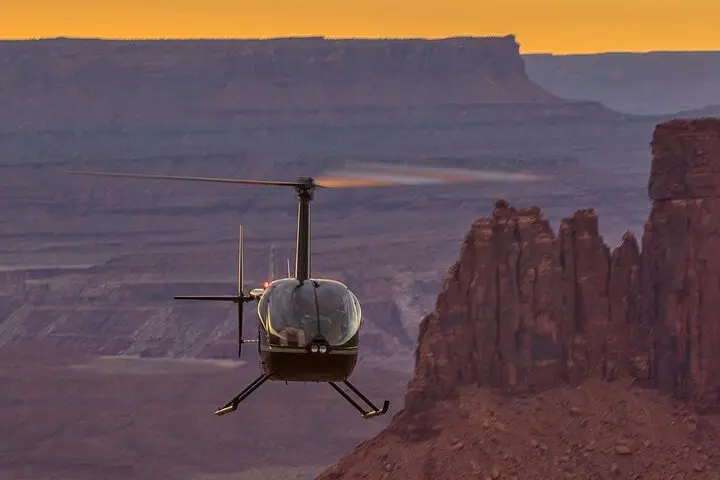
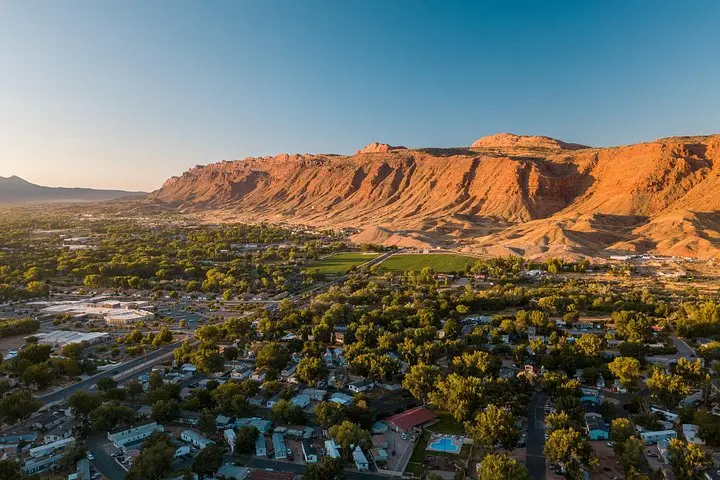

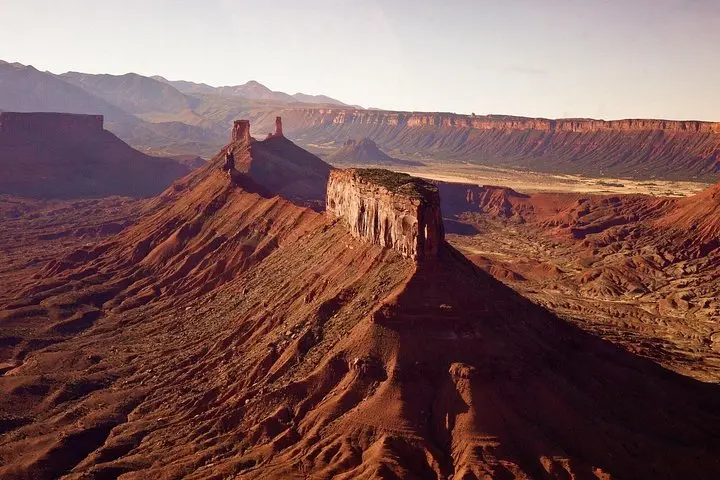
You lift off from a small desert apron and the town of Moab shrinks into a patchwork of red roofs and sage-gray flats. The helicopter climbs with a hush, the valley opening like a map beneath you—rivers cutting silver lines, mesas stacked in stratified bands, and a canyon rim that drops away in heart-stopping relief. For sixty minutes the ground rearranges itself into a sequence of revelations: Dead Horse Point’s 2,000-foot overlook, the pale sweep of Potash Ponds, and the lonely spire of Castleton Tower pushing upward from a sea of rust-colored stone.
You lift off from a small desert apron and the town of Moab shrinks into a patchwork of red roofs and sage-gray flats. The helicopter climbs with a hush, the valley opening like a map beneath you—rivers cutting silver lines, mesas stacked in stratified bands, and a canyon rim that drops away in heart-stopping relief. For sixty minutes the ground rearranges itself into a sequence of revelations: Dead Horse Point’s 2,000-foot overlook, the pale sweep of Potash Ponds, and the lonely spire of Castleton Tower pushing upward from a sea of rust-colored stone.
This is the Edge of Canyonlands—an arena shaped by deep time. The rock layers you see were deposited by ancient seas, lakes and wind-driven dunes; later uplift and the Colorado River’s patient incision carved the pinnacles and buttes. Human history is a thinner line here: Ute and Paiute peoples traversed these mesas long before Euro-American explorers and miners named features for horses, castles and cities. Today, Moab serves as the gateway city and launch point for aerial tours that see what trails and overlooks only hint at.
The flight stitches together well-known icons with hidden backcountry — Corona Arch’s broad opening seen from above, the Otho Natural Bridge tucked in Mill Creek Canyon, and the Hell’s Revenge jeep trail snaking over slickrock ridges that dare off-roaders below. Live narration via headsets frames each landmark with geology and local lore, so by the time you spiral back toward Canyonlands Field Airport, the landscape feels both new and memorably explained.
Practicalities are straightforward. Tours depart from Canyonlands Field (check in at the Redtail Air desk inside the terminal), last 60 minutes, and guarantee window seats and headsets. The shared flights keep groups small; expect a maximum of three passengers per trip. Bookings require full names, date of birth and passenger weight for safety balance—enter them when reserving. The operator provides complimentary water; ear-covering headsets ensure clear narration over rotor noise.
Timing and packing matter: early morning or late afternoon flights offer low-angle light that sculpts the canyons, while midday flights deliver higher contrast and the brightest views of the Potash Ponds’ vivid salts. Bring a small camera with fast shutter, spare batteries, sunglasses and a lightweight wind layer—the cabin is quiet but can feel cool at altitude. If weather cancels, the tour’s policy allows refunds with at least 24 hours' notice.
For travelers who want the broadest perspective of Canyonlands in the least time, the Grand Moab Scenic Heli Tour is an efficient, exhilarating way to read the desert’s lines from above and come away with a deeper sense of why this landscape both resists and rewards exploration.