THE ADVENTURE COLLECTIVE® · Independent discovery and booking for outdoor travel

Spend a full day on the outer Great Barrier Reef from Cairns aboard a fast catamaran. Snorkel sheltered lagoons, visit an underwater observatory, and learn reef ecology directly from on-board marine biologists.
Spend a full day on the outer Great Barrier Reef from Cairns aboard a fast catamaran. Snorkel sheltered lagoons, visit an underwater observatory, and learn reef ecology directly from on-board marine biologists.
You step off the catamaran onto a broad aluminum pontoon and the ocean opens like a moving map beneath you — patches of electric coral, darting schools of fish, and a blue that deepens toward the horizon.
Verified experiences and guided adventures in the surrounding area.
Operated by Reef Magic · Cairns, Queensland
You step off the catamaran onto a broad aluminum pontoon and the ocean opens like a moving map beneath you — patches of electric coral, darting schools of fish, and a blue that deepens toward the horizon.
This outer-reef platform sits on ancient limestone and coral foundations shaped over millennia by currents and coral growth. The Great Barrier Reef is both living architecture and archive: reefs have grown here since the last ice age while the coastal Gimuy Walubara Yidinji and Yirrganydji peoples have long-held connections to these waters.
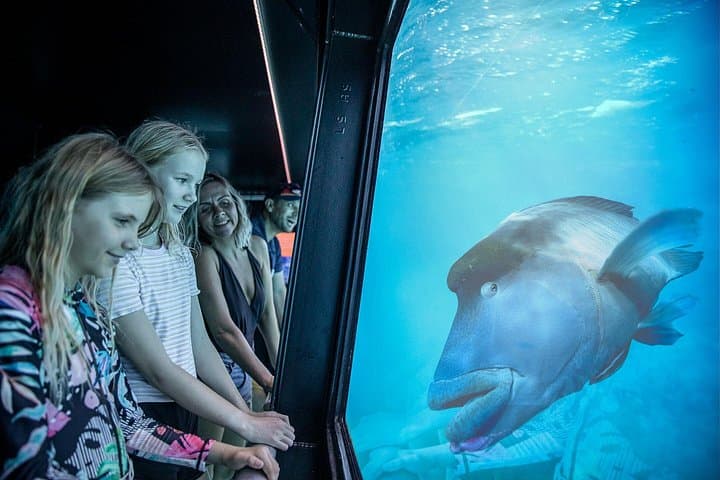
Onboard marine biologists run short talks and guided snorkel safaris, pointing out reef residents from Maori wrasse to hawksbill turtles and explaining coral ecology and bleaching stress. You can stay dry and peer through the underwater observatory or glass-bottom boat, or slip into the lagoon for shallow, sheltered snorkeling; introductory scuba options are available for those wanting deeper views.
Plan for sun, salt and motion: arrive hydrated, apply reef-safe sunscreen, and carry a light lycra or wetsuit for cooler months. Bring a mask you trust if you have one; rental gear is provided but fit matters. If you’re prone to seasickness, take precautions before the 1.5-hour ride out.
Time your day around the marine biologist talks to get the most context for what you’re seeing; these short science sessions turn casual observation into insight. Respect buoyancy rules, avoid touching coral, and know that conditions can change with wind and swell — but when visibility is good, the reef delivers one of Australia’s most vivid outdoor classrooms.
The catamaran crossing is approximately 1.5 hours each way; expect a full 8‑hour day including transfers and time on the reef.
Yes — the pontoon has shallow sheltered lagoons and flotation aids; staff can recommend safe areas and children can use life vests.
Introductory scuba (taster) dives are offered aboard for an extra fee; they include briefing and are subject to a medical questionnaire and age limits.
Follow recommended surface interval rules — typically wait 12–24 hours after dives before flying, depending on total dive time and depth; check with the dive staff for specifics.
Reef Magic operates guided outdoor trips and adventures with an emphasis on safety, stewardship, and memorable experiences.

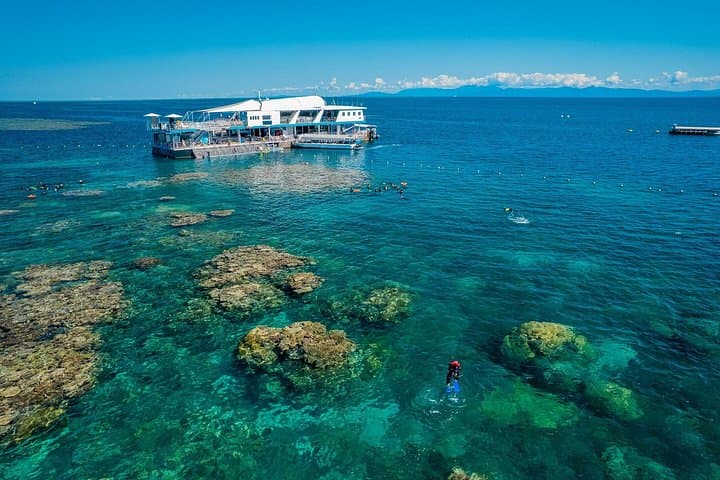

You step off the catamaran onto a broad aluminum pontoon and the ocean opens like a moving map beneath you — patches of electric coral, darting schools of fish, and a blue that deepens toward the horizon.
You step off the catamaran onto a broad aluminum pontoon and the ocean opens like a moving map beneath you — patches of electric coral, darting schools of fish, and a blue that deepens toward the horizon.
This outer-reef platform sits on ancient limestone and coral foundations shaped over millennia by currents and coral growth. The Great Barrier Reef is both living architecture and archive: reefs have grown here since the last ice age while the coastal Gimuy Walubara Yidinji and Yirrganydji peoples have long-held connections to these waters.
Onboard marine biologists run short talks and guided snorkel safaris, pointing out reef residents from Maori wrasse to hawksbill turtles and explaining coral ecology and bleaching stress. You can stay dry and peer through the underwater observatory or glass-bottom boat, or slip into the lagoon for shallow, sheltered snorkeling; introductory scuba options are available for those wanting deeper views.
Plan for sun, salt and motion: arrive hydrated, apply reef-safe sunscreen, and carry a light lycra or wetsuit for cooler months. Bring a mask you trust if you have one; rental gear is provided but fit matters. If you’re prone to seasickness, take precautions before the 1.5-hour ride out.
Time your day around the marine biologist talks to get the most context for what you’re seeing; these short science sessions turn casual observation into insight. Respect buoyancy rules, avoid touching coral, and know that conditions can change with wind and swell — but when visibility is good, the reef delivers one of Australia’s most vivid outdoor classrooms.