THE ADVENTURE COLLECTIVE® · Independent discovery and booking for outdoor travel

Walk a volcanic canyon lined with rock-cut churches, explore a multi-level underground city, and stand beside a remote crater lake on this full-day Cappadocia green tour. Practical route details and tips help you prepare for uneven trails, narrow underground passages, and changing microclimates.
Walk a volcanic canyon lined with rock-cut churches, explore a multi-level underground city, and stand beside a remote crater lake on this full-day Cappadocia green tour. Practical route details and tips help you prepare for uneven trails, narrow underground passages, and changing microclimates.
A morning wind pushes dust off the plateau as the minivan drops you at a knife-edge rim above a long, green cut in volcanic stone. You step down into Ihlara Valley and the world changes—stone walls shade a river that dares you to slow down, and carved churches peer from ledges like watchful neighbors.
Verified experiences and guided adventures in the surrounding area.
Operated by ToBadaa · Ihlara, Aksaray Province
A morning wind pushes dust off the plateau as the minivan drops you at a knife-edge rim above a long, green cut in volcanic stone. You step down into Ihlara Valley and the world changes—stone walls shade a river that dares you to slow down, and carved churches peer from ledges like watchful neighbors.
This full-day route threads three distinct geologic and cultural acts: the underground city of Derinkuyu hewn into tuff by centuries of human need; Ihlara Valley, a 14-km canyon where early Christians carved hundreds of chapels into basalt cliffs; and Selime Monastery, a cathedral-sized complex gouged from volcanic flows. Nar Lake sits apart—a small crater pool whose mineral-warmed springs once drew villagers seeking relief from rheumatism.
Expect 4–6 km of walking on uneven, rocky trails in the valley, short stair descents into chapels, and narrow passages in the underground city where ceilings dip and history presses close. Elevation change is modest on the valley floor but there are steps and short climbs at viewpoints—prepare for uneven footing rather than long ascents.
Practical guide: start early to avoid heat, wear grippy shoes, carry 1–2 liters of water, and bring a light layer for shade-to-river temperature swings. Photography is best in soft morning light in the canyon; frescoes inside churches are fragile—observe without touching. The tour covers transportation and lunch; guides will handle admissions but come with comfortable shoes and a sense of curiosity.
The typical valley segment on day tours covers roughly 4–6 km on mostly flat but rocky paths with some stairs—plan for 1.5–3 hours depending on pace.
Accessible sections require crouching in low tunnels and navigating narrow staircases; it’s not technically difficult but may be uncomfortable for anyone with claustrophobia or mobility limitations.
Most shared green tours include transport, a guide, and lunch but not always museum or site entrance fees—confirm details at booking; this particular tour lists lunch and transportation as included.
Tours may be modified or canceled in severe weather; indoor sites like Derinkuyu are sheltered, but valley walks and crater-lake access can be slippery or closed in storms.
ToBadaa operates guided outdoor trips and adventures with an emphasis on safety, stewardship, and memorable experiences.
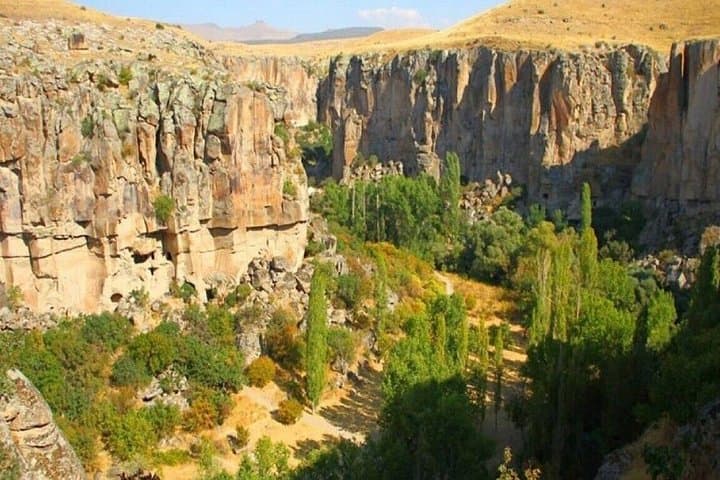

A morning wind pushes dust off the plateau as the minivan drops you at a knife-edge rim above a long, green cut in volcanic stone. You step down into Ihlara Valley and the world changes—stone walls shade a river that dares you to slow down, and carved churches peer from ledges like watchful neighbors.
A morning wind pushes dust off the plateau as the minivan drops you at a knife-edge rim above a long, green cut in volcanic stone. You step down into Ihlara Valley and the world changes—stone walls shade a river that dares you to slow down, and carved churches peer from ledges like watchful neighbors.
This full-day route threads three distinct geologic and cultural acts: the underground city of Derinkuyu hewn into tuff by centuries of human need; Ihlara Valley, a 14-km canyon where early Christians carved hundreds of chapels into basalt cliffs; and Selime Monastery, a cathedral-sized complex gouged from volcanic flows. Nar Lake sits apart—a small crater pool whose mineral-warmed springs once drew villagers seeking relief from rheumatism.
Expect 4–6 km of walking on uneven, rocky trails in the valley, short stair descents into chapels, and narrow passages in the underground city where ceilings dip and history presses close. Elevation change is modest on the valley floor but there are steps and short climbs at viewpoints—prepare for uneven footing rather than long ascents.
Practical guide: start early to avoid heat, wear grippy shoes, carry 1–2 liters of water, and bring a light layer for shade-to-river temperature swings. Photography is best in soft morning light in the canyon; frescoes inside churches are fragile—observe without touching. The tour covers transportation and lunch; guides will handle admissions but come with comfortable shoes and a sense of curiosity.