THE ADVENTURE COLLECTIVE® · Independent discovery and booking for outdoor travel

Experience a private visit to Griya Beji Waterfall with a traditional Balinese holy bath. This guided tour combines cultural ritual, easy walking to the falls, and nearby Ubud stops for a full-day spiritual and nature outing.
Experience a private visit to Griya Beji Waterfall with a traditional Balinese holy bath. This guided tour combines cultural ritual, easy walking to the falls, and nearby Ubud stops for a full-day spiritual and nature outing.
You step from the air‑conditioned car into a pocket of green: limestone terraces, palms, and the low chant of temple bells guiding you toward falling water. At Griya Beji, the cascade isn’t loud so much as insistent—cool curtains pulling you forward—while carved shrines and prayer flags mark a place used for purification.
Verified experiences and guided adventures in the surrounding area.
Operated by Bersinar Bali Tour · Punggul, Bali
You step from the air‑conditioned car into a pocket of green: limestone terraces, palms, and the low chant of temple bells guiding you toward falling water. At Griya Beji, the cascade isn’t loud so much as insistent—cool curtains pulling you forward—while carved shrines and prayer flags mark a place used for purification.
The site sits within a living Balinese temple complex where local families have long treated springs as sources of spiritual and physical healing. Geologically, the falls tumble over volcanic rock and alluvial terraces shaped by Bali’s tropical rains; the stream that feeds them threads rice paddies downstream. Cultural practice here blends Hindu purification rituals—bhakti and melukat—with everyday village life, and the tour often includes Balinese garments and prayer equipment so visitors can participate respectfully.
Expect a guided holy bath ceremony: instructions, a simple blessing, and time to rinse beneath the fall. Accessibility is better than many rural sites—paths and transport are wheelchair accessible—but the ritual involves standing in shallow, uneven rock pools and modest dress is required. Combine this visit with nearby Ubud stops for monkey forest trails and market browsing if you want a full cultural day.
Practical guidance: book morning slots to avoid heat and crowds, bring a quick‑dry change of clothes and waterproof pouch for valuables. Wear sturdy sandals or light hiking shoes with grippy soles for wet rock. Hydrate before and after the ceremony—Balinese rituals can be physically and emotionally intense—and follow the guide’s directions during the holy bath to respect local customs and stay safe.
The private tour runs about 7 hours and typically includes private transport, entrance fees, Balinese outfit and prayer equipment, and a guided holy bath ceremony.
The activity is generally accessible, but the ritual requires standing in uneven, wet areas; those with mobility issues, spinal or heart conditions, or pregnant travelers should consult the operator first.
Most tours provide Balinese outfit pieces and sarongs, but bringing quick‑dry swimwear and a lightweight sarong you’re comfortable with is a good backup.
Yes—operators commonly pair Griya Beji with visits to the Ubud Monkey Forest and Ubud Art Market for a full cultural day trip.
Bersinar Bali Tour operates guided outdoor trips and adventures with an emphasis on safety, stewardship, and memorable experiences.
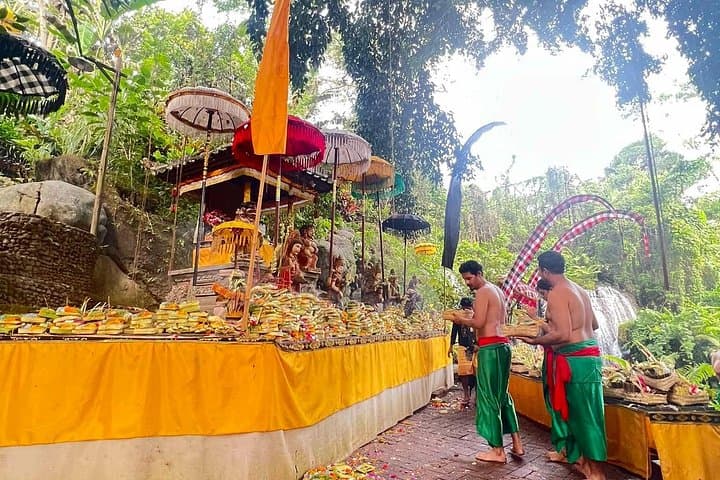


You step from the air‑conditioned car into a pocket of green: limestone terraces, palms, and the low chant of temple bells guiding you toward falling water. At Griya Beji, the cascade isn’t loud so much as insistent—cool curtains pulling you forward—while carved shrines and prayer flags mark a place used for purification.
You step from the air‑conditioned car into a pocket of green: limestone terraces, palms, and the low chant of temple bells guiding you toward falling water. At Griya Beji, the cascade isn’t loud so much as insistent—cool curtains pulling you forward—while carved shrines and prayer flags mark a place used for purification.
The site sits within a living Balinese temple complex where local families have long treated springs as sources of spiritual and physical healing. Geologically, the falls tumble over volcanic rock and alluvial terraces shaped by Bali’s tropical rains; the stream that feeds them threads rice paddies downstream. Cultural practice here blends Hindu purification rituals—bhakti and melukat—with everyday village life, and the tour often includes Balinese garments and prayer equipment so visitors can participate respectfully.
Expect a guided holy bath ceremony: instructions, a simple blessing, and time to rinse beneath the fall. Accessibility is better than many rural sites—paths and transport are wheelchair accessible—but the ritual involves standing in shallow, uneven rock pools and modest dress is required. Combine this visit with nearby Ubud stops for monkey forest trails and market browsing if you want a full cultural day.
Practical guidance: book morning slots to avoid heat and crowds, bring a quick‑dry change of clothes and waterproof pouch for valuables. Wear sturdy sandals or light hiking shoes with grippy soles for wet rock. Hydrate before and after the ceremony—Balinese rituals can be physically and emotionally intense—and follow the guide’s directions during the holy bath to respect local customs and stay safe.