THE ADVENTURE COLLECTIVE® · Independent discovery and booking for outdoor travel

Climb Gros Piton on a guided day hike from Soufrière to trade rainforest for ocean views and volcanic rock—an intense but rewarding ascent with deep cultural and geological context. Read on for what to expect and how to prepare.
Climb Gros Piton on a guided day hike from Soufrière to trade rainforest for ocean views and volcanic rock—an intense but rewarding ascent with deep cultural and geological context. Read on for what to expect and how to prepare.
Morning light slices between palms as the van eases out of Soufrière and the twin cones of the Pitons grow taller with every kilometer. The trailhead feels immediate—rainforest breathing around you, ocean flashing to the west, and a guide who reads the mountain’s rhythm. The climb begins steep and focused; the incline asks for measured steps and quiet attention.
Verified experiences and guided adventures in the surrounding area.
Operated by Caribbean Tours Agency · Soufrière, Soufrière Quarter
Morning light slices between palms as the van eases out of Soufrière and the twin cones of the Pitons grow taller with every kilometer. The trailhead feels immediate—rainforest breathing around you, ocean flashing to the west, and a guide who reads the mountain’s rhythm. The climb begins steep and focused; the incline asks for measured steps and quiet attention.
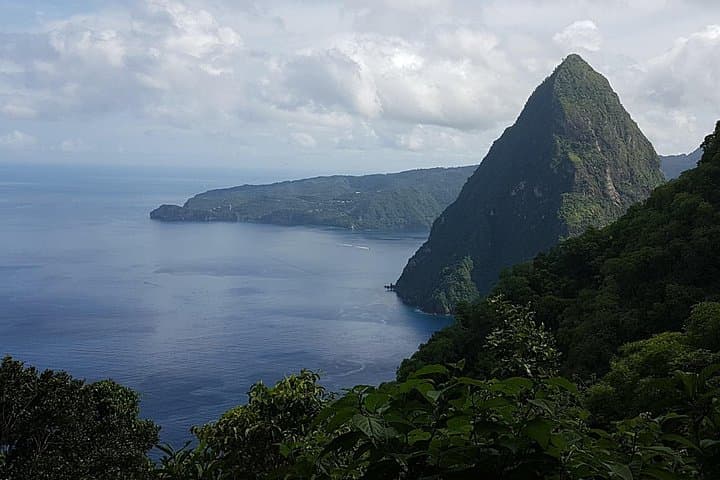
Gros Piton is a volcanic plug formed by viscous lava that cooled and resisted erosion, now part of the Pitons Management Area, a UNESCO World Heritage site. The area around Soufrière carries layers of colonial and Indigenous history—the old sugar estate landscapes, fishermen’s coves and community sites such as the Fond Gens Libre interpreter center that interpret local culture.
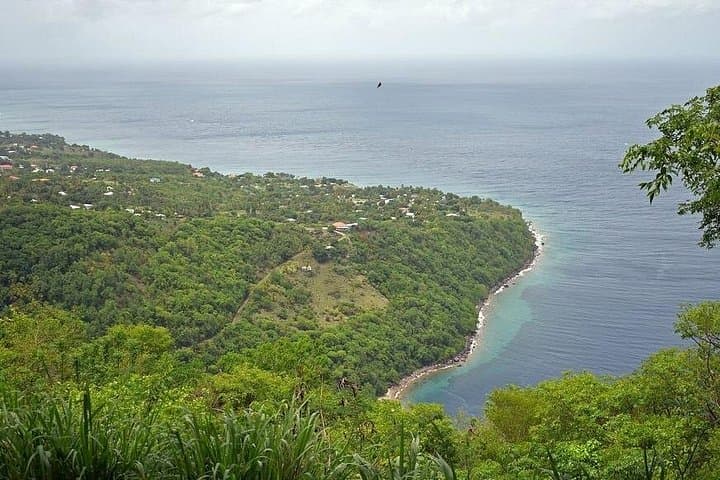
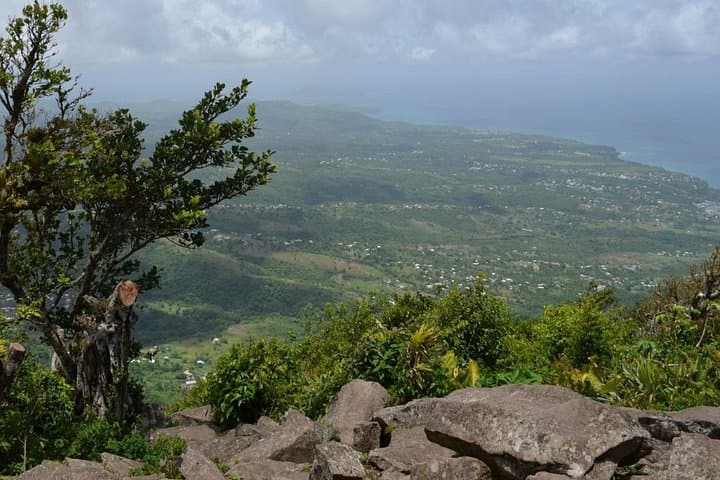
Expect a roughly 4–6 km round-trip effort with about 750–800 m (2,400–2,600 ft) of elevation gain depending on route and approach. The trail switches from packed earth to rough volcanic rock, with several named rest points (first through fourth quarter) that open into sweeping views of Petit Piton and the Caribbean. In the canopy, birds and occasional tree-dwelling reptiles make the climb feel alive; on clear days you can see the coastline curve toward Marigot Bay.
Practically: this is a guided, strenuous day hike—good cardio fitness and sure footing matter. Wear sturdy trail shoes, carry 2–3 liters of water, sun protection and a light rain shell. Start early to avoid midday heat, move steadily on steep sections, and follow your guide on narrow or exposed pitches. When the summit arrives, the ocean’s pull and the island’s volcanic bones make the effort undeniably worth it.
The guided outing typically takes 5–6 hours door-to-door; expect 2–3 hours ascending and 1.5–2 descending with steep, sustained sections—good fitness is required.
This experience is guided and includes a professional driver-guide; guides handle route-finding, safety briefings and local interpretation.
Not recommended—this hike is physically demanding and organizers advise against participation for young children, pregnant travelers, or those with serious cardiovascular or spinal issues.
Dry season (December to April) generally offers more stable weather and clearer views, though early mornings year-round reduce the chance of rain and heat.
Caribbean Tours Agency operates guided outdoor trips and adventures with an emphasis on safety, stewardship, and memorable experiences.
Morning light slices between palms as the van eases out of Soufrière and the twin cones of the Pitons grow taller with every kilometer. The trailhead feels immediate—rainforest breathing around you, ocean flashing to the west, and a guide who reads the mountain’s rhythm. The climb begins steep and focused; the incline asks for measured steps and quiet attention.
Morning light slices between palms as the van eases out of Soufrière and the twin cones of the Pitons grow taller with every kilometer. The trailhead feels immediate—rainforest breathing around you, ocean flashing to the west, and a guide who reads the mountain’s rhythm. The climb begins steep and focused; the incline asks for measured steps and quiet attention.
Gros Piton is a volcanic plug formed by viscous lava that cooled and resisted erosion, now part of the Pitons Management Area, a UNESCO World Heritage site. The area around Soufrière carries layers of colonial and Indigenous history—the old sugar estate landscapes, fishermen’s coves and community sites such as the Fond Gens Libre interpreter center that interpret local culture.
Expect a roughly 4–6 km round-trip effort with about 750–800 m (2,400–2,600 ft) of elevation gain depending on route and approach. The trail switches from packed earth to rough volcanic rock, with several named rest points (first through fourth quarter) that open into sweeping views of Petit Piton and the Caribbean. In the canopy, birds and occasional tree-dwelling reptiles make the climb feel alive; on clear days you can see the coastline curve toward Marigot Bay.
Practically: this is a guided, strenuous day hike—good cardio fitness and sure footing matter. Wear sturdy trail shoes, carry 2–3 liters of water, sun protection and a light rain shell. Start early to avoid midday heat, move steadily on steep sections, and follow your guide on narrow or exposed pitches. When the summit arrives, the ocean’s pull and the island’s volcanic bones make the effort undeniably worth it.