THE ADVENTURE COLLECTIVE® · Independent discovery and booking for outdoor travel

Climb Gros Piton for raw, coastal panoramas and a close look at St. Lucia's volcanic backbone. This guided hike mixes steep rainforest paths, historic caves, and a summit ridge with sweeping views of Soufrière Bay.
Climb Gros Piton for raw, coastal panoramas and a close look at St. Lucia's volcanic backbone. This guided hike mixes steep rainforest paths, historic caves, and a summit ridge with sweeping views of Soufrière Bay.
You start below the mountain with salt air on your face and the Piton's granite shoulder looming above, a green monolith that seems to lean toward the Caribbean Sea. The trail climbs quickly; limestone and volcanic rock underfoot give way to shaded rainforest where sunlit gaps reveal panoramic flashes of Soufrière Bay and Petit Piton opposite.
Verified experiences and guided adventures in the surrounding area.
You start below the mountain with salt air on your face and the Piton's granite shoulder looming above, a green monolith that seems to lean toward the Caribbean Sea. The trail climbs quickly; limestone and volcanic rock underfoot give way to shaded rainforest where sunlit gaps reveal panoramic flashes of Soufrière Bay and Petit Piton opposite.
Geology here is blunt and honest: Gros Piton is a volcanic plug sculpted by erosion, its steep flanks a record of ancient lava flows. History threads through the route — the Anse L'Ivrogne canyon and its caves once sheltered 18th‑century rebels during slave uprisings, and the cultural landscape around Soufrière still carries Creole agricultural traditions and fishing rhythms.
Expect narrow, root‑tangled sections and occasional stone steps carved into the slope; the climb gains roughly 700–800 meters to the summit and rewards effort with a broad, wind‑cleared ridge and 360° views of rain forest, reef, and ocean. Guides commonly lead groups, sharing local lore and pointing out endemic plants and the rare St. Lucia parrot.
Practical guidance: start early to avoid midday heat and sudden tropical showers; carry 2–3 liters of water, sturdy boots with good grip, and a lightweight rain shell. Pace yourself on steeper pitches, use trekking poles if you have them, and stay on the marked path — erosion is a real concern. Descend with daylight to spare; the trail is best experienced as a full‑day outing that pairs physical challenge with unmatched coastal vistas.
Guided outings are typically a full‑day commitment; plan on 6–8 hours roundtrip depending on pace and group size.
The route is steep and physically demanding but non‑technical — no ropes or climbing gear are required for the standard path.
Guides are strongly recommended and often required by local operators; they improve safety, navigation, and the cultural experience.
The dry season (December–May) offers more reliable weather and clearer summit views; avoid hurricane season months if possible.
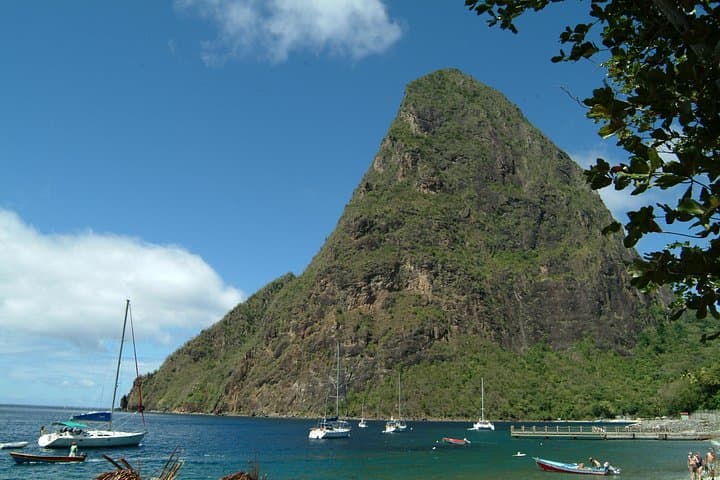
You start below the mountain with salt air on your face and the Piton's granite shoulder looming above, a green monolith that seems to lean toward the Caribbean Sea. The trail climbs quickly; limestone and volcanic rock underfoot give way to shaded rainforest where sunlit gaps reveal panoramic flashes of Soufrière Bay and Petit Piton opposite.
You start below the mountain with salt air on your face and the Piton's granite shoulder looming above, a green monolith that seems to lean toward the Caribbean Sea. The trail climbs quickly; limestone and volcanic rock underfoot give way to shaded rainforest where sunlit gaps reveal panoramic flashes of Soufrière Bay and Petit Piton opposite.
Geology here is blunt and honest: Gros Piton is a volcanic plug sculpted by erosion, its steep flanks a record of ancient lava flows. History threads through the route — the Anse L'Ivrogne canyon and its caves once sheltered 18th‑century rebels during slave uprisings, and the cultural landscape around Soufrière still carries Creole agricultural traditions and fishing rhythms.
Expect narrow, root‑tangled sections and occasional stone steps carved into the slope; the climb gains roughly 700–800 meters to the summit and rewards effort with a broad, wind‑cleared ridge and 360° views of rain forest, reef, and ocean. Guides commonly lead groups, sharing local lore and pointing out endemic plants and the rare St. Lucia parrot.
Practical guidance: start early to avoid midday heat and sudden tropical showers; carry 2–3 liters of water, sturdy boots with good grip, and a lightweight rain shell. Pace yourself on steeper pitches, use trekking poles if you have them, and stay on the marked path — erosion is a real concern. Descend with daylight to spare; the trail is best experienced as a full‑day outing that pairs physical challenge with unmatched coastal vistas.