THE ADVENTURE COLLECTIVE® · Independent discovery and booking for outdoor travel

Ascend the narrow, chain-lined spine of Angels Landing with permits included and expert guidance. This guided hike balances safety, local insight, and a dramatic 5.4-mile route that rewards you with sweeping Zion Canyon views.
Ascend the narrow, chain-lined spine of Angels Landing with permits included and expert guidance. This guided hike balances safety, local insight, and a dramatic 5.4-mile route that rewards you with sweeping Zion Canyon views.
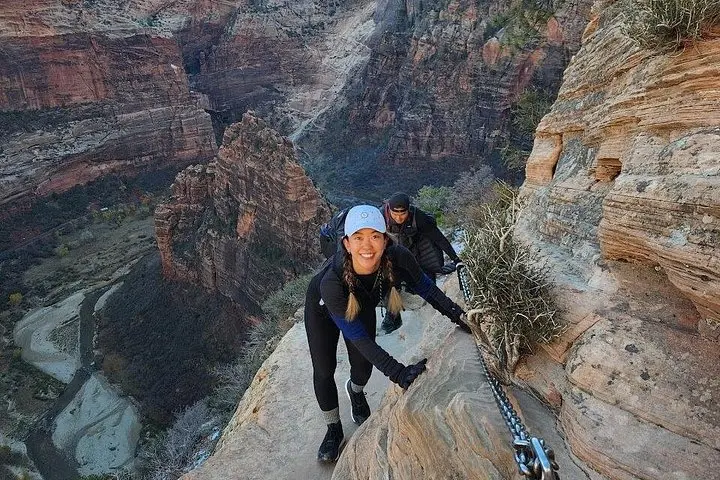
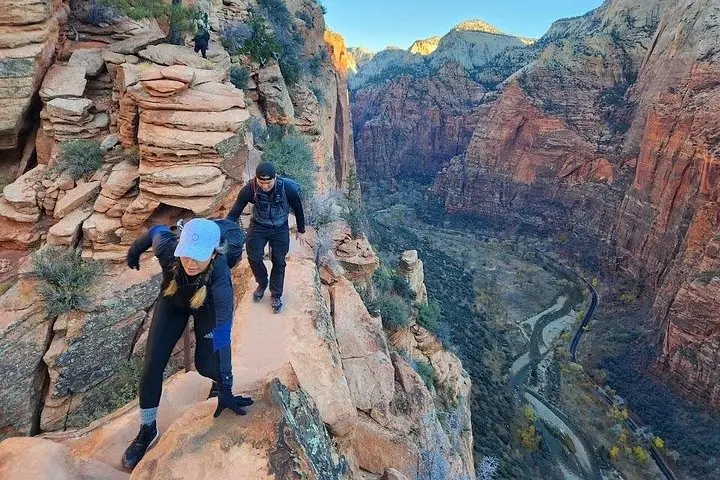
The morning air in Zion has a grit to it that sharpens the senses: cold breath hanging under a sky the color of old copper, the canyon walls already bleeding into light. You start at the Grotto Trailhead, where the park shuttle drops you beneath the serrated face of Navajo Sandstone. The trail pulls you upward through scrub and pinyon, then tightens into Walter’s Wiggles — 21 steep switchbacks that begin to test lungs and focus. Above them, Scout Lookout opens like a balcony; beyond that, the final half-mile becomes a spine of stone chained on both sides, a hand-over-hand passage to one of the most vertiginous summits in the Southwest.
Verified experiences and guided adventures in the surrounding area.
Operated by Land Beyond Zion Tours · Springdale, Utah
The morning air in Zion has a grit to it that sharpens the senses: cold breath hanging under a sky the color of old copper, the canyon walls already bleeding into light. You start at the Grotto Trailhead, where the park shuttle drops you beneath the serrated face of Navajo Sandstone. The trail pulls you upward through scrub and pinyon, then tightens into Walter’s Wiggles — 21 steep switchbacks that begin to test lungs and focus. Above them, Scout Lookout opens like a balcony; beyond that, the final half-mile becomes a spine of stone chained on both sides, a hand-over-hand passage to one of the most vertiginous summits in the Southwest.
Angels Landing is as geological as it is theatrical. The ridge rises from Jurassic sand dunes turned to rock; uplift and the Virgin River carved the steep amphitheater that frames Zion Canyon. Indigenous people, including Southern Paiute ancestors, have used these landscapes for generations, and modern visitation has accelerated over the last century. A park permit system introduced recently controls access to the narrow ridge to protect visitors and the fragile trail. Guided tours like this one provide permitted entry, local expertise, and safety-focused coaching on exposed sections.
The route is compact and demanding: roughly 5.4 miles round-trip with about 1,488 feet of elevation gain. Terrain varies from packed dirt and slickrock to the chain-assisted scramble along the final ridge. Weather shifts fast — hot sun baking the rock in summer, sudden storms in shoulder seasons, and icy patches in winter — so timing and gear matter.
On a practical level, plan for 4–6 hours and bring at least 2 liters of water, sun protection, and steady footwear with good traction. Gloves help on the chains; a small daypack keeps hands free. Guides will pace groups, point out geological layers and cultural notes, and coach hikers through exposure if needed. This operator includes permit handling, emphasizes inclusive leadership as a woman-owned, LGBTQ+ and BIPOC-friendly company, and offers optional GoPro capture for the summit push.
Respect the trail: yield space on narrow sections, keep packs compact, and never linger on the ridge. If you have a serious fear of heights, spinal issues, or cardiac concerns, this route is not appropriate. Check the Zion shuttle schedule and weather before you go; the company typically confirms exact meeting details a few days prior.
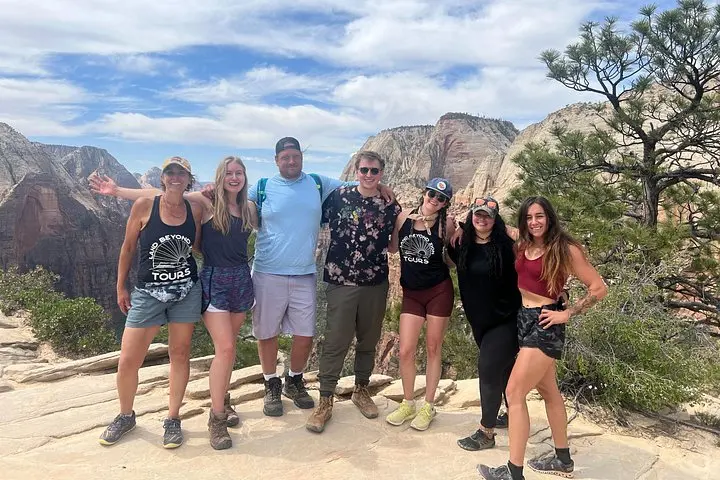
When you reach the summit, the canyon unfurls into a panorama of steep amphitheaters and braided river below — the kind of view that makes the climb feel less like obligation and more like permission to stand somewhere wild and high. Return with patience, respect for the landscape, and memories framed by red stone and high sky.
Yes — since the park's permit system started, permits are required to hike the final ridge; this guided tour includes permit acquisition for listed dates.
Expect a sustained climb: about 5.4 miles round-trip with ~1,488 feet of gain; the chains and exposure make it more demanding than a typical day hike.
Guides can coach less-experienced hikers, but participants should be comfortable with heights, basic scrambling, and sustained elevation gain.
The operator collects height and weight and flags serious spinal or cardiac issues; check with the company if you have specific medical concerns.
The park shuttle serves the Grotto Trailhead seasonally and is often the easiest access; the operator will confirm meeting logistics before the trip.
This tour is sold as all sales final — cancellations are nonrefundable; the company may cancel or reschedule for bad weather or low enrollment.
Land Beyond Zion Tours operates guided outdoor trips and adventures with an emphasis on safety, stewardship, and memorable experiences.
The morning air in Zion has a grit to it that sharpens the senses: cold breath hanging under a sky the color of old copper, the canyon walls already bleeding into light. You start at the Grotto Trailhead, where the park shuttle drops you beneath the serrated face of Navajo Sandstone. The trail pulls you upward through scrub and pinyon, then tightens into Walter’s Wiggles — 21 steep switchbacks that begin to test lungs and focus. Above them, Scout Lookout opens like a balcony; beyond that, the final half-mile becomes a spine of stone chained on both sides, a hand-over-hand passage to one of the most vertiginous summits in the Southwest.
The morning air in Zion has a grit to it that sharpens the senses: cold breath hanging under a sky the color of old copper, the canyon walls already bleeding into light. You start at the Grotto Trailhead, where the park shuttle drops you beneath the serrated face of Navajo Sandstone. The trail pulls you upward through scrub and pinyon, then tightens into Walter’s Wiggles — 21 steep switchbacks that begin to test lungs and focus. Above them, Scout Lookout opens like a balcony; beyond that, the final half-mile becomes a spine of stone chained on both sides, a hand-over-hand passage to one of the most vertiginous summits in the Southwest.
Angels Landing is as geological as it is theatrical. The ridge rises from Jurassic sand dunes turned to rock; uplift and the Virgin River carved the steep amphitheater that frames Zion Canyon. Indigenous people, including Southern Paiute ancestors, have used these landscapes for generations, and modern visitation has accelerated over the last century. A park permit system introduced recently controls access to the narrow ridge to protect visitors and the fragile trail. Guided tours like this one provide permitted entry, local expertise, and safety-focused coaching on exposed sections.
The route is compact and demanding: roughly 5.4 miles round-trip with about 1,488 feet of elevation gain. Terrain varies from packed dirt and slickrock to the chain-assisted scramble along the final ridge. Weather shifts fast — hot sun baking the rock in summer, sudden storms in shoulder seasons, and icy patches in winter — so timing and gear matter.
On a practical level, plan for 4–6 hours and bring at least 2 liters of water, sun protection, and steady footwear with good traction. Gloves help on the chains; a small daypack keeps hands free. Guides will pace groups, point out geological layers and cultural notes, and coach hikers through exposure if needed. This operator includes permit handling, emphasizes inclusive leadership as a woman-owned, LGBTQ+ and BIPOC-friendly company, and offers optional GoPro capture for the summit push.
Respect the trail: yield space on narrow sections, keep packs compact, and never linger on the ridge. If you have a serious fear of heights, spinal issues, or cardiac concerns, this route is not appropriate. Check the Zion shuttle schedule and weather before you go; the company typically confirms exact meeting details a few days prior.
When you reach the summit, the canyon unfurls into a panorama of steep amphitheaters and braided river below — the kind of view that makes the climb feel less like obligation and more like permission to stand somewhere wild and high. Return with patience, respect for the landscape, and memories framed by red stone and high sky.