THE ADVENTURE COLLECTIVE® · Independent discovery and booking for outdoor travel

Climb a 20‑metre face on Sugarloaf Mountain with guided, certified gear and exclusive access off the main tourist trail. Expect coarse granite, sweeping bay views, and a short ridge walk to the summit followed by a scenic cable car descent.
Climb a 20‑metre face on Sugarloaf Mountain with guided, certified gear and exclusive access off the main tourist trail. Expect coarse granite, sweeping bay views, and a short ridge walk to the summit followed by a scenic cable car descent.
You meet at General Tibúrcio Square, Urca, with Guanabara Bay translating the city's pulse into wind on your face. A short, steep walk leads you off the tourist path to the base of Sugarloaf’s granite skin, where ropes hum and the ocean seems to push you upward.
Verified experiences and guided adventures in the surrounding area.
Operated by RIOTRIPS · Rio de Janeiro, Rio de Janeiro
You meet at General Tibúrcio Square, Urca, with Guanabara Bay translating the city's pulse into wind on your face. A short, steep walk leads you off the tourist path to the base of Sugarloaf’s granite skin, where ropes hum and the ocean seems to push you upward.
The ascent follows an exclusive Grade 2 route — a 20‑metre vertical pitch that is technical in feel but aimed at climbers with basic instruction. Sugarloaf (Pão de Açúcar) is a granite monolith carved by ancient erosion; the cable car that now shares the skyline opened in 1912 and made this rock a defining Rio landmark. Local guides often weave in the neighborhood’s fishing history and the military battery at Urca, giving context to the climb’s strategic, cultural position overlooking the city.
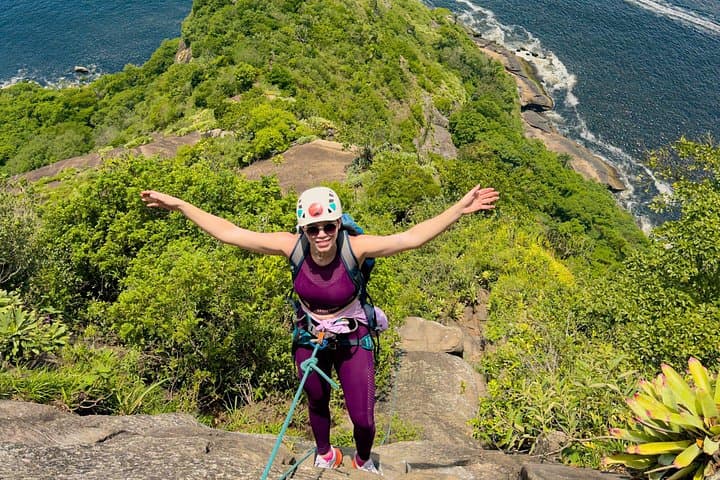
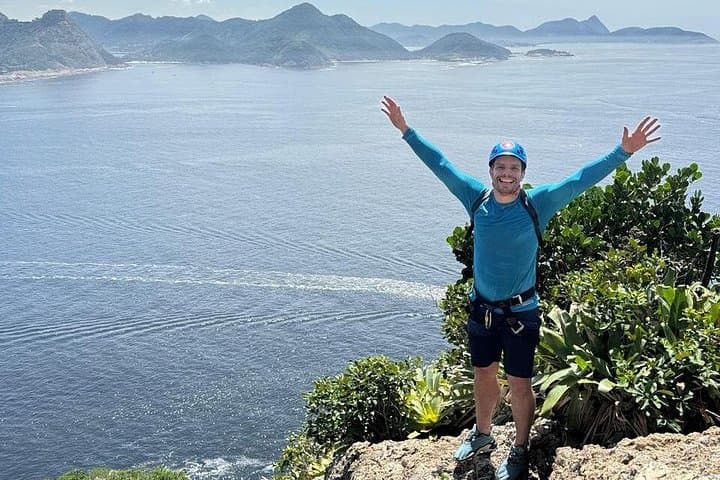
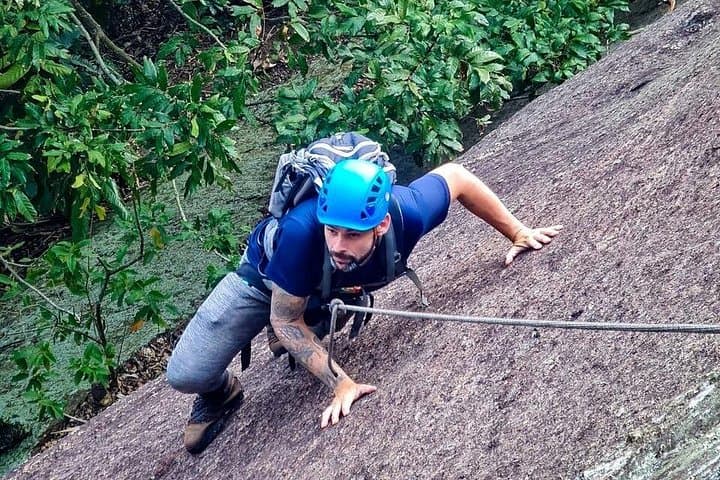
The rock itself is coarse and grippy, offering short, sustained moves and weathered pockets; the real reward is the panorama — beaches, the Christus silhouette, and islands shimmering in Guanabara Bay. After the top-out, the group follows a short ridge to the Philosopher’s Rock and returns by cable car, the descent a civilizing contrast to the exposure of the climb.
Practical points: the operator provides certified helmets, harnesses and ropes; bring closed-toe shoes with good traction, 1–2 liters of water, sun protection, and a light shell for sudden coastal showers. Best times are morning or late afternoon light; avoid thunderstorms. This is an entry-level outdoor climb that still asks for respect—stay clipped, listen to your guide, and leave time to take in the view.
No prior technical experience is required; the route is rated easy‑to‑moderate and conducted with professional instruction and full safety gear.
Meet at General Tibúrcio Square in Urca; the neighborhood is accessible by bus, taxi or by walking from Praia Vermelha and has nearby public transport options.
Operators typically ask for age and weight during booking; travelers should have moderate fitness and disclose health conditions—pregnancy and recent injuries may restrict participation.
The activity is canceled in bad weather for safety; the policy allows a full refund if canceled 24 hours before or if the operator cancels due to weather.
RIOTRIPS operates guided outdoor trips and adventures with an emphasis on safety, stewardship, and memorable experiences.

You meet at General Tibúrcio Square, Urca, with Guanabara Bay translating the city's pulse into wind on your face. A short, steep walk leads you off the tourist path to the base of Sugarloaf’s granite skin, where ropes hum and the ocean seems to push you upward.
You meet at General Tibúrcio Square, Urca, with Guanabara Bay translating the city's pulse into wind on your face. A short, steep walk leads you off the tourist path to the base of Sugarloaf’s granite skin, where ropes hum and the ocean seems to push you upward.
The ascent follows an exclusive Grade 2 route — a 20‑metre vertical pitch that is technical in feel but aimed at climbers with basic instruction. Sugarloaf (Pão de Açúcar) is a granite monolith carved by ancient erosion; the cable car that now shares the skyline opened in 1912 and made this rock a defining Rio landmark. Local guides often weave in the neighborhood’s fishing history and the military battery at Urca, giving context to the climb’s strategic, cultural position overlooking the city.
The rock itself is coarse and grippy, offering short, sustained moves and weathered pockets; the real reward is the panorama — beaches, the Christus silhouette, and islands shimmering in Guanabara Bay. After the top-out, the group follows a short ridge to the Philosopher’s Rock and returns by cable car, the descent a civilizing contrast to the exposure of the climb.
Practical points: the operator provides certified helmets, harnesses and ropes; bring closed-toe shoes with good traction, 1–2 liters of water, sun protection, and a light shell for sudden coastal showers. Best times are morning or late afternoon light; avoid thunderstorms. This is an entry-level outdoor climb that still asks for respect—stay clipped, listen to your guide, and leave time to take in the view.