THE ADVENTURE COLLECTIVE® · Independent discovery and booking for outdoor travel

Climb the highest mountain in Wales on the quieter Snowdon Ranger Path with a qualified local guide. Expect sweeping views, slate-town history, and a full-value 14 km day with 900 meters of ascent—weather and mountain willing.
Climb the highest mountain in Wales on the quieter Snowdon Ranger Path with a qualified local guide. Expect sweeping views, slate-town history, and a full-value 14 km day with 900 meters of ascent—weather and mountain willing.
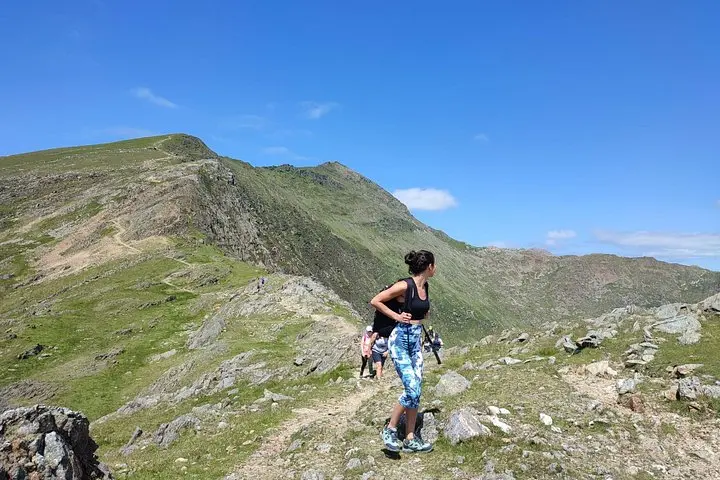
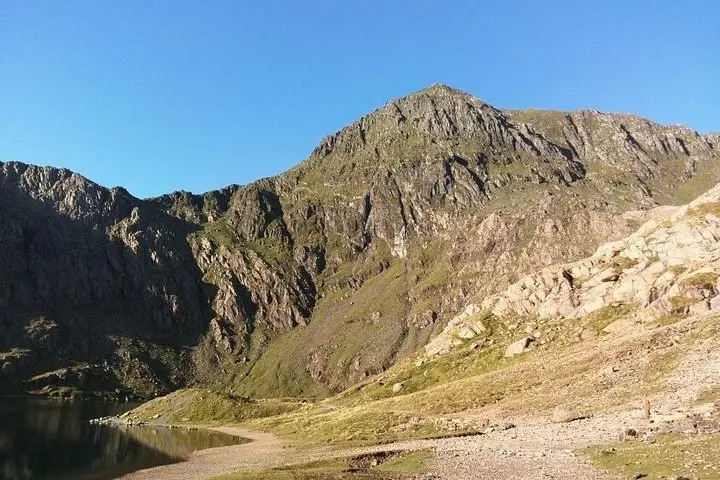
Morning light slides across Llyn Cwellyn as the mountain wakes, a cold breath rolling off Yr Wyddfa and nudging ripples toward the shore. Boots click in the Snowdon Ranger car park, flasks hiss open, and a qualified mountain leader gathers the group—steady, unhurried, and tuned to the weather. The Ranger Path rises from farmland into rougher country, a stout track of stone that soon tilts your calves into work. Skylarks chatter overhead while the slope insists you find a rhythm. The mountain doesn’t shout; it steadily invites, step by step, toward the skyline.
Verified experiences and guided adventures in the surrounding area.
Operated by Wales Outdoors - Cardiff · Llanberis, Wales
Morning light slides across Llyn Cwellyn as the mountain wakes, a cold breath rolling off Yr Wyddfa and nudging ripples toward the shore. Boots click in the Snowdon Ranger car park, flasks hiss open, and a qualified mountain leader gathers the group—steady, unhurried, and tuned to the weather. The Ranger Path rises from farmland into rougher country, a stout track of stone that soon tilts your calves into work. Skylarks chatter overhead while the slope insists you find a rhythm. The mountain doesn’t shout; it steadily invites, step by step, toward the skyline.
This is the quieter side of Wales’s highest peak. While the Pyg and Miners’ routes draw crowds, the Ranger Path often moves with a calmer pulse, giving you space to hear the wind drumming the ridges and the distant Snowdon Mountain Railway clatter across the shoulder. Underfoot it’s classic Eryri: slate fragments, scuffed grit, and a long, even gradient that tightens near Cwm Clogwyn. Your guide points out the etched geology—volcanic tuffs and rhyolites shaped by ice—and threads in the culture: the Welsh name, Yr Wyddfa, and Llanberis’s slate legacy that once fueled a world.
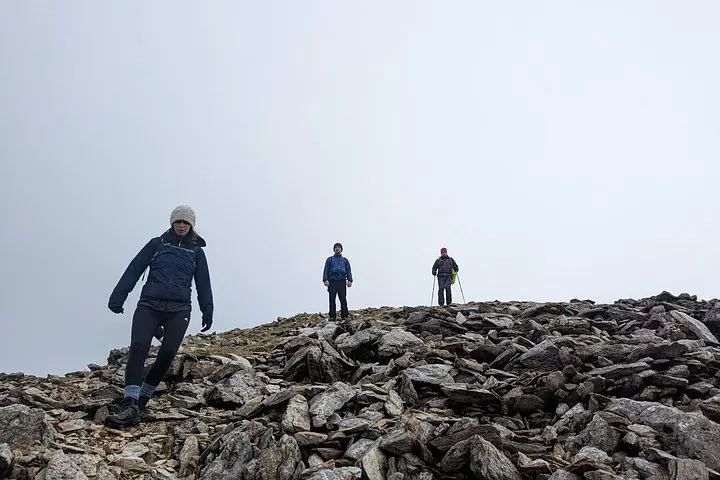
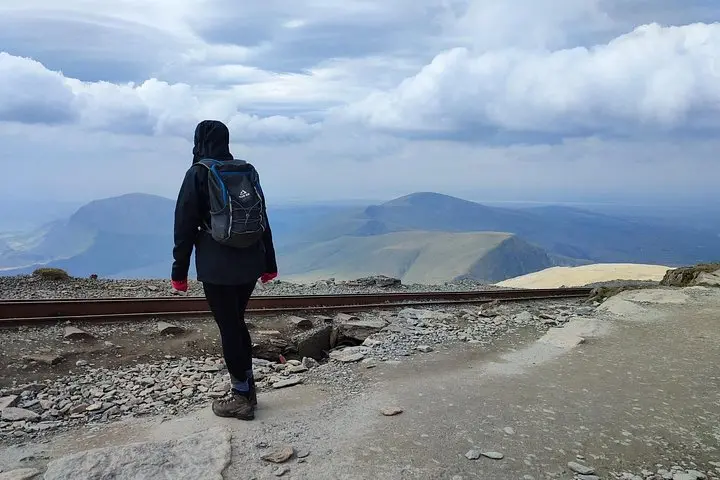
History rides the summit, too. Since 1896, trains have eased visitors to 1,085 meters, and in summer a summit café may open. But the mountain makes the rules. Weather shuts doors, clouds swallow views, and the café cannot be counted on. Pack your own warmth—food, layers, resolve. On a clear day, the panorama stretches to the Llŷn Peninsula and over to Anglesey, with blue lochs pooling far below. On a wild day, the wind shouldering the cairn reminds you who calls the tempo.
Guides here earn their keep in the margins—choosing safe lines, reading a gust before it hits, and pacing the group for a solid 14 km day with around 900 meters of ascent. Descent often traces the escarpment with big views dropping into the valley and across to Llanberis, slate heaps scarring the hillsides like a history book left open. It’s a full mountain day—no handrails beyond stone pitching and your own footwork.
Practicalities matter. Expect 6–7 hours on your feet. The Ranger car park is pay-and-display, and the Sherpa buses serve the western flank in season. Bring 2–3 liters of water, a waterproof shell, and a warm midlayer even in July. The mountain is fair but firm: it offers a generous summit if you arrive ready—fed, hydrated, and layered—willing to let the weather steer the story.
Expect approximately 14 km (8.7 miles) round-trip with about 900 m (2,950 ft) of ascent, typically 6–7 hours depending on conditions and group pace.
The ascent follows the Snowdon Ranger Path, a quieter western approach. The guide may choose a different descent along the escarpment depending on weather and group ability.
No. It usually operates May–September and often closes in bad weather. Always bring your own food and hot drinks.
Toilets are available in Llanberis and sometimes at the summit when the café is open. There are no facilities at the Ranger car park itself.
Dogs are not recommended on group summit days due to livestock, terrain, and group pacing. Service animals are permitted.
In season, Sherpa bus services stop near the Snowdon Ranger area—check current S4/S97 timetables. Otherwise, arrange a taxi from Caernarfon or Llanberis.
Wales Outdoors - Cardiff operates guided outdoor trips and adventures with an emphasis on safety, stewardship, and memorable experiences.
Morning light slides across Llyn Cwellyn as the mountain wakes, a cold breath rolling off Yr Wyddfa and nudging ripples toward the shore. Boots click in the Snowdon Ranger car park, flasks hiss open, and a qualified mountain leader gathers the group—steady, unhurried, and tuned to the weather. The Ranger Path rises from farmland into rougher country, a stout track of stone that soon tilts your calves into work. Skylarks chatter overhead while the slope insists you find a rhythm. The mountain doesn’t shout; it steadily invites, step by step, toward the skyline.
Morning light slides across Llyn Cwellyn as the mountain wakes, a cold breath rolling off Yr Wyddfa and nudging ripples toward the shore. Boots click in the Snowdon Ranger car park, flasks hiss open, and a qualified mountain leader gathers the group—steady, unhurried, and tuned to the weather. The Ranger Path rises from farmland into rougher country, a stout track of stone that soon tilts your calves into work. Skylarks chatter overhead while the slope insists you find a rhythm. The mountain doesn’t shout; it steadily invites, step by step, toward the skyline.
This is the quieter side of Wales’s highest peak. While the Pyg and Miners’ routes draw crowds, the Ranger Path often moves with a calmer pulse, giving you space to hear the wind drumming the ridges and the distant Snowdon Mountain Railway clatter across the shoulder. Underfoot it’s classic Eryri: slate fragments, scuffed grit, and a long, even gradient that tightens near Cwm Clogwyn. Your guide points out the etched geology—volcanic tuffs and rhyolites shaped by ice—and threads in the culture: the Welsh name, Yr Wyddfa, and Llanberis’s slate legacy that once fueled a world.
History rides the summit, too. Since 1896, trains have eased visitors to 1,085 meters, and in summer a summit café may open. But the mountain makes the rules. Weather shuts doors, clouds swallow views, and the café cannot be counted on. Pack your own warmth—food, layers, resolve. On a clear day, the panorama stretches to the Llŷn Peninsula and over to Anglesey, with blue lochs pooling far below. On a wild day, the wind shouldering the cairn reminds you who calls the tempo.
Guides here earn their keep in the margins—choosing safe lines, reading a gust before it hits, and pacing the group for a solid 14 km day with around 900 meters of ascent. Descent often traces the escarpment with big views dropping into the valley and across to Llanberis, slate heaps scarring the hillsides like a history book left open. It’s a full mountain day—no handrails beyond stone pitching and your own footwork.
Practicalities matter. Expect 6–7 hours on your feet. The Ranger car park is pay-and-display, and the Sherpa buses serve the western flank in season. Bring 2–3 liters of water, a waterproof shell, and a warm midlayer even in July. The mountain is fair but firm: it offers a generous summit if you arrive ready—fed, hydrated, and layered—willing to let the weather steer the story.