THE ADVENTURE COLLECTIVE® · Independent discovery and booking for outdoor travel

Pedal through Central Park’s mix of engineered vistas, rocky outcrops and cultural landmarks on a two‑hour guided loop. This practical guide covers route expectations, gear and timing so you can make the most of a compact urban adventure.
Pedal through Central Park’s mix of engineered vistas, rocky outcrops and cultural landmarks on a two‑hour guided loop. This practical guide covers route expectations, gear and timing so you can make the most of a compact urban adventure.
The morning light strikes the northern edge of the Reservoir and the first pedal stroke carries you under a tunnel of mature elms. The city hums at the park’s borders while inside carriage roads curve past rock outcrops, open lawns and quiet ponds; the rhythm of the ride is urban and elemental at once.
Verified experiences and guided adventures in the surrounding area.
Operated by Bike Rent NYC · New York, New York
The morning light strikes the northern edge of the Reservoir and the first pedal stroke carries you under a tunnel of mature elms. The city hums at the park’s borders while inside carriage roads curve past rock outcrops, open lawns and quiet ponds; the rhythm of the ride is urban and elemental at once.
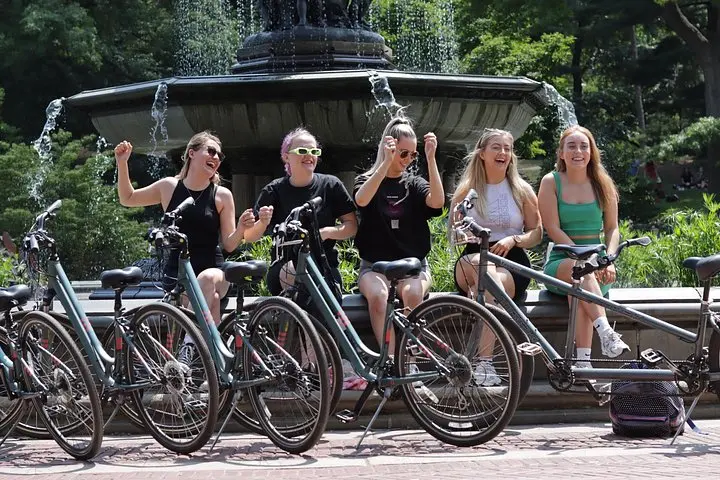
Central Park was designed by Frederick Law Olmsted and Calvert Vaux in the mid‑19th century to create public green space on Manhattan’s bedrock—look for exposed Manhattan schist at several viewpoints. The park’s landscape blends engineered vistas, Victorian gardens and rugged, wooded pockets like the Ravine and the Ramble. Cultural touchstones—Bethesda Fountain, Belvedere Castle, Strawberry Fields—dot the route and reflect New York’s civic life: concerts, impromptu games and daily commuters all share the same paths.
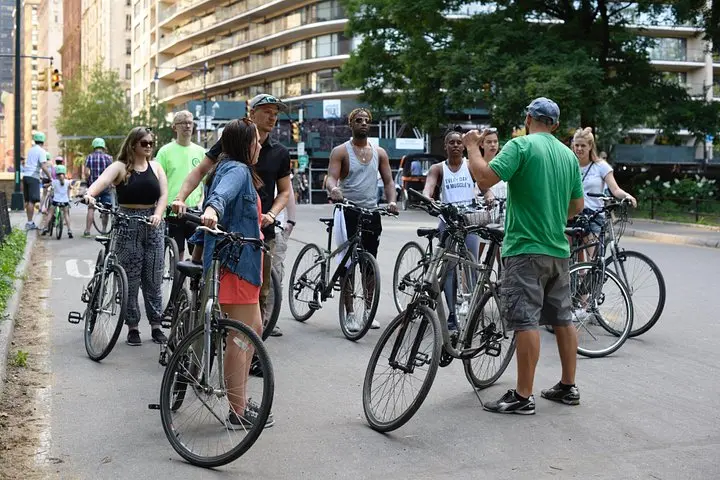
Expect about 6–8 miles of mostly paved carriage roads in a two‑hour loop with gentle grades and cumulative elevation gain under 200 ft; terrain is kid‑and-accessible‑friendly when you use the wider paths. Guides explain history, point out geological features and steer clear of heavy pedestrian sections.
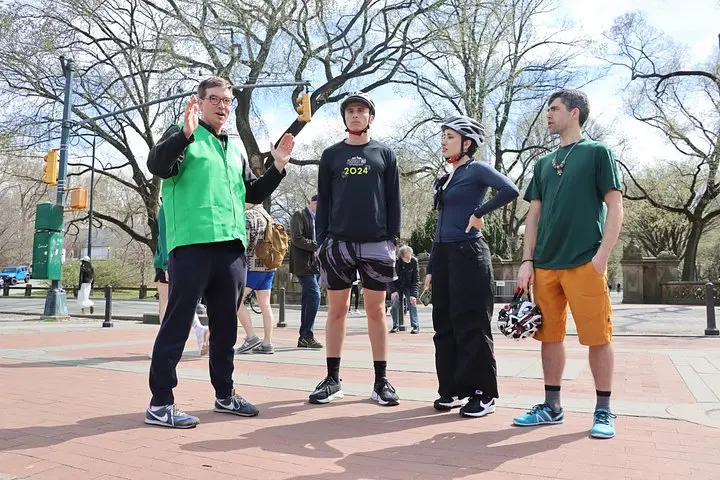
Practical tips: arrive 15 minutes early to collect your Trek or Giant bike and helmet; accessible handcycles and child trailers are available. One guide per 15 riders keeps the pace steady and safe. Bring a refillable water bottle, wear layers for changing microclimates, and time your ride for early morning or late afternoon to avoid peak crowds. Respect cyclists’ speed limits, yield to pedestrians, and lock your bike if you explore on foot—Central Park rewards close attention with quieter corners and frequent wildlife sightings.
The tour runs about two hours and typically covers 6–8 miles on paved carriage roads with gentle grades.
Yes—helmets are available on request and operators provide child bikes, trailers and seats as needed.
Accessible handcycles are available; contact the operator ahead of time to arrange equipment and any special assistance.
You can cancel for a full refund if you cancel at least 24 hours before the scheduled departure; rescheduling is allowed with no additional cost.
Bike Rent NYC operates guided outdoor trips and adventures with an emphasis on safety, stewardship, and memorable experiences.

The morning light strikes the northern edge of the Reservoir and the first pedal stroke carries you under a tunnel of mature elms. The city hums at the park’s borders while inside carriage roads curve past rock outcrops, open lawns and quiet ponds; the rhythm of the ride is urban and elemental at once.
The morning light strikes the northern edge of the Reservoir and the first pedal stroke carries you under a tunnel of mature elms. The city hums at the park’s borders while inside carriage roads curve past rock outcrops, open lawns and quiet ponds; the rhythm of the ride is urban and elemental at once.
Central Park was designed by Frederick Law Olmsted and Calvert Vaux in the mid‑19th century to create public green space on Manhattan’s bedrock—look for exposed Manhattan schist at several viewpoints. The park’s landscape blends engineered vistas, Victorian gardens and rugged, wooded pockets like the Ravine and the Ramble. Cultural touchstones—Bethesda Fountain, Belvedere Castle, Strawberry Fields—dot the route and reflect New York’s civic life: concerts, impromptu games and daily commuters all share the same paths.
Expect about 6–8 miles of mostly paved carriage roads in a two‑hour loop with gentle grades and cumulative elevation gain under 200 ft; terrain is kid‑and-accessible‑friendly when you use the wider paths. Guides explain history, point out geological features and steer clear of heavy pedestrian sections.
Practical tips: arrive 15 minutes early to collect your Trek or Giant bike and helmet; accessible handcycles and child trailers are available. One guide per 15 riders keeps the pace steady and safe. Bring a refillable water bottle, wear layers for changing microclimates, and time your ride for early morning or late afternoon to avoid peak crowds. Respect cyclists’ speed limits, yield to pedestrians, and lock your bike if you explore on foot—Central Park rewards close attention with quieter corners and frequent wildlife sightings.