THE ADVENTURE COLLECTIVE® · Independent discovery and booking for outdoor travel

Spend a single, carefully paced day exploring Egypt’s pyramid evolution—from the Step Pyramid at Saqqara to the Great Pyramid and the experimental forms at Dahshur. This guided tour combines door‑to‑door transport, an Egyptology guide and a local lunch for a focused archaeological experience.
Spend a single, carefully paced day exploring Egypt’s pyramid evolution—from the Step Pyramid at Saqqara to the Great Pyramid and the experimental forms at Dahshur. This guided tour combines door‑to‑door transport, an Egyptology guide and a local lunch for a focused archaeological experience.
You step out of the air‑conditioned car and the desert light pins long shadows across stones older than most modern nations.
Verified experiences and guided adventures in the surrounding area.
Operated by Egypt Gift Tours · Giza, Giza Governorate
You step out of the air‑conditioned car and the desert light pins long shadows across stones older than most modern nations.
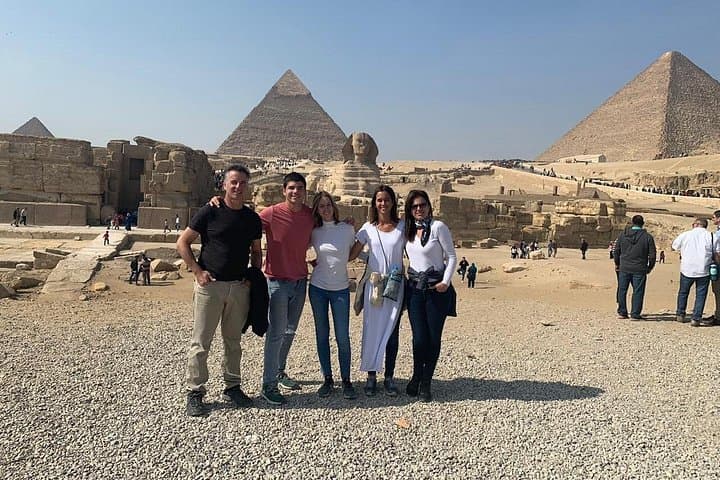
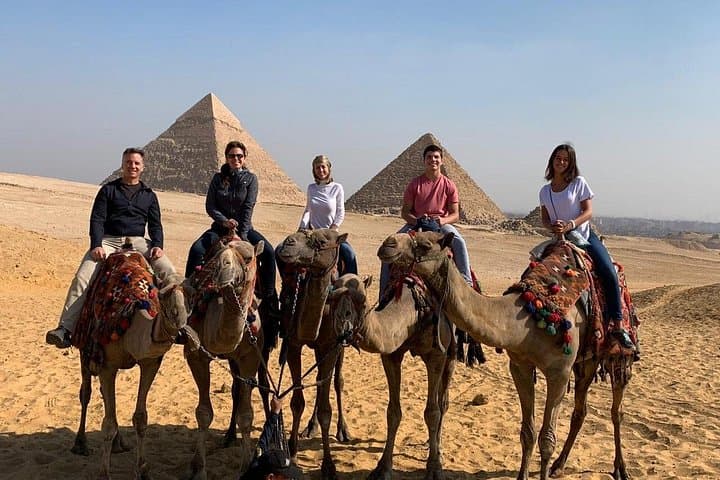
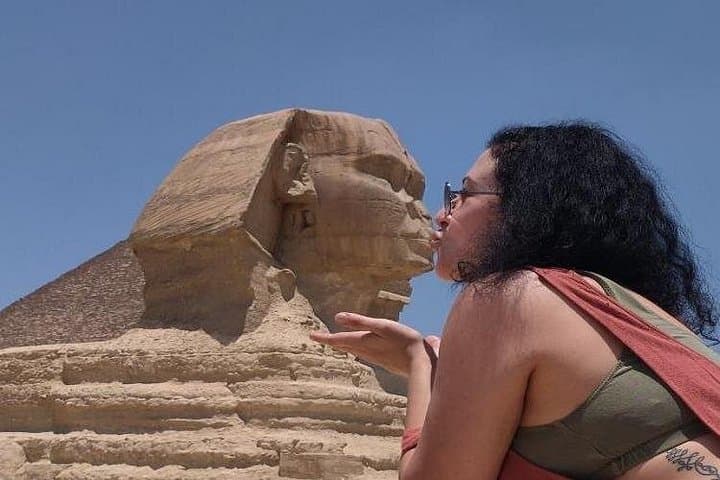
The Giza Plateau spreads like a ruinous skyline: the Great Pyramid rising with deliberate geometry, the squat form of the Sphinx watching over the valley temple, and beyond the sands the low ridge that hides Dahshur’s bent and red pyramids. That same day moves inland to Saqqara, where the stepped silhouette of Djoser—arguably the world’s first major stone monument—marks a turning point in funerary architecture.
This one‑day guided route stitches together three eras of pyramid building. At Giza, visitors examine the classic Old Kingdom funerary complex and the valley temple associated with Khafre; at Saqqara they see mastabas and richly decorated noble tombs revealing daily life; at Dahshur they observe experimental forms under King Snefru that preceded the Giza monuments. Geology is simple: limestone bedrock quarried nearby, shifting sands and wind causing slow surface erosion.
Practicalities matter: the tour runs about eight hours with door‑to‑door transfers, an English‑speaking Egyptology guide, and lunch included—entrance fees and optional interior access are extra. Footing is uneven, shade sparse, and temperatures can swing dramatically; early starts and sunscreen are nonnegotiable. Bring water, sun protection, good walking shoes and a camera with extra battery. Allow time at each stop to absorb the scale—these sites ask for orientation and patience more than speed.
Entrance fees and optional internal pyramid access are usually not included and must be paid on site; check with your operator for current prices.
Yes, the tour includes door‑to‑door pickup and drop‑off by air‑conditioned vehicle within Cairo and Giza pickup zones.
Interior access is possible at some pyramids but requires an additional ticket and may be restricted for conservation and safety reasons.
Lightweight, breathable clothes that cover shoulders and knees are respectful and practical; closed shoes are recommended for uneven terrain.
Egypt Gift Tours operates guided outdoor trips and adventures with an emphasis on safety, stewardship, and memorable experiences.

You step out of the air‑conditioned car and the desert light pins long shadows across stones older than most modern nations.
You step out of the air‑conditioned car and the desert light pins long shadows across stones older than most modern nations.
The Giza Plateau spreads like a ruinous skyline: the Great Pyramid rising with deliberate geometry, the squat form of the Sphinx watching over the valley temple, and beyond the sands the low ridge that hides Dahshur’s bent and red pyramids. That same day moves inland to Saqqara, where the stepped silhouette of Djoser—arguably the world’s first major stone monument—marks a turning point in funerary architecture.
This one‑day guided route stitches together three eras of pyramid building. At Giza, visitors examine the classic Old Kingdom funerary complex and the valley temple associated with Khafre; at Saqqara they see mastabas and richly decorated noble tombs revealing daily life; at Dahshur they observe experimental forms under King Snefru that preceded the Giza monuments. Geology is simple: limestone bedrock quarried nearby, shifting sands and wind causing slow surface erosion.
Practicalities matter: the tour runs about eight hours with door‑to‑door transfers, an English‑speaking Egyptology guide, and lunch included—entrance fees and optional interior access are extra. Footing is uneven, shade sparse, and temperatures can swing dramatically; early starts and sunscreen are nonnegotiable. Bring water, sun protection, good walking shoes and a camera with extra battery. Allow time at each stop to absorb the scale—these sites ask for orientation and patience more than speed.