THE ADVENTURE COLLECTIVE® · Independent discovery and booking for outdoor travel

Step onto the Giza Plateau for a guided, skip-the-line exploration of the Great Pyramid complex and the Sphinx. This practical, half-day tour from Cairo covers the main public areas, offers private transport and local insights to help you navigate history and the desert setting.
Step onto the Giza Plateau for a guided, skip-the-line exploration of the Great Pyramid complex and the Sphinx. This practical, half-day tour from Cairo covers the main public areas, offers private transport and local insights to help you navigate history and the desert setting.
The morning sun hits the broad shoulders of the Great Pyramid and the desert wind dares you to step closer. On the Giza Plateau, the three pyramids—Khufu, Khafre and Menkaure—rise from golden stone, their faces catching light while the Sphinx watches over the complex with an inscrutable gaze.
Verified experiences and guided adventures in the surrounding area.
Operated by Emo Tours Swiss · Giza, Cairo Governorate
The morning sun hits the broad shoulders of the Great Pyramid and the desert wind dares you to step closer. On the Giza Plateau, the three pyramids—Khufu, Khafre and Menkaure—rise from golden stone, their faces catching light while the Sphinx watches over the complex with an inscrutable gaze.
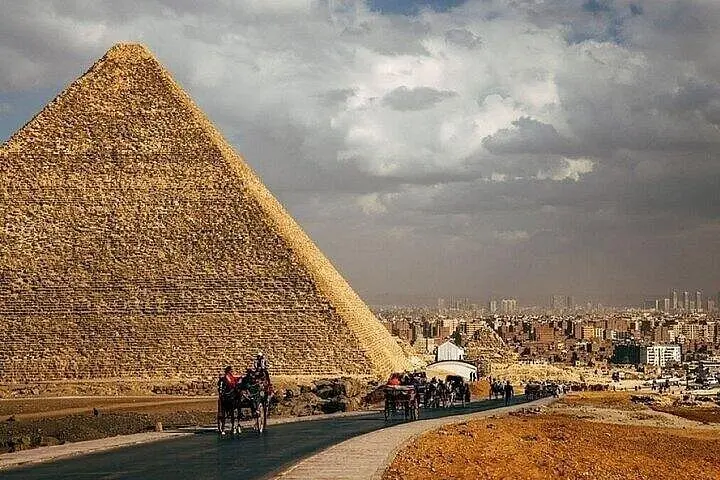
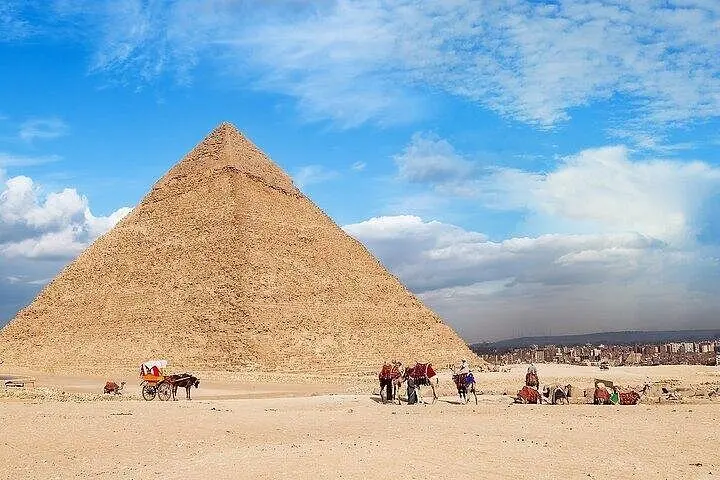
These monuments date to Egypt’s Old Kingdom (c. 2600–2500 BCE); the pyramids are royal tombs of pharaohs whose funerary complexes and nearby Valley Temples reveal practical engineering and ritual design. Geologically, the plateau is a capped bedrock of limestone and sand that has preserved these structures for millennia while giving the site its bleached, wind-polished surfaces. Locally, vendors and camel handlers form part of the living scene—expect a lively, sometimes commercial atmosphere around the monuments.
Practical guidance: this guided, skip-the-line day tour from Cairo lasts about four hours, includes hotel pickup and bottled water, and covers the basic public areas of the plateau—interior pyramid access typically requires a separate ticket. Walks across uneven compacted sand and stone total roughly 1–2 miles (1.5–3 km); wear sturdy closed-toe shoes, sun protection and modest clothing out of cultural respect. Mornings are cooler and less crowded; afternoons bring heat. Security checks are standard and photography of some restricted zones may be limited.
Bring small cash for incidental purchases and tipping, and plan transport time back to Cairo—traffic can add 30–60 minutes. With a knowledgeable guide and a clear, practical plan, a half-day at Giza delivers an immediate connection to ancient engineering and living Egyptian culture.
This tour includes basic access to the Giza Plateau and external views; entry to pyramid interiors usually requires a separate ticket available on-site or in advance.
Yes—private air-conditioned transportation with pickup and drop-off from Cairo or Giza hotels is included.
The provider advises it is not recommended for travelers with serious spinal, heart or pregnancy-related conditions due to security checks, walking and uneven surfaces.
Basic restroom facilities and vendors are present near the plateau; bottled water is included on the tour but bring extra cash for snacks or additional purchases.
Emo Tours Swiss operates guided outdoor trips and adventures with an emphasis on safety, stewardship, and memorable experiences.
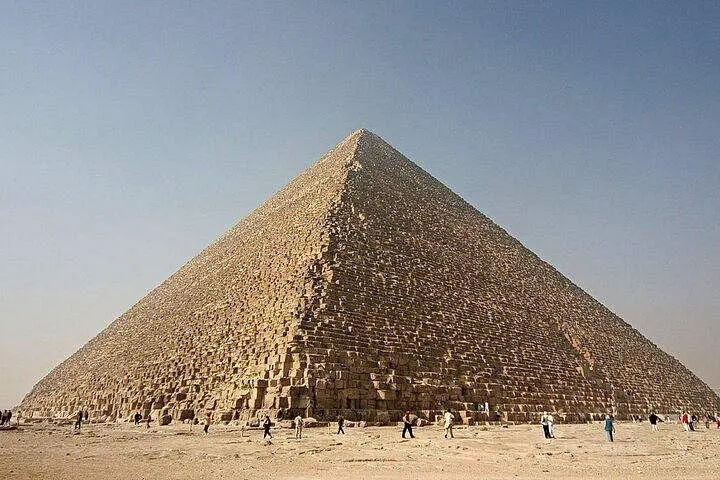
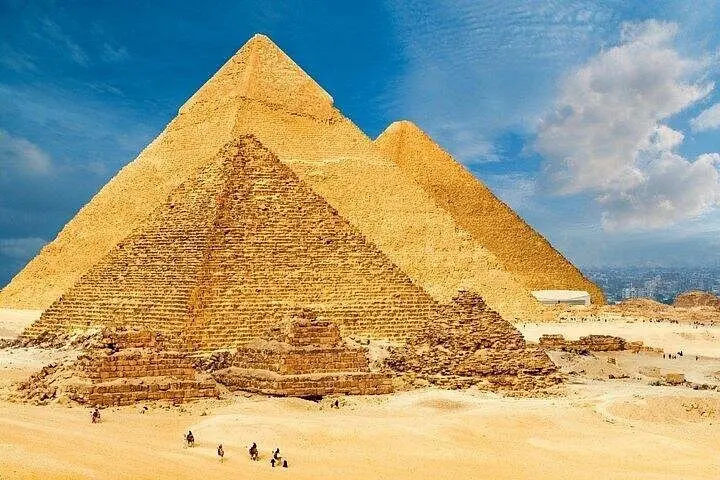
The morning sun hits the broad shoulders of the Great Pyramid and the desert wind dares you to step closer. On the Giza Plateau, the three pyramids—Khufu, Khafre and Menkaure—rise from golden stone, their faces catching light while the Sphinx watches over the complex with an inscrutable gaze.
The morning sun hits the broad shoulders of the Great Pyramid and the desert wind dares you to step closer. On the Giza Plateau, the three pyramids—Khufu, Khafre and Menkaure—rise from golden stone, their faces catching light while the Sphinx watches over the complex with an inscrutable gaze.
These monuments date to Egypt’s Old Kingdom (c. 2600–2500 BCE); the pyramids are royal tombs of pharaohs whose funerary complexes and nearby Valley Temples reveal practical engineering and ritual design. Geologically, the plateau is a capped bedrock of limestone and sand that has preserved these structures for millennia while giving the site its bleached, wind-polished surfaces. Locally, vendors and camel handlers form part of the living scene—expect a lively, sometimes commercial atmosphere around the monuments.
Practical guidance: this guided, skip-the-line day tour from Cairo lasts about four hours, includes hotel pickup and bottled water, and covers the basic public areas of the plateau—interior pyramid access typically requires a separate ticket. Walks across uneven compacted sand and stone total roughly 1–2 miles (1.5–3 km); wear sturdy closed-toe shoes, sun protection and modest clothing out of cultural respect. Mornings are cooler and less crowded; afternoons bring heat. Security checks are standard and photography of some restricted zones may be limited.
Bring small cash for incidental purchases and tipping, and plan transport time back to Cairo—traffic can add 30–60 minutes. With a knowledgeable guide and a clear, practical plan, a half-day at Giza delivers an immediate connection to ancient engineering and living Egyptian culture.