THE ADVENTURE COLLECTIVE® · Independent discovery and booking for outdoor travel

Walk through the ruins of Nicaragua’s first colonial capital with a guide who brings 16th-century life into focus. Enjoy close-up views of Momotombo volcano and Lake Xolotlán while exploring partially restored foundations and a historic church.
Walk through the ruins of Nicaragua’s first colonial capital with a guide who brings 16th-century life into focus. Enjoy close-up views of Momotombo volcano and Lake Xolotlán while exploring partially restored foundations and a historic church.
The first view arrives before the ruins do: a low ring of stone, the slope of a weathered hill, and beyond them the cone of Momotombo daring the sky while Lake Xolotlán glints below. Visitors step from León City into a landscape where ash and sediment have shaped both ground and story — wind ruffling dry grasses as a guide traces the outline of a vanished colonial capital.
Verified experiences and guided adventures in the surrounding area.
Operated by Vapues Travel · León, León Department
The first view arrives before the ruins do: a low ring of stone, the slope of a weathered hill, and beyond them the cone of Momotombo daring the sky while Lake Xolotlán glints below. Visitors step from León City into a landscape where ash and sediment have shaped both ground and story — wind ruffling dry grasses as a guide traces the outline of a vanished colonial capital.
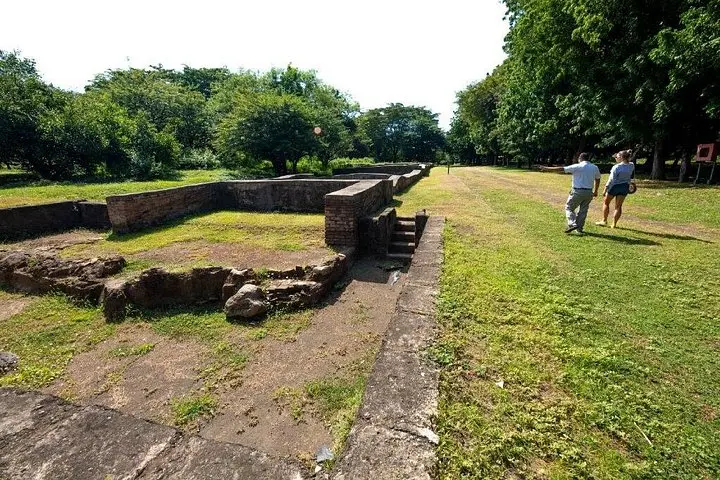
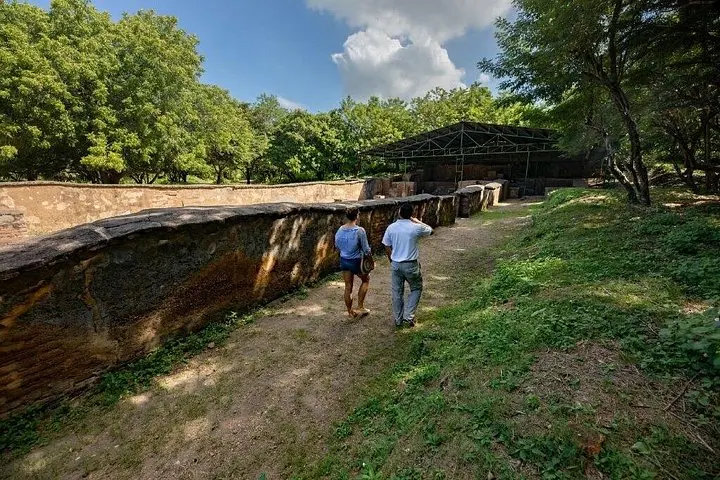
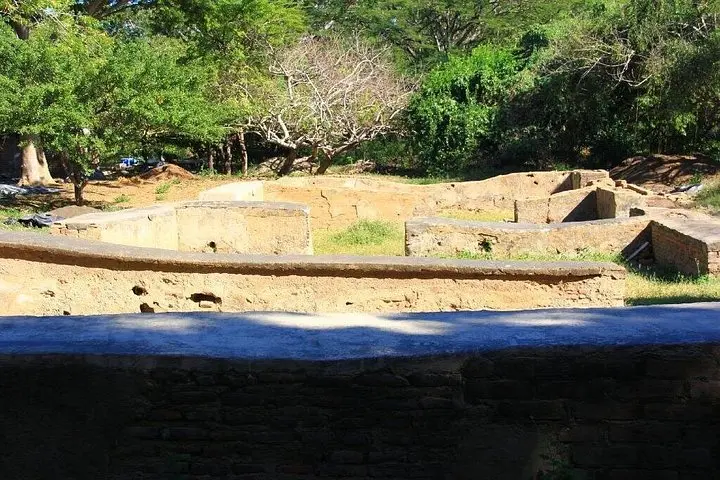
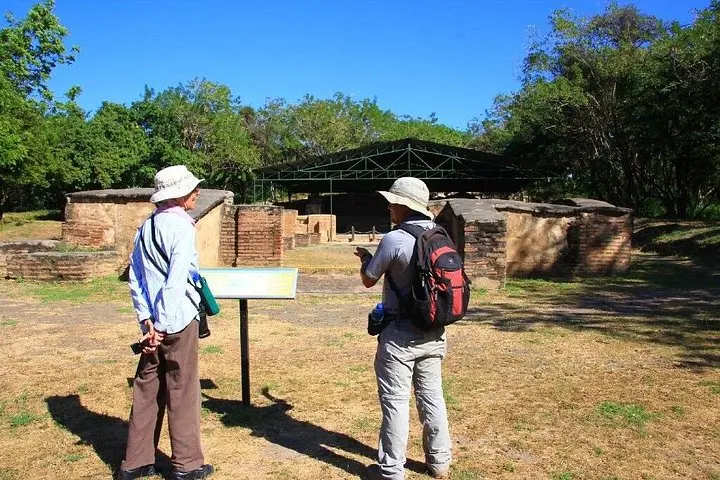
Founded in 1524, León Viejo was abandoned in the early 17th century after repeated earthquakes and volcanic eruptions—Momotombo’s eruptions and lake-borne sediments gradually buried streets and homes. Excavations begun in the 20th century revealed foundations, a partially restored church and the town’s grid; UNESCO added the site to its World Heritage list in 2000 for its rare preservation of a Spanish colonial town in situ.
Geology is visible here: pumice layers, compacted ash, and lacustrine deposits that tell the story of how fire and water forced a city to move. Culturally, the site sits within the larger León region—known for its revolutionary history and vibrant cathedral—making a short ruin visit an easy cultural add-on to city stays.
Practically, expect a guided 90–120 minute walk over dirt paths with a short uphill to a viewpoint overlooking the lake and Momotombo. Wear sturdy walking shoes, sun protection, and bring water; the site is exposed and can be hot midday. Photographers will want golden-hour light for Momotombo. Respect roped areas and stay on marked paths to protect fragile archaeology. Pickup from León and basic facilities nearby make this a straightforward half-day outing for history-minded travelers.
The excursion lasts about 90–120 minutes including transport from León and on-site interpretation by a professional guide.
Paths are generally stable but uneven; the tour is rated easy and suitable for most, though some sections include short uphill walks that may be challenging for those with severe mobility restrictions.
According to the itinerary, admission and pick-up/drop-off are included—confirm details with the operator at booking.
Early morning or late afternoon offers cooler temperatures and the best light on Momotombo; midday can be hot and bright.
Vapues Travel operates guided outdoor trips and adventures with an emphasis on safety, stewardship, and memorable experiences.
The first view arrives before the ruins do: a low ring of stone, the slope of a weathered hill, and beyond them the cone of Momotombo daring the sky while Lake Xolotlán glints below. Visitors step from León City into a landscape where ash and sediment have shaped both ground and story — wind ruffling dry grasses as a guide traces the outline of a vanished colonial capital.
The first view arrives before the ruins do: a low ring of stone, the slope of a weathered hill, and beyond them the cone of Momotombo daring the sky while Lake Xolotlán glints below. Visitors step from León City into a landscape where ash and sediment have shaped both ground and story — wind ruffling dry grasses as a guide traces the outline of a vanished colonial capital.
Founded in 1524, León Viejo was abandoned in the early 17th century after repeated earthquakes and volcanic eruptions—Momotombo’s eruptions and lake-borne sediments gradually buried streets and homes. Excavations begun in the 20th century revealed foundations, a partially restored church and the town’s grid; UNESCO added the site to its World Heritage list in 2000 for its rare preservation of a Spanish colonial town in situ.
Geology is visible here: pumice layers, compacted ash, and lacustrine deposits that tell the story of how fire and water forced a city to move. Culturally, the site sits within the larger León region—known for its revolutionary history and vibrant cathedral—making a short ruin visit an easy cultural add-on to city stays.
Practically, expect a guided 90–120 minute walk over dirt paths with a short uphill to a viewpoint overlooking the lake and Momotombo. Wear sturdy walking shoes, sun protection, and bring water; the site is exposed and can be hot midday. Photographers will want golden-hour light for Momotombo. Respect roped areas and stay on marked paths to protect fragile archaeology. Pickup from León and basic facilities nearby make this a straightforward half-day outing for history-minded travelers.