THE ADVENTURE COLLECTIVE® · Independent discovery and booking for outdoor travel

Navigate Fez’s 9,000‑plus alleys with a local guide who turns a bewildering medieval medina into a curated cultural walk. See Al‑Qarawiyyin, the Chouara tannery, and artisan souks while learning local customs and practical tips for exploring the city on foot.
Navigate Fez’s 9,000‑plus alleys with a local guide who turns a bewildering medieval medina into a curated cultural walk. See Al‑Qarawiyyin, the Chouara tannery, and artisan souks while learning local customs and practical tips for exploring the city on foot.
You step through an unmarked arch and the city folds around you: alleys narrow, air thickens with spice and leather, and the medina’s stone walls redirect your pace. A local guide threads the group through arteries of commerce — past dyers’ vats that flash indigo, and the rhythmic hammering of coppersmiths in Place Seffarine — making the maze readable.
Verified experiences and guided adventures in the surrounding area.
Operated by Morocco Medinas Tours · Fez, Fès-Meknès
You step through an unmarked arch and the city folds around you: alleys narrow, air thickens with spice and leather, and the medina’s stone walls redirect your pace. A local guide threads the group through arteries of commerce — past dyers’ vats that flash indigo, and the rhythmic hammering of coppersmiths in Place Seffarine — making the maze readable.
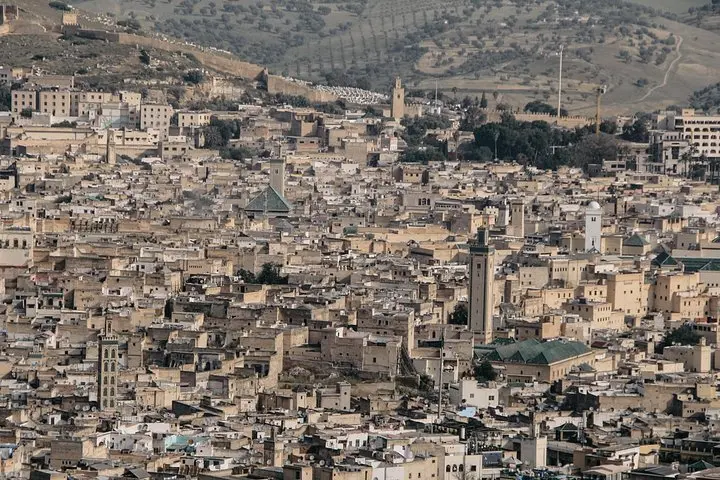
Fez el-Bali, founded in the 8th–9th centuries, is one of the world’s largest car-free urban areas and a living medieval city. Its streets curve around landmarks such as Al-Qarawiyyin (859 CE), Al Attarine Madrasa (14th century), and the centuries-old Chouara tannery. The architecture blends Andalusian and North African influences; zellij tilework, carved stucco, and cedar ceilings mark religious and educational spaces, while souks preserve guild-based craft districts.
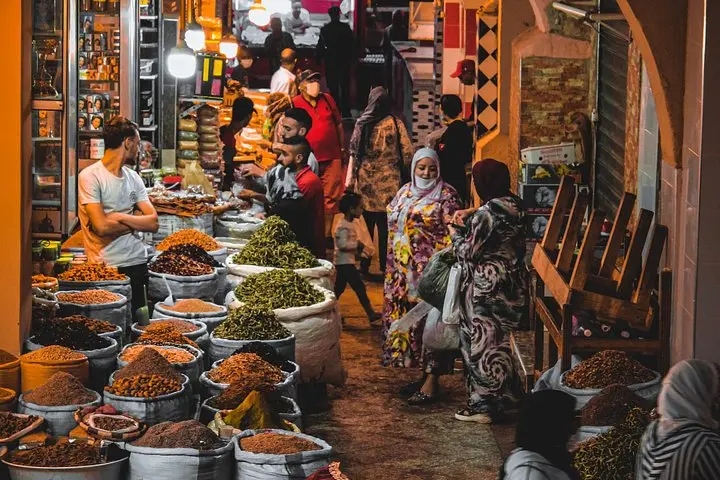
Beyond monuments, the medina hums with daily life: market calls, simmering tagines, and artisans continuing techniques unchanged for centuries. Your guide interprets social codes — where to photograph, how to bargain, and which alleys lead to quieter viewpoints — turning disorientation into discovery.
Practical guidance: expect 4–5 hours on foot across uneven cobbles and narrow passages; wear sturdy shoes and carry water. The tour typically includes entrance fees and a tea or light lunch, and can be adapted for mobility needs. Mid-morning departures avoid midday heat and the busiest crowds. Keep valuables secured, follow your guide’s lead in sacred sites, and leave time after the tour to explore a craft stall you discover — the medina rewards slower curiosity.
Expect continuous walking for 4–5 hours with frequent stops; distances vary but anticipate several miles and many steps on uneven ground.
Most standard tours include entrance fees to selected sites; confirm specific admissions (e.g., madrasa or museum) with your operator before booking.
Large parts of the medina are narrow and step‑filled; some operators can adapt routes and transport options, but full wheelchair access is limited.
Yes — the tour facilitates authentic interactions, but bargaining is customary and a polite approach yields the best experience.
Morocco Medinas Tours operates guided outdoor trips and adventures with an emphasis on safety, stewardship, and memorable experiences.
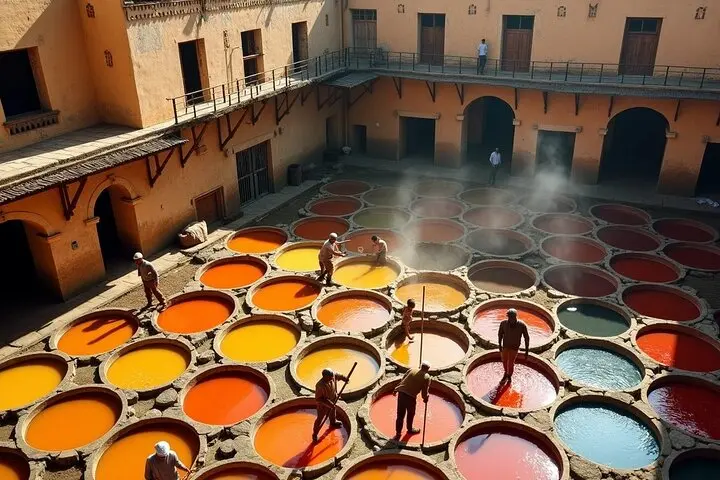
You step through an unmarked arch and the city folds around you: alleys narrow, air thickens with spice and leather, and the medina’s stone walls redirect your pace. A local guide threads the group through arteries of commerce — past dyers’ vats that flash indigo, and the rhythmic hammering of coppersmiths in Place Seffarine — making the maze readable.
You step through an unmarked arch and the city folds around you: alleys narrow, air thickens with spice and leather, and the medina’s stone walls redirect your pace. A local guide threads the group through arteries of commerce — past dyers’ vats that flash indigo, and the rhythmic hammering of coppersmiths in Place Seffarine — making the maze readable.
Fez el-Bali, founded in the 8th–9th centuries, is one of the world’s largest car-free urban areas and a living medieval city. Its streets curve around landmarks such as Al-Qarawiyyin (859 CE), Al Attarine Madrasa (14th century), and the centuries-old Chouara tannery. The architecture blends Andalusian and North African influences; zellij tilework, carved stucco, and cedar ceilings mark religious and educational spaces, while souks preserve guild-based craft districts.
Beyond monuments, the medina hums with daily life: market calls, simmering tagines, and artisans continuing techniques unchanged for centuries. Your guide interprets social codes — where to photograph, how to bargain, and which alleys lead to quieter viewpoints — turning disorientation into discovery.
Practical guidance: expect 4–5 hours on foot across uneven cobbles and narrow passages; wear sturdy shoes and carry water. The tour typically includes entrance fees and a tea or light lunch, and can be adapted for mobility needs. Mid-morning departures avoid midday heat and the busiest crowds. Keep valuables secured, follow your guide’s lead in sacred sites, and leave time after the tour to explore a craft stall you discover — the medina rewards slower curiosity.