THE ADVENTURE COLLECTIVE® · Independent discovery and booking for outdoor travel

A guided, conservation-focused trek from Chatham Bay up to Mt. Taboi through one of the Eastern Caribbean’s last dry-forest stands. Learn local natural history, watch for endemic reptiles, and earn sweeping island views on a four-hour hike.
A guided, conservation-focused trek from Chatham Bay up to Mt. Taboi through one of the Eastern Caribbean’s last dry-forest stands. Learn local natural history, watch for endemic reptiles, and earn sweeping island views on a four-hour hike.
You step off the road above Chatham Bay and into a hush of leaves: the trail first hums gently beneath your boots, then narrows as the forest takes on an older voice. Shade thickens. Birds move like punctuation. Your guide scans trunks and rock outcrops; sometimes they point and the forest obliges with a flash of scaled skin — a Union Island Gecko or, more rarely, a Grenadine Pink Rhino Iguana.
Verified experiences and guided adventures in the surrounding area.
Operated by Union Island Environmental Alliance · Clifton, Grenadines
You step off the road above Chatham Bay and into a hush of leaves: the trail first hums gently beneath your boots, then narrows as the forest takes on an older voice. Shade thickens. Birds move like punctuation. Your guide scans trunks and rock outcrops; sometimes they point and the forest obliges with a flash of scaled skin — a Union Island Gecko or, more rarely, a Grenadine Pink Rhino Iguana.
This route crosses one of the Eastern Caribbean’s remaining stands of Lesser Antillean Dry Forest, a fragile habitat shaped by limestone ridges and seasonal droughts. The area has been protected by local authorities; only licensed UIEA guides are permitted to lead visitors, a practice born of conservation and community stewardship. The geology is compact: shallow soils over limestone, quick drainage, and rocky steps that sharpen into a steeper climb toward Mt. Taboi’s summit.
Culturally, the track links small coastal communities to higher ground used historically for fuel and forage; today guides combine natural-history commentary with local stories about fishing, boatbuilding, and life between reef and ridge.
Practical guidance: expect roughly 4 hours round-trip with steady climbs in the latter half and uneven limestone footing. Wear grippy shoes, carry at least 1.5–2 liters of water, and start early to avoid midday sun on exposed sections. Move quietly to increase chances of wildlife sightings, follow your guide’s lead, and pack out all waste—this reserve survives because visitors do the small things right.
Yes — the Forest Reserve is closed to unaccompanied visitors; only approved UIEA guides are authorized to lead groups.
It’s moderate: the first half is gentle, but the trail becomes steeper and rockier approaching Mt. Taboi; expect about 4 hours round-trip.
Guides often point out the Union Island Gecko and may locate Grenadine Pink Rhino Iguanas; birdlife and native plants are abundant.
No facilities on the trail—bring snacks included by the tour operator and use facilities in Clifton before departure.
Union Island Environmental Alliance operates guided outdoor trips and adventures with an emphasis on safety, stewardship, and memorable experiences.
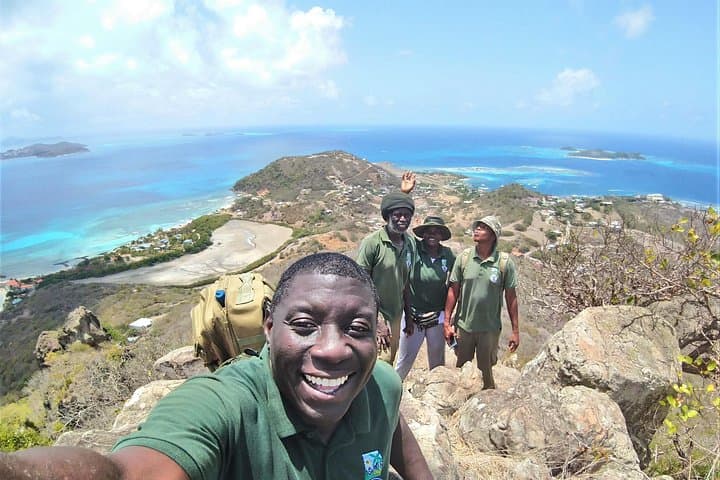

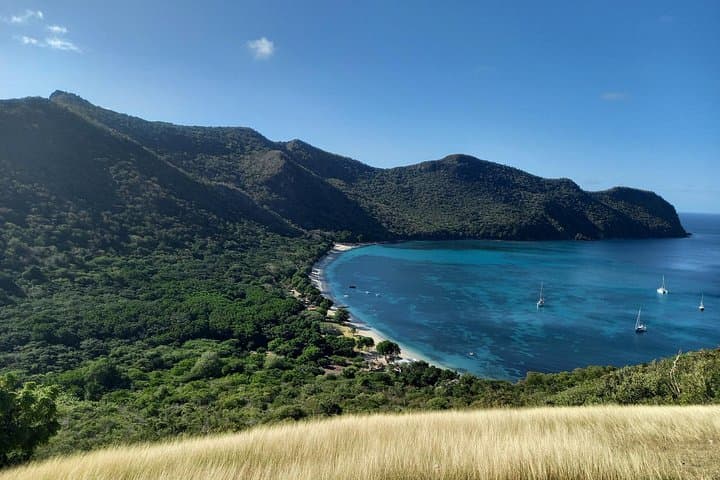

You step off the road above Chatham Bay and into a hush of leaves: the trail first hums gently beneath your boots, then narrows as the forest takes on an older voice. Shade thickens. Birds move like punctuation. Your guide scans trunks and rock outcrops; sometimes they point and the forest obliges with a flash of scaled skin — a Union Island Gecko or, more rarely, a Grenadine Pink Rhino Iguana.
You step off the road above Chatham Bay and into a hush of leaves: the trail first hums gently beneath your boots, then narrows as the forest takes on an older voice. Shade thickens. Birds move like punctuation. Your guide scans trunks and rock outcrops; sometimes they point and the forest obliges with a flash of scaled skin — a Union Island Gecko or, more rarely, a Grenadine Pink Rhino Iguana.
This route crosses one of the Eastern Caribbean’s remaining stands of Lesser Antillean Dry Forest, a fragile habitat shaped by limestone ridges and seasonal droughts. The area has been protected by local authorities; only licensed UIEA guides are permitted to lead visitors, a practice born of conservation and community stewardship. The geology is compact: shallow soils over limestone, quick drainage, and rocky steps that sharpen into a steeper climb toward Mt. Taboi’s summit.
Culturally, the track links small coastal communities to higher ground used historically for fuel and forage; today guides combine natural-history commentary with local stories about fishing, boatbuilding, and life between reef and ridge.
Practical guidance: expect roughly 4 hours round-trip with steady climbs in the latter half and uneven limestone footing. Wear grippy shoes, carry at least 1.5–2 liters of water, and start early to avoid midday sun on exposed sections. Move quietly to increase chances of wildlife sightings, follow your guide’s lead, and pack out all waste—this reserve survives because visitors do the small things right.