THE ADVENTURE COLLECTIVE® · Independent discovery and booking for outdoor travel

Walk from saguaro-studded flats to pine-lined ridges on guided hikes through Saguaro National Park. Small groups, interpretive guides, and routes that cross six climate zones make this a compact but rich desert-to-mountain experience.
Walk from saguaro-studded flats to pine-lined ridges on guided hikes through Saguaro National Park. Small groups, interpretive guides, and routes that cross six climate zones make this a compact but rich desert-to-mountain experience.
You step out of the visitor center into a bowl of vertical green — saguaros standing like slow-moving columns casting long, cool shadows across gravel and creosote. A guide leads the way: the trail rises, the air changes, and within miles the cactus-dominated flats give way to oak and eventually pines as you climb through six distinct life zones.
Verified experiences and guided adventures in the surrounding area.
Operated by Arizona Climbing Guides · Tucson, Arizona
You step out of the visitor center into a bowl of vertical green — saguaros standing like slow-moving columns casting long, cool shadows across gravel and creosote. A guide leads the way: the trail rises, the air changes, and within miles the cactus-dominated flats give way to oak and eventually pines as you climb through six distinct life zones.
The park preserves a slice of the Sonoran Desert and parts of the Rincon and Tucson mountain ranges. Once protected as a national monument in the 1930s and redesignated a national park in 1994, its landscape records volcanic uplifts, ancient riverbeds, and the long relationship between the Tohono O'odham people and the saguaro.
Expect geology in motion: rounded volcanic outcrops, alluvial fans, and weathered granite; culturally, the trails trace routes used for generations and showcase petroglyphs and historic ranching traces in lesser-visited corners.
Practically, guided hikes vary from interpretive strolls to full-day mileage; groups are small and guides provide context on ecology and safety. Bring layered sun protection, carry at least 2–3 liters of water, and wear supportive footwear for rocky, sometimes loose terrain. Guides supply backpacks and trekking poles and include bottled water and lunch on longer outings.
Early mornings and late afternoons are best for both temperature and wildlife activity; summer demands an early start. Keep a respectful distance from saguaros and wildlife, follow your guide’s route, and prepare for rapid temperature swings as you gain elevation. With preparation, these guided hikes deliver the raw contrast of desert heat and cool mountain air in one outing.
Guides recommend a moderate fitness level—able to hike several miles with elevation gain and stand for interpretive stops; specific routes vary from easy strolls to full-day mileage.
Guided hikes typically include a certified guide, bottled water and lunch on full-day trips, plus use of backpacks and trekking poles when noted in the listing.
Fall through spring offer milder daytime temperatures; in summer start very early to avoid midday heat and check for seasonal closures due to extreme temperatures.
Younger children may be able to join easier interpretive walks, but full-day and steeper routes require greater stamina—check age and fitness requirements with the operator.
Arizona Climbing Guides operates guided outdoor trips and adventures with an emphasis on safety, stewardship, and memorable experiences.
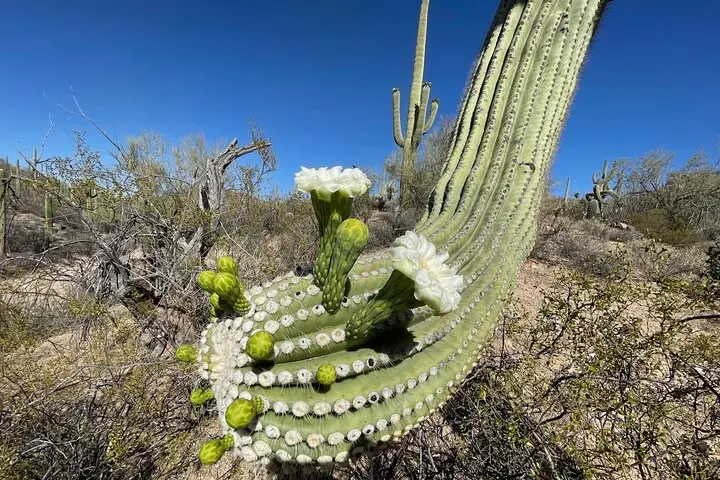
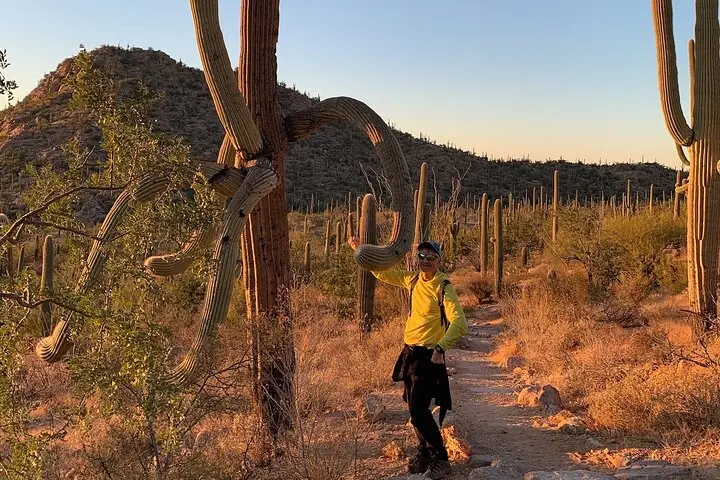
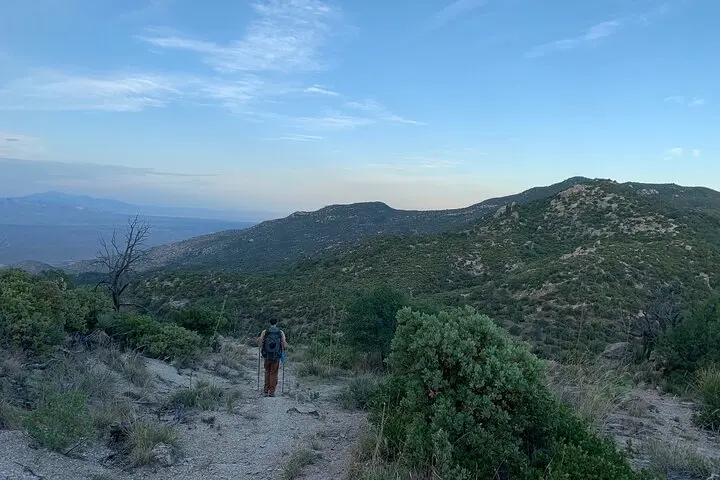
You step out of the visitor center into a bowl of vertical green — saguaros standing like slow-moving columns casting long, cool shadows across gravel and creosote. A guide leads the way: the trail rises, the air changes, and within miles the cactus-dominated flats give way to oak and eventually pines as you climb through six distinct life zones.
You step out of the visitor center into a bowl of vertical green — saguaros standing like slow-moving columns casting long, cool shadows across gravel and creosote. A guide leads the way: the trail rises, the air changes, and within miles the cactus-dominated flats give way to oak and eventually pines as you climb through six distinct life zones.
The park preserves a slice of the Sonoran Desert and parts of the Rincon and Tucson mountain ranges. Once protected as a national monument in the 1930s and redesignated a national park in 1994, its landscape records volcanic uplifts, ancient riverbeds, and the long relationship between the Tohono O'odham people and the saguaro.
Expect geology in motion: rounded volcanic outcrops, alluvial fans, and weathered granite; culturally, the trails trace routes used for generations and showcase petroglyphs and historic ranching traces in lesser-visited corners.
Practically, guided hikes vary from interpretive strolls to full-day mileage; groups are small and guides provide context on ecology and safety. Bring layered sun protection, carry at least 2–3 liters of water, and wear supportive footwear for rocky, sometimes loose terrain. Guides supply backpacks and trekking poles and include bottled water and lunch on longer outings.
Early mornings and late afternoons are best for both temperature and wildlife activity; summer demands an early start. Keep a respectful distance from saguaros and wildlife, follow your guide’s route, and prepare for rapid temperature swings as you gain elevation. With preparation, these guided hikes deliver the raw contrast of desert heat and cool mountain air in one outing.