THE ADVENTURE COLLECTIVE® · Independent discovery and booking for outdoor travel

Pedal a Hobie-style kayak into Moreton Bay’s mangrove creeks and learn lure skills from an expert guide. This four-hour session focuses on soft-plastic techniques, spot selection and using fishfinders to find bites.
Pedal a Hobie-style kayak into Moreton Bay’s mangrove creeks and learn lure skills from an expert guide. This four-hour session focuses on soft-plastic techniques, spot selection and using fishfinders to find bites.
You push off a fringe of mangrove, the hull slipping through tannin-stained water while the bay breathes open ahead—low islands, a salt breeze, and the steady hum of pedal drives turning beneath your feet.
Verified experiences and guided adventures in the surrounding area.
You push off a fringe of mangrove, the hull slipping through tannin-stained water while the bay breathes open ahead—low islands, a salt breeze, and the steady hum of pedal drives turning beneath your feet.
This four-hour guided kayak fishing experience uses Hobie-style pedal kayaks built for stability and sight-fishing across Moreton Bay and adjacent waterways. The coastline here records layers of geology: Pleistocene sand islands, tidal flats and sheltered channels carved by sea-level shifts. The area sits on the traditional lands of the Quandamooka peoples, whose fishing knowledge shaped sustainable harvest rhythms long before modern guides arrived.
Expect instruction on lure presentation, soft-plastic rigging, and using small fishfinders to read structure from your kayak. Guides focus on technique—spot selection, jighead weights, and reading tidal runs—so novices leave with usable skills and anglers sharpen their craft in a new platform.
Practical notes: routes are sheltered but exposed to wind and tide; tides set where fish congregate and where launching is straightforward. Hobie pedal systems reduce upper-body strain, but balance and basic instruction-following are essential. Bring polarized sunglasses, reef shoes, and a waterproof layer; pack snacks and extra water for sun-soaked afternoons. Operators typically supply tackle and rods, but if you have preferred lures bring them.
This trip is tactile—currents nudging the kayak, a line tightening like a question answered—and it’s designed to teach as much as to catch. For a half-day on Moreton Bay, it’s an efficient, instructive way to fish from a platform that puts you in direct contact with fishable structure and bay life.
No — guides provide basic instruction and use stable Hobie pedal kayaks; a willingness to follow guidance and basic balance is enough.
Most guides supply rods, reels and terminal tackle, but bringing favorite soft-plastics and jigs is recommended if you have preferred lures.
Common targets include flathead, whiting, bream and occasional snapper or mangrove jacks depending on location and season.
Operators monitor conditions—trips may be rescheduled for strong winds or hazardous weather; light rain is usually acceptable but check cancellation policy.
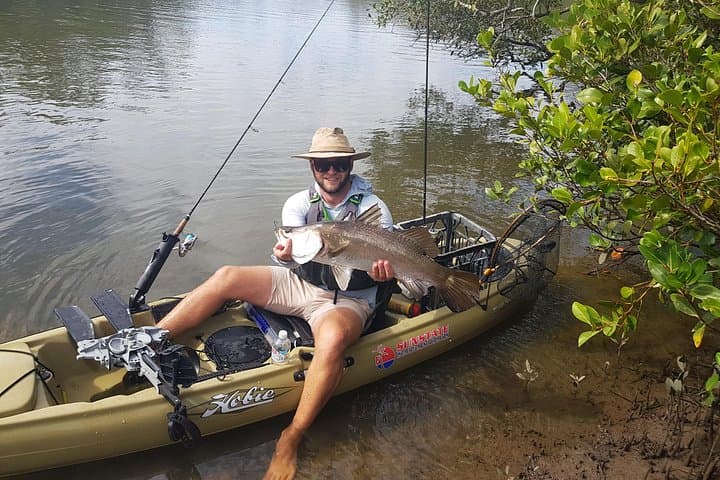
You push off a fringe of mangrove, the hull slipping through tannin-stained water while the bay breathes open ahead—low islands, a salt breeze, and the steady hum of pedal drives turning beneath your feet.
You push off a fringe of mangrove, the hull slipping through tannin-stained water while the bay breathes open ahead—low islands, a salt breeze, and the steady hum of pedal drives turning beneath your feet.
This four-hour guided kayak fishing experience uses Hobie-style pedal kayaks built for stability and sight-fishing across Moreton Bay and adjacent waterways. The coastline here records layers of geology: Pleistocene sand islands, tidal flats and sheltered channels carved by sea-level shifts. The area sits on the traditional lands of the Quandamooka peoples, whose fishing knowledge shaped sustainable harvest rhythms long before modern guides arrived.
Expect instruction on lure presentation, soft-plastic rigging, and using small fishfinders to read structure from your kayak. Guides focus on technique—spot selection, jighead weights, and reading tidal runs—so novices leave with usable skills and anglers sharpen their craft in a new platform.
Practical notes: routes are sheltered but exposed to wind and tide; tides set where fish congregate and where launching is straightforward. Hobie pedal systems reduce upper-body strain, but balance and basic instruction-following are essential. Bring polarized sunglasses, reef shoes, and a waterproof layer; pack snacks and extra water for sun-soaked afternoons. Operators typically supply tackle and rods, but if you have preferred lures bring them.
This trip is tactile—currents nudging the kayak, a line tightening like a question answered—and it’s designed to teach as much as to catch. For a half-day on Moreton Bay, it’s an efficient, instructive way to fish from a platform that puts you in direct contact with fishable structure and bay life.