THE ADVENTURE COLLECTIVE® · Independent discovery and booking for outdoor travel

A guided 8 km loop up Monte Tezio with 500 m ascent that pairs sweeping views of Lake Trasimeno with on-trail archaeology. Ideal for hikers with moderate fitness and an interest in Umbrian landscape and history.
A guided 8 km loop up Monte Tezio with 500 m ascent that pairs sweeping views of Lake Trasimeno with on-trail archaeology. Ideal for hikers with moderate fitness and an interest in Umbrian landscape and history.
You step out of Perugia’s valley air into a fir-and-chestnut corridor where the path begins to climb, and the city’s red roofs shrink below. The trail pushes you through scrub and beech, then opens onto summit meadows near 900–1,000 m with a raw sweep of Lake Trasimeno and Umbria’s rolling hills.
Verified experiences and guided adventures in the surrounding area.
Operated by Le Storie di Loz · Perugia, Umbria
You step out of Perugia’s valley air into a fir-and-chestnut corridor where the path begins to climb, and the city’s red roofs shrink below. The trail pushes you through scrub and beech, then opens onto summit meadows near 900–1,000 m with a raw sweep of Lake Trasimeno and Umbria’s rolling hills.
Monte Tezio’s slopes are both geological and cultural pages: Apennine limestone underfoot, terraces and the remains of a settlement that dates back millennia, and medieval snow pits once used to store winter ice. Local guides often combine natural-history notes with archaeology; this route lets you read both the land and the people who shaped it.
The loop is about 8 km with roughly 500 m of elevation gain, mostly singletrack and short dirt-road sections—classified medium difficulty and typically covered in 4–5 hours with a certified environmental hiking guide (archaeologist). Expect narrow rooty sections, exposed ridgelines for photo stops, and open meadows at the high point where wind and sun become active players.
Practical edge: hike in the morning to avoid heat and to catch the best light over Trasimeno; wear stiff-soled boots for rocky stretches, carry 1–1.5 liters of water, and bring a light layered shell. Note the tour includes coffee/tea and accommodates service animals; it’s not recommended for people with serious spinal or cardiovascular conditions. Leave archaeological features intact and follow your guide—these paths protect both wildlife and fragile heritage.
Most departures are from central Perugia; exact meeting location is provided after booking—allow time for a short transfer to trailheads outside the city.
The loop is medium difficulty—suitable for regular walkers with moderate fitness; beginners should train for continuous uphill walking and uneven terrain.
A certified environmental hiking guide who is also an archaeologist and hot beverages (coffee/tea); group sizes up to ~20 on shared departures.
Service animals are permitted; pet policies beyond service animals should be confirmed with the operator before booking.
Le Storie di Loz operates guided outdoor trips and adventures with an emphasis on safety, stewardship, and memorable experiences.
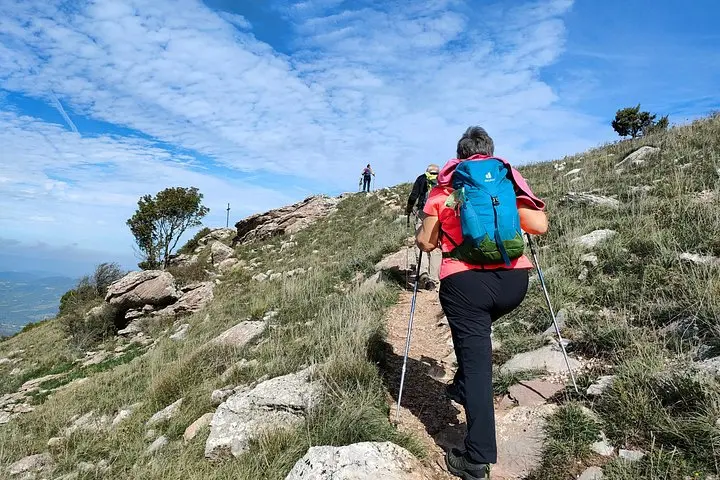
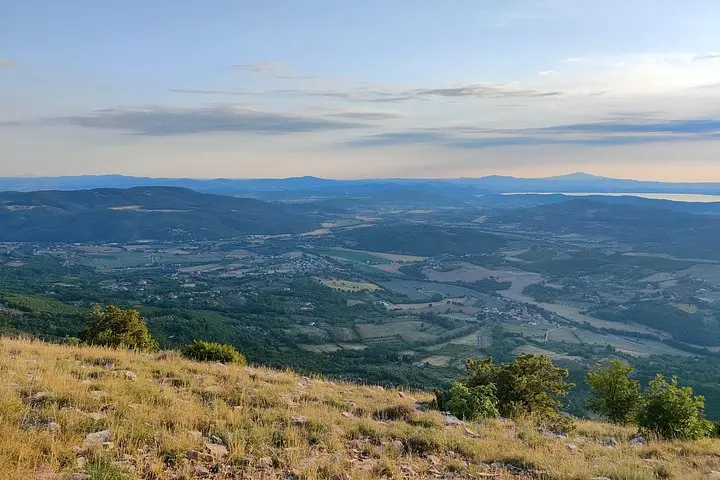
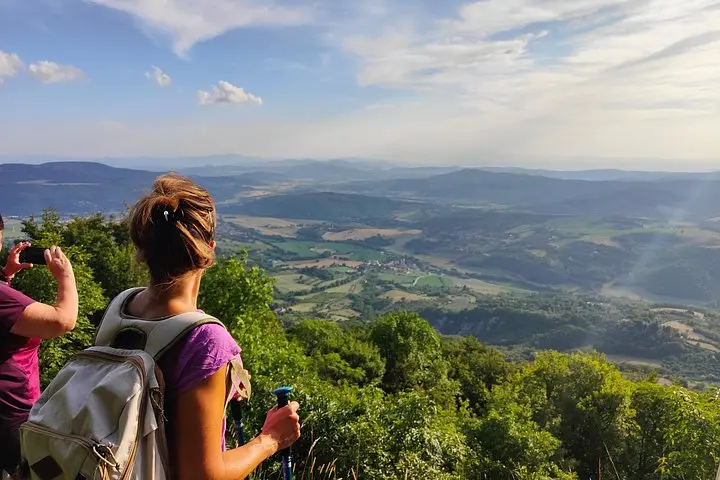
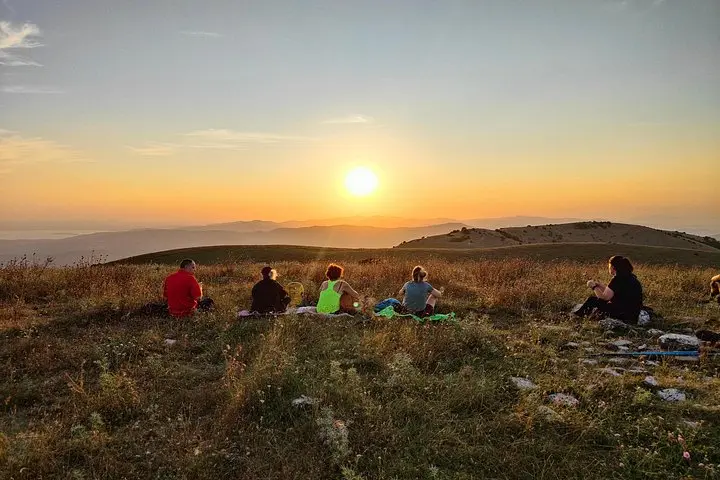
You step out of Perugia’s valley air into a fir-and-chestnut corridor where the path begins to climb, and the city’s red roofs shrink below. The trail pushes you through scrub and beech, then opens onto summit meadows near 900–1,000 m with a raw sweep of Lake Trasimeno and Umbria’s rolling hills.
You step out of Perugia’s valley air into a fir-and-chestnut corridor where the path begins to climb, and the city’s red roofs shrink below. The trail pushes you through scrub and beech, then opens onto summit meadows near 900–1,000 m with a raw sweep of Lake Trasimeno and Umbria’s rolling hills.
Monte Tezio’s slopes are both geological and cultural pages: Apennine limestone underfoot, terraces and the remains of a settlement that dates back millennia, and medieval snow pits once used to store winter ice. Local guides often combine natural-history notes with archaeology; this route lets you read both the land and the people who shaped it.
The loop is about 8 km with roughly 500 m of elevation gain, mostly singletrack and short dirt-road sections—classified medium difficulty and typically covered in 4–5 hours with a certified environmental hiking guide (archaeologist). Expect narrow rooty sections, exposed ridgelines for photo stops, and open meadows at the high point where wind and sun become active players.
Practical edge: hike in the morning to avoid heat and to catch the best light over Trasimeno; wear stiff-soled boots for rocky stretches, carry 1–1.5 liters of water, and bring a light layered shell. Note the tour includes coffee/tea and accommodates service animals; it’s not recommended for people with serious spinal or cardiovascular conditions. Leave archaeological features intact and follow your guide—these paths protect both wildlife and fragile heritage.