THE ADVENTURE COLLECTIVE® · Independent discovery and booking for outdoor travel

A focused 90–120 minute guided walk through Ohrid’s lakeside highlights — from the Chinar Tree and St. John at Kaneo to Samoil’s Fortress and the old bazaar. Learn the town’s layered history while moving at a steady, accessible pace.
A focused 90–120 minute guided walk through Ohrid’s lakeside highlights — from the Chinar Tree and St. John at Kaneo to Samoil’s Fortress and the old bazaar. Learn the town’s layered history while moving at a steady, accessible pace.
You meet at the 1,100-year Chinar Tree and the city opens up like a map beneath an old hand — Lake Ohrid to one side, terraced stone houses and church domes to the other. The guide leads a compact loop: a lakeside stroll past St. John at Kaneo, up cobbled alleys to the Roman theater and Gallery of Icons, then along the ridge to Samoil’s Fortress where the city and water spread out below.
Verified experiences and guided adventures in the surrounding area.
Operated by Wtatil.com · Ohrid, Ohrid Municipality
You meet at the 1,100-year Chinar Tree and the city opens up like a map beneath an old hand — Lake Ohrid to one side, terraced stone houses and church domes to the other. The guide leads a compact loop: a lakeside stroll past St. John at Kaneo, up cobbled alleys to the Roman theater and Gallery of Icons, then along the ridge to Samoil’s Fortress where the city and water spread out below.
Ohrid sits on one of Europe’s oldest lakes; its geology is a slow record of limestone cliffs and glacial-era basin shapes. The town’s churches and monasteries span Byzantine and medieval Macedonian styles — St. Sofija and St. Bogorodica Perivleptos show fresco layers and carved iconostasis, while Plaosnik marks centuries of ecclesiastical revival. The old bazaar (Charsija) still hums with local crafts and a measurable Ottoman footprint.
Practically: expect 90–120 minutes on largely paved, uneven cobbles with short stair sections and roughly 1.5–2.5 km of walking and about 40–80 m cumulative elevation gain. Bring comfortable shoes, a refillable bottle, and a light layer for windy lake exposure. Photography is easy but be respectful inside active churches. Mid-morning and late afternoon offer the best light and quieter lanes; guided groups are small, so you cover key sites efficiently without skipping local stories about paper-making, saints, and the Chinar’s community role.
The tour lasts about 90–120 minutes and covers roughly 1.5–2.5 km with short stair climbs and an elevation gain of approximately 40–80 m.
The guide visits church exteriors and some interiors where allowed; be respectful, follow signs about photography, and avoid flash in active worship spaces.
The route is rated easy but includes uneven cobbles and stairs; it’s suitable for children and most adults but may be challenging for those with significant mobility limitations.
Meet and finish is at the Chinar Tree square near the lakeside promenade — a central, easy-to-find landmark in Ohrid’s old town.
Wtatil.com operates guided outdoor trips and adventures with an emphasis on safety, stewardship, and memorable experiences.
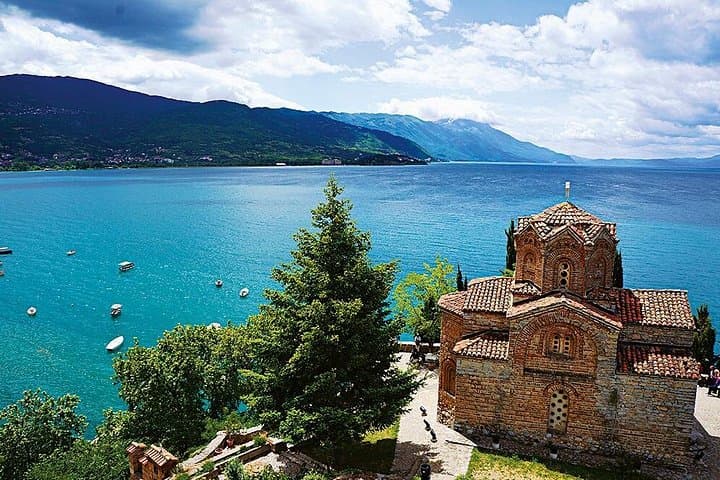
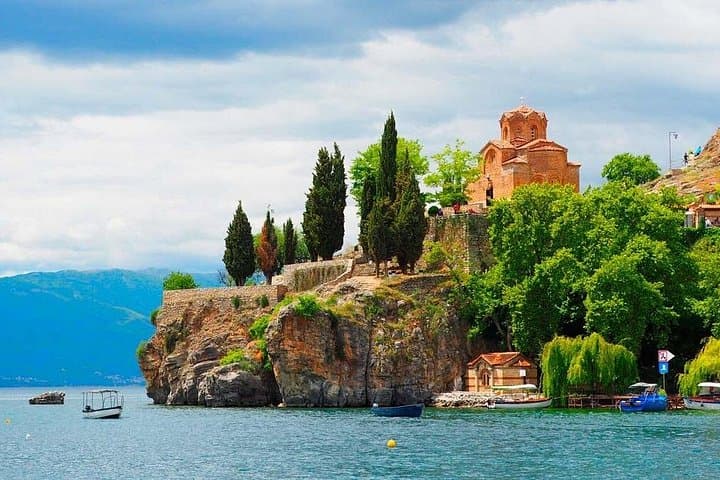

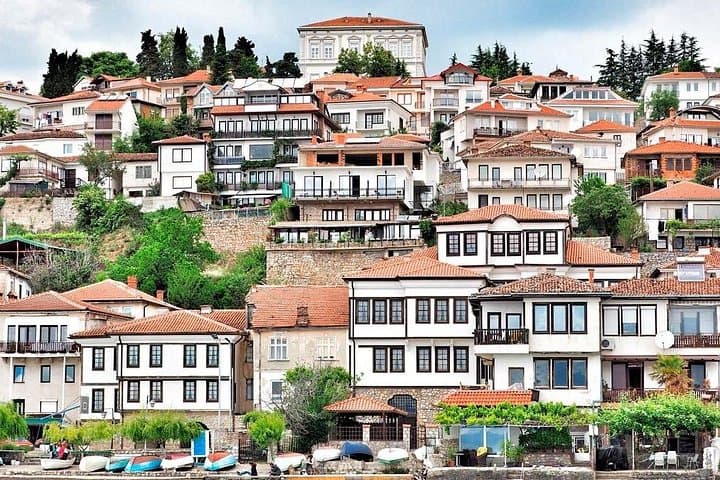
You meet at the 1,100-year Chinar Tree and the city opens up like a map beneath an old hand — Lake Ohrid to one side, terraced stone houses and church domes to the other. The guide leads a compact loop: a lakeside stroll past St. John at Kaneo, up cobbled alleys to the Roman theater and Gallery of Icons, then along the ridge to Samoil’s Fortress where the city and water spread out below.
You meet at the 1,100-year Chinar Tree and the city opens up like a map beneath an old hand — Lake Ohrid to one side, terraced stone houses and church domes to the other. The guide leads a compact loop: a lakeside stroll past St. John at Kaneo, up cobbled alleys to the Roman theater and Gallery of Icons, then along the ridge to Samoil’s Fortress where the city and water spread out below.
Ohrid sits on one of Europe’s oldest lakes; its geology is a slow record of limestone cliffs and glacial-era basin shapes. The town’s churches and monasteries span Byzantine and medieval Macedonian styles — St. Sofija and St. Bogorodica Perivleptos show fresco layers and carved iconostasis, while Plaosnik marks centuries of ecclesiastical revival. The old bazaar (Charsija) still hums with local crafts and a measurable Ottoman footprint.
Practically: expect 90–120 minutes on largely paved, uneven cobbles with short stair sections and roughly 1.5–2.5 km of walking and about 40–80 m cumulative elevation gain. Bring comfortable shoes, a refillable bottle, and a light layer for windy lake exposure. Photography is easy but be respectful inside active churches. Mid-morning and late afternoon offer the best light and quieter lanes; guided groups are small, so you cover key sites efficiently without skipping local stories about paper-making, saints, and the Chinar’s community role.