THE ADVENTURE COLLECTIVE® · Independent discovery and booking for outdoor travel

Leave Naples for a focused, small-group visit to Pompeii with skip-the-line access. Walk Roman streets with an expert guide, see preserved homes and public baths, and learn how the 79 AD eruption froze a city in time.
Leave Naples for a focused, small-group visit to Pompeii with skip-the-line access. Walk Roman streets with an expert guide, see preserved homes and public baths, and learn how the 79 AD eruption froze a city in time.
The morning bus eases out of Naples and the Gulf shrinks from view as Vesuvius looms, its dark flank watching over a city that stopped in 79 AD. Guests step off a climate-controlled vehicle at the archaeological park and, in a compact group, move through streets that still carry wheel-rut grooves and the echoes of everyday life.
Verified experiences and guided adventures in the surrounding area.
Operated by Tour Service Pompei · Pompeii, Campania
The morning bus eases out of Naples and the Gulf shrinks from view as Vesuvius looms, its dark flank watching over a city that stopped in 79 AD. Guests step off a climate-controlled vehicle at the archaeological park and, in a compact group, move through streets that still carry wheel-rut grooves and the echoes of everyday life.
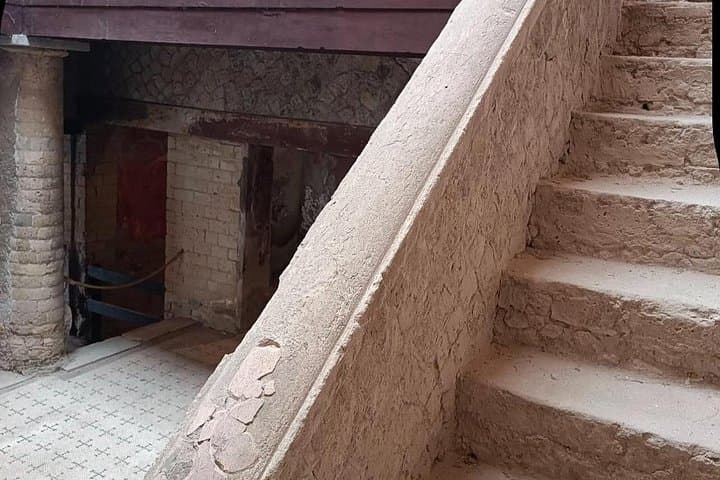
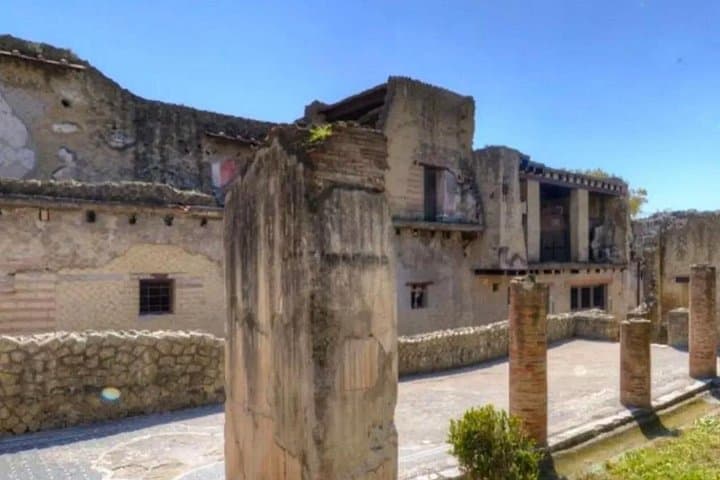
Pompeii is an archaeological snapshot: ash and pumice froze homes, frescoes, and shops beneath a volcanic mantle. Geology and history meet here — a stratified record of Roman urban planning, water systems and commerce exposed by nineteenth- and twentieth-century excavations. Local culture threads into the visit too; volunteer conservators work alongside guides to interpret findings for modern Neapolitan audiences and international visitors.
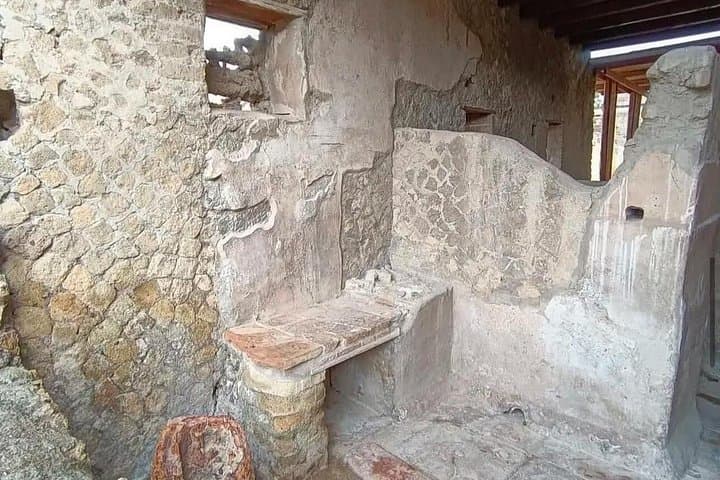
Expect two hours of focused walking on uneven Roman paving, with stops at household atria, bakeries, and public baths. The guide highlights construction methods, plaster pigments, and evidence of the eruption's final hours — practical context that keeps the story anchored to place. Bring sun protection and a refillable water bottle: summer heat intensifies on exposed stone, and shaded spots are limited.
Logistics are straightforward: departure from Naples, skip-the-line admission, and a return to the original meeting point. Mobility is mixed — ramps and accessible paths exist but much of the site has cobbles and thresholds. Photography is allowed but avoid touching frescoes or barriers. For travelers who want ancient Rome in full, this small-group option condenses the essentials with local insight and efficient transport, leaving time to explore Naples’ own streets afterward.
The guided portion at the archaeological park is typically about two hours; the full tour including transport from Naples is around four hours.
This tour includes skip-the-line admission, which minimizes queue time but does not eliminate short waits during peak periods.
Parts of Pompeii have ramps and more accessible paths, but many original streets and sites have uneven cobbles and steps—check with the operator for specific accessibility arrangements.
Yes, personal photography is permitted, but touching frescoes and entering restricted areas is prohibited to protect fragile remains.
Tour Service Pompei operates guided outdoor trips and adventures with an emphasis on safety, stewardship, and memorable experiences.
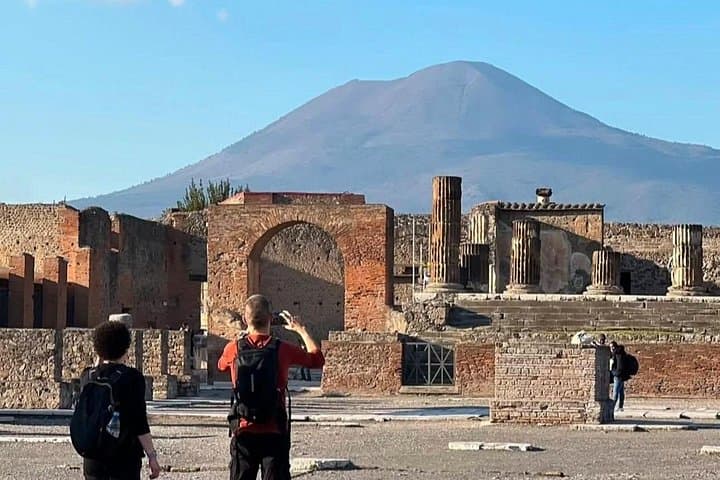
The morning bus eases out of Naples and the Gulf shrinks from view as Vesuvius looms, its dark flank watching over a city that stopped in 79 AD. Guests step off a climate-controlled vehicle at the archaeological park and, in a compact group, move through streets that still carry wheel-rut grooves and the echoes of everyday life.
The morning bus eases out of Naples and the Gulf shrinks from view as Vesuvius looms, its dark flank watching over a city that stopped in 79 AD. Guests step off a climate-controlled vehicle at the archaeological park and, in a compact group, move through streets that still carry wheel-rut grooves and the echoes of everyday life.
Pompeii is an archaeological snapshot: ash and pumice froze homes, frescoes, and shops beneath a volcanic mantle. Geology and history meet here — a stratified record of Roman urban planning, water systems and commerce exposed by nineteenth- and twentieth-century excavations. Local culture threads into the visit too; volunteer conservators work alongside guides to interpret findings for modern Neapolitan audiences and international visitors.
Expect two hours of focused walking on uneven Roman paving, with stops at household atria, bakeries, and public baths. The guide highlights construction methods, plaster pigments, and evidence of the eruption's final hours — practical context that keeps the story anchored to place. Bring sun protection and a refillable water bottle: summer heat intensifies on exposed stone, and shaded spots are limited.
Logistics are straightforward: departure from Naples, skip-the-line admission, and a return to the original meeting point. Mobility is mixed — ramps and accessible paths exist but much of the site has cobbles and thresholds. Photography is allowed but avoid touching frescoes or barriers. For travelers who want ancient Rome in full, this small-group option condenses the essentials with local insight and efficient transport, leaving time to explore Naples’ own streets afterward.