THE ADVENTURE COLLECTIVE® · Independent discovery and booking for outdoor travel

Walk Digbeth’s decorated canals and factory walls with a local guide who explains the stories behind each mural. This easy 5 km tour mixes photography stops with cultural context and accessible routing.
Walk Digbeth’s decorated canals and factory walls with a local guide who explains the stories behind each mural. This easy 5 km tour mixes photography stops with cultural context and accessible routing.
On a brisk morning outside the Eagle and Ball pub, a small group gathers as the guide in orange checks maps and smiles. The city smells of canal water and frying chip‑shop batter; brick walls lean in close, daring you to look up. This guided street art walk across Birmingham's canals and into Digbeth covers roughly five kilometres and lasts 90 to 120 minutes, or 90 minutes for the running option.
Verified experiences and guided adventures in the surrounding area.
Operated by Run of a Kind Birmingham · Birmingham, West Midlands
On a brisk morning outside the Eagle and Ball pub, a small group gathers as the guide in orange checks maps and smiles. The city smells of canal water and frying chip‑shop batter; brick walls lean in close, daring you to look up. This guided street art walk across Birmingham's canals and into Digbeth covers roughly five kilometres and lasts 90 to 120 minutes, or 90 minutes for the running option.
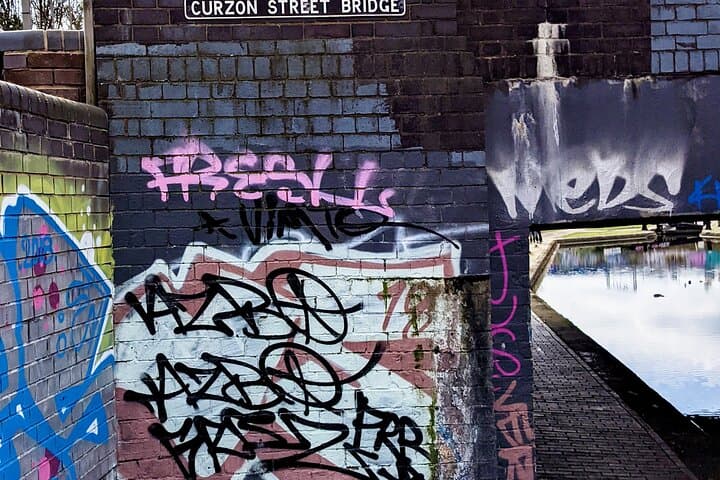
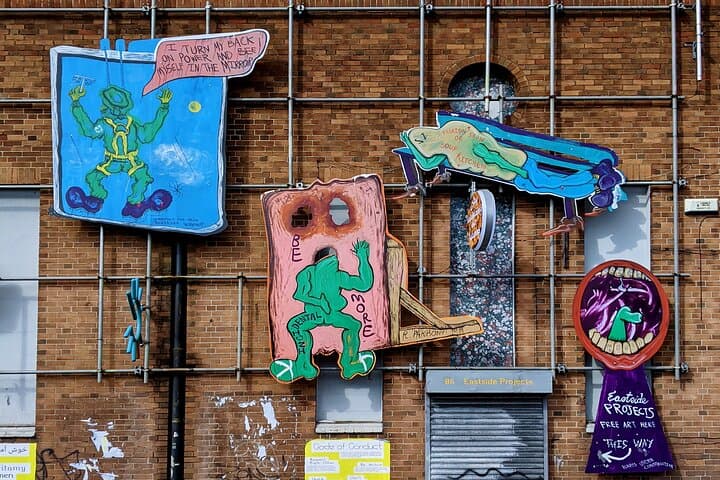
Birmingham's murals sit on former industrial shells—Victorian factories and canal warehouses—repainted with voices that reference immigration, labour history and recent protest movements. The tour highlights the Banksy connection in the Jewellery Quarter, the decorated Lock Keepers Cottage and large‑scale works by homegrown artists, including pieces around the Custard Factory and the car‑park mural of Pongo the orangutan by Louis Masai.
Geology and layout shape the route: low‑lying canal corridors and compact streets keep gradients minimal, so the walk is mostly flat though cobbles and uneven paving require attention. Culturally, Digbeth is a creative quarter formed by postwar migration and repurposed industry; conversations on the tour often touch on art's role in regeneration and activism.
Practical guidance: wear comfortable walking shoes, bring a waterproof layer, and carry a charged phone for photos and the digital brochure provided. The route uses public transport links, is wheelchair accessible on the advertised path, and runs with up to 25 guests; bookings are final sale. Arrive fifteen minutes early to meet by the pub and download the brochure to follow along with artist credits.
The meeting point is outside the Eagle and Ball pub in central Birmingham; arrive 10–15 minutes early to check in.
The advertised route is wheelchair accessible, using paths and ramps where available; contact the operator for specific accessibility needs.
Yes—photography is encouraged for personal use; be respectful of private property and events at live venues.
All sales are final; the tour is non-refundable and may be cancelled by the operator in bad weather or for insufficient travellers.
Run of a Kind Birmingham operates guided outdoor trips and adventures with an emphasis on safety, stewardship, and memorable experiences.
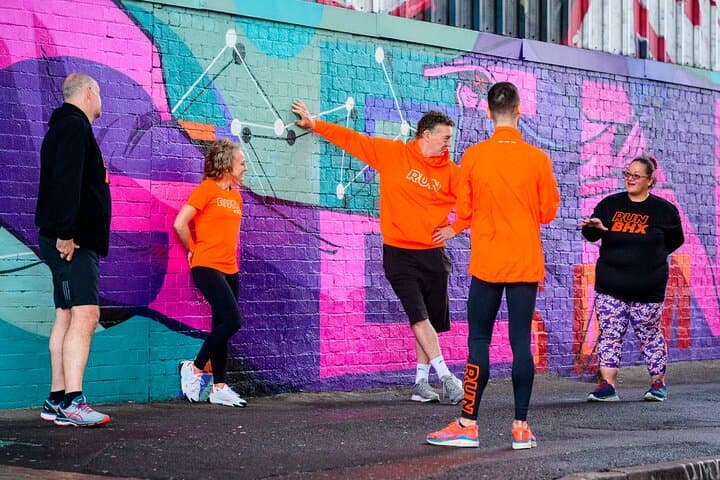

On a brisk morning outside the Eagle and Ball pub, a small group gathers as the guide in orange checks maps and smiles. The city smells of canal water and frying chip‑shop batter; brick walls lean in close, daring you to look up. This guided street art walk across Birmingham's canals and into Digbeth covers roughly five kilometres and lasts 90 to 120 minutes, or 90 minutes for the running option.
On a brisk morning outside the Eagle and Ball pub, a small group gathers as the guide in orange checks maps and smiles. The city smells of canal water and frying chip‑shop batter; brick walls lean in close, daring you to look up. This guided street art walk across Birmingham's canals and into Digbeth covers roughly five kilometres and lasts 90 to 120 minutes, or 90 minutes for the running option.
Birmingham's murals sit on former industrial shells—Victorian factories and canal warehouses—repainted with voices that reference immigration, labour history and recent protest movements. The tour highlights the Banksy connection in the Jewellery Quarter, the decorated Lock Keepers Cottage and large‑scale works by homegrown artists, including pieces around the Custard Factory and the car‑park mural of Pongo the orangutan by Louis Masai.
Geology and layout shape the route: low‑lying canal corridors and compact streets keep gradients minimal, so the walk is mostly flat though cobbles and uneven paving require attention. Culturally, Digbeth is a creative quarter formed by postwar migration and repurposed industry; conversations on the tour often touch on art's role in regeneration and activism.
Practical guidance: wear comfortable walking shoes, bring a waterproof layer, and carry a charged phone for photos and the digital brochure provided. The route uses public transport links, is wheelchair accessible on the advertised path, and runs with up to 25 guests; bookings are final sale. Arrive fifteen minutes early to meet by the pub and download the brochure to follow along with artist credits.