THE ADVENTURE COLLECTIVE® · Independent discovery and booking for outdoor travel

Explore Arunachala’s temple, ashram, caves and the Girivalam circuit with a local guide. This combined cultural walk and trek balances sacred sites with steady hill paths—ideal for travelers seeking history, views, and a moderate outdoor challenge.
Explore Arunachala’s temple, ashram, caves and the Girivalam circuit with a local guide. This combined cultural walk and trek balances sacred sites with steady hill paths—ideal for travelers seeking history, views, and a moderate outdoor challenge.
Morning light hits the broad flank of Arunachala and the town wakes to bells and sandalwood smoke. A guide leads the party from the ornate gopurams of Arunachaleswarar Temple, down streets where flower sellers call, and up the Girivalam path that wraps the sacred hill—each stone carrying centuries of pilgrimage.
Verified experiences and guided adventures in the surrounding area.
Operated by Satheesh K · Tiruvannamalai, Tamil Nadu
Morning light hits the broad flank of Arunachala and the town wakes to bells and sandalwood smoke. A guide leads the party from the ornate gopurams of Arunachaleswarar Temple, down streets where flower sellers call, and up the Girivalam path that wraps the sacred hill—each stone carrying centuries of pilgrimage.
Tiruvannamalai’s history centers on Arunachala, a granite outcrop revered in Shaiva tradition and made modernly famous by sage Ramana Maharshi, whose ashram draws contemplatives worldwide. Geologically the mountain is an ancient volcanic core of hard granite that stands distinct from the surrounding plains; culturally the town balances daily ritual with living artisan crafts and temple architecture dating from medieval Chola and later Vijayanagara periods.
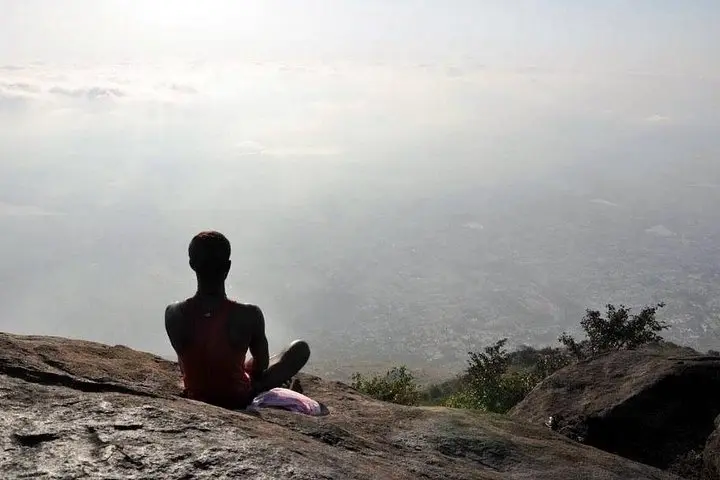
Expect half-day to full-day pacing: temple exploration, a meditative stop at Ramana Ashram, a 14–16 km circuit on the Girivalam path with uneven stone and packed-earth sections, and short treks to caves and Skandashramam viewpoints. The walk is spiritual and physical—crowds ebb at dawn and swell during full-moon pujas, while mid-day heat makes breaks necessary.
Practical guidance: wear closed shoes with good traction, carry 2–3 liters of water and sun protection, and plan for modest temple attire (shoulders and knees covered). Start early to avoid crowds and heat, bring small currency for offerings and local snacks, and follow your guide’s route near steeper stretches to protect both sites and yourself. The tour combines cultural immersion with manageable trekking—ready for travelers who want history, views, and a measured outdoor challenge.
The full Girivalam path around Arunachala is roughly 14–16 km depending on exact route; expect 3–5 hours walking at a steady pace.
Most temple areas are open to the public without charge, but specific inner sanctum access or donations are separate and not usually included in basic tours.
Parts of the day tour are family-friendly, but the full circuit and some cave approaches involve uneven ground and steps; moderate mobility is recommended.
No formal permit is required for the Girivalam circuit or common pilgrimage paths, but guided access may be required for certain caves and private ashram areas.
Satheesh K operates guided outdoor trips and adventures with an emphasis on safety, stewardship, and memorable experiences.
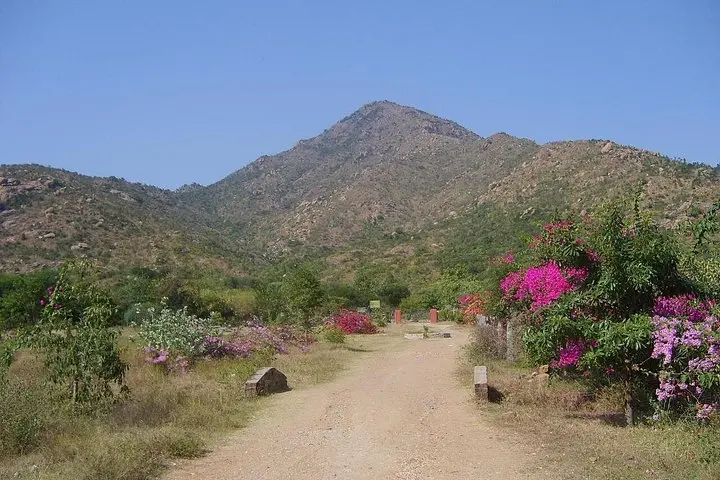
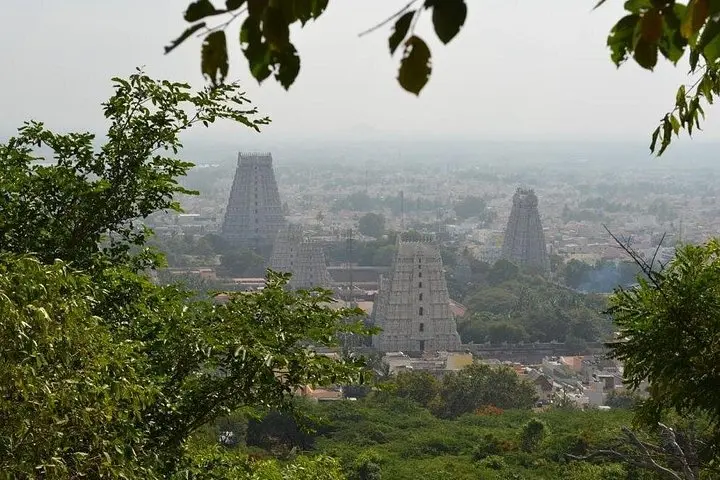
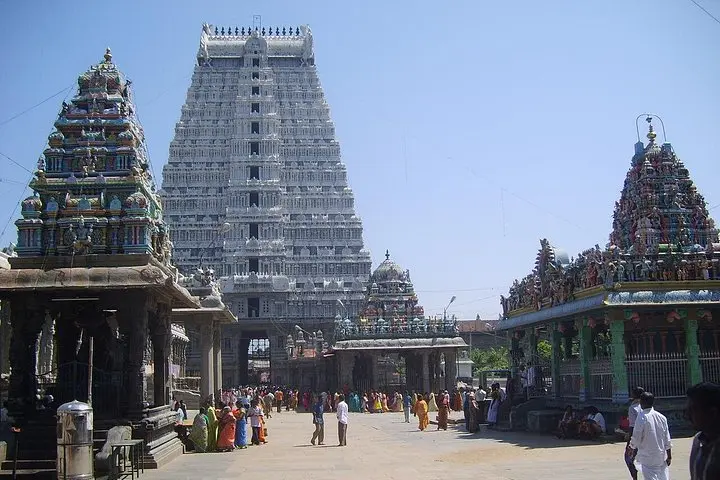
Morning light hits the broad flank of Arunachala and the town wakes to bells and sandalwood smoke. A guide leads the party from the ornate gopurams of Arunachaleswarar Temple, down streets where flower sellers call, and up the Girivalam path that wraps the sacred hill—each stone carrying centuries of pilgrimage.
Morning light hits the broad flank of Arunachala and the town wakes to bells and sandalwood smoke. A guide leads the party from the ornate gopurams of Arunachaleswarar Temple, down streets where flower sellers call, and up the Girivalam path that wraps the sacred hill—each stone carrying centuries of pilgrimage.
Tiruvannamalai’s history centers on Arunachala, a granite outcrop revered in Shaiva tradition and made modernly famous by sage Ramana Maharshi, whose ashram draws contemplatives worldwide. Geologically the mountain is an ancient volcanic core of hard granite that stands distinct from the surrounding plains; culturally the town balances daily ritual with living artisan crafts and temple architecture dating from medieval Chola and later Vijayanagara periods.
Expect half-day to full-day pacing: temple exploration, a meditative stop at Ramana Ashram, a 14–16 km circuit on the Girivalam path with uneven stone and packed-earth sections, and short treks to caves and Skandashramam viewpoints. The walk is spiritual and physical—crowds ebb at dawn and swell during full-moon pujas, while mid-day heat makes breaks necessary.
Practical guidance: wear closed shoes with good traction, carry 2–3 liters of water and sun protection, and plan for modest temple attire (shoulders and knees covered). Start early to avoid crowds and heat, bring small currency for offerings and local snacks, and follow your guide’s route near steeper stretches to protect both sites and yourself. The tour combines cultural immersion with manageable trekking—ready for travelers who want history, views, and a measured outdoor challenge.