THE ADVENTURE COLLECTIVE® · Independent discovery and booking for outdoor travel

Walk the ash-filled streets of Pompeii with a guide and feel the scale of Roman daily life beneath the shadow of Vesuvius. This guided outing from Naples combines priority entry, expert context, and a focused route through the site's best-preserved houses and public spaces.
Walk the ash-filled streets of Pompeii with a guide and feel the scale of Roman daily life beneath the shadow of Vesuvius. This guided outing from Naples combines priority entry, expert context, and a focused route through the site's best-preserved houses and public spaces.
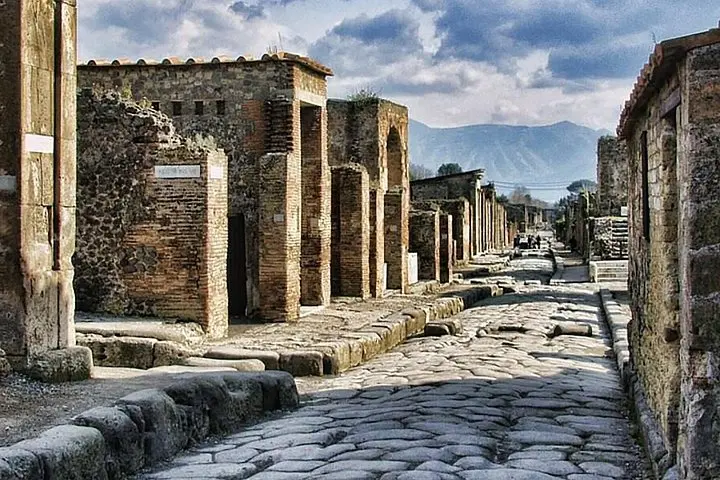
A morning in Pompeii begins on a stone street that still remembers the rhythm of Roman sandals. Sun presses warm against volcanic tufa and plaster casts stand silent in courtyards where laughter once echoed; Mount Vesuvius looms, a dark forehead against the Bay of Naples.
Verified experiences and guided adventures in the surrounding area.
Operated by ROMA IN TOURS · Pompeii, Campania
A morning in Pompeii begins on a stone street that still remembers the rhythm of Roman sandals. Sun presses warm against volcanic tufa and plaster casts stand silent in courtyards where laughter once echoed; Mount Vesuvius looms, a dark forehead against the Bay of Naples.
The site preserves a city frozen by the 79 AD eruption—streets, temples, bakeries and frescoed villas lie in place beneath ash and pumice. Geologically, the landscape is volcanic: pumice, tuff and layers of ash created an anaerobic blanket that slowed decay and preserved organic shapes. Culturally, Pompeii offers an intimate glance at Roman daily life—shops with counters, graffiti on walls, and ornate houses like the House of the Vettii revealing wealthy domestic tastes.
Walks inside the park typically cover 2–3 km of mostly flat cobbled lanes with minimal elevation change, though uneven paving and occasional steps demand steady footing. The pace is observational: lean close to a mosaic, read the Latin inscriptions, and look back to see Naples and the sea.
Practical guidance: arrive early to use the priority entrance included in many guided departures and avoid the midday heat. Wear sturdy shoes, bring 1–1.5 liters of water, sun protection and a light layer for coastal breezes. Photography is allowed but be respectful of fragile frescoes and fenced areas. Allow at least three hours to move comfortably through the principal zones; guided tours compress highlights into about four hours with round-trip transfer options from Naples.
Pompeii is both classroom and open-air museum—informative, tactile and unavoidably human.
Most guided experiences last about four hours including transfer time; plan to spend roughly 3 hours inside the archaeological park to see main highlights.
Priority entrance moves you to the fast queue but does not guarantee no wait; early start times minimize any delays.
Some main paths are relatively flat, but many areas have cobbles, steps and uneven terrain; accessibility is limited—check in advance for specific route accommodations.
Small snacks are allowed, but dining inside the ruins is restricted—use designated picnic areas and avoid eating near vulnerable mosaics and frescoes.
ROMA IN TOURS operates guided outdoor trips and adventures with an emphasis on safety, stewardship, and memorable experiences.


A morning in Pompeii begins on a stone street that still remembers the rhythm of Roman sandals. Sun presses warm against volcanic tufa and plaster casts stand silent in courtyards where laughter once echoed; Mount Vesuvius looms, a dark forehead against the Bay of Naples.
A morning in Pompeii begins on a stone street that still remembers the rhythm of Roman sandals. Sun presses warm against volcanic tufa and plaster casts stand silent in courtyards where laughter once echoed; Mount Vesuvius looms, a dark forehead against the Bay of Naples.
The site preserves a city frozen by the 79 AD eruption—streets, temples, bakeries and frescoed villas lie in place beneath ash and pumice. Geologically, the landscape is volcanic: pumice, tuff and layers of ash created an anaerobic blanket that slowed decay and preserved organic shapes. Culturally, Pompeii offers an intimate glance at Roman daily life—shops with counters, graffiti on walls, and ornate houses like the House of the Vettii revealing wealthy domestic tastes.
Walks inside the park typically cover 2–3 km of mostly flat cobbled lanes with minimal elevation change, though uneven paving and occasional steps demand steady footing. The pace is observational: lean close to a mosaic, read the Latin inscriptions, and look back to see Naples and the sea.
Practical guidance: arrive early to use the priority entrance included in many guided departures and avoid the midday heat. Wear sturdy shoes, bring 1–1.5 liters of water, sun protection and a light layer for coastal breezes. Photography is allowed but be respectful of fragile frescoes and fenced areas. Allow at least three hours to move comfortably through the principal zones; guided tours compress highlights into about four hours with round-trip transfer options from Naples.
Pompeii is both classroom and open-air museum—informative, tactile and unavoidably human.