THE ADVENTURE COLLECTIVE® · Independent discovery and booking for outdoor travel

Explore Notre-Dame de Reims with a licensed guide and discover the coronation site of French kings, centuries-old stained glass, and ongoing conservation efforts. This 90-minute tour balances close architectural study with accessible, practical visitor tips.
Explore Notre-Dame de Reims with a licensed guide and discover the coronation site of French kings, centuries-old stained glass, and ongoing conservation efforts. This 90-minute tour balances close architectural study with accessible, practical visitor tips.
You step onto the plaza and the cathedral’s façade confronts you: carved stone figures watch the square as light leans through a tracery of flying buttresses. Inside, shafts of colored light push through 13th–20th century stained glass, sketching the flagstones with red and blue.
Verified experiences and guided adventures in the surrounding area.
Operated by Office de Tourisme du Grand Reims · Reims, Grand Est
You step onto the plaza and the cathedral’s façade confronts you: carved stone figures watch the square as light leans through a tracery of flying buttresses. Inside, shafts of colored light push through 13th–20th century stained glass, sketching the flagstones with red and blue.
Notre-Dame de Reims is where French kings were anointed for centuries; the building you see largely dates from the 13th century, though foundations and fragments reach deeper into Merovingian and Romanesque layers. The façade’s sculpted kings and angels speak to medieval political ritual, while later stained glass and postwar restorations tell a story of resilience — World War I left scars that conservators have steadily healed.
The tour moves from the nave to the sculpted portals, then to chapels and the archaeological crypt beneath, with a licensed guide outlining coronation rites, Gothic structural logic, and conservation challenges. Geologically, the stone is local limestone that absorbs centuries of city soot and rain; conservators monitor erosion and pollution impact.
Practical notes: the guided tour runs about 90 minutes, requires minimal fitness, and navigates step-free routes in many areas though some corners have thresholds. Photography for personal use is generally permitted without flash; respect services and signage. Best times are early morning or late afternoon to avoid tour overlap and see the stained glass at its most vivid. Wear comfortable shoes, bring a small water bottle, and allow time afterward to visit Palais du Tau or the crypt museum. The experience is equal parts architectural study and quiet ritual — informative, accessible, and grounded in living history.
The tour lasts approximately 90 minutes and covers the nave, portals, chapels, and selected interior features.
Many areas are wheelchair accessible and the tour notes accessible routes, but some thresholds and older stone floors may be uneven.
Personal photography is generally allowed without flash; follow signage and respect any restrictions during services or special events.
Mobile tickets are accepted; bring a screenshot or the confirmation email for entry.
Office de Tourisme du Grand Reims operates guided outdoor trips and adventures with an emphasis on safety, stewardship, and memorable experiences.
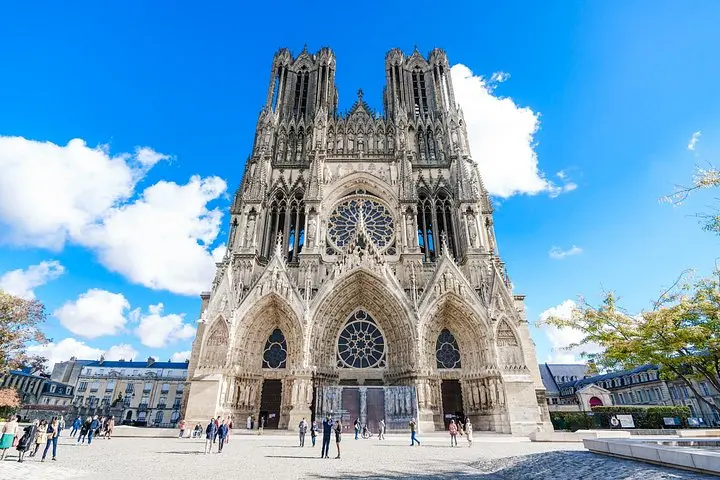
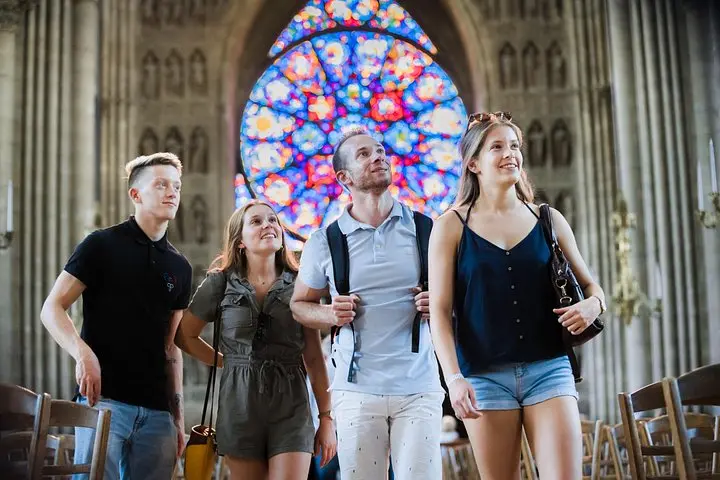
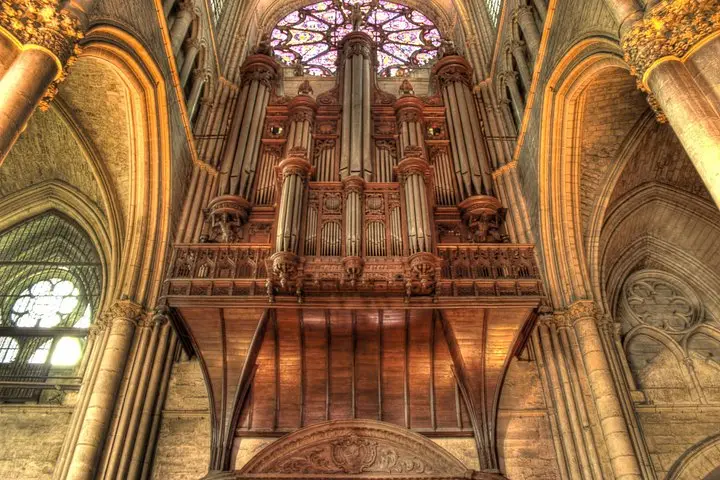
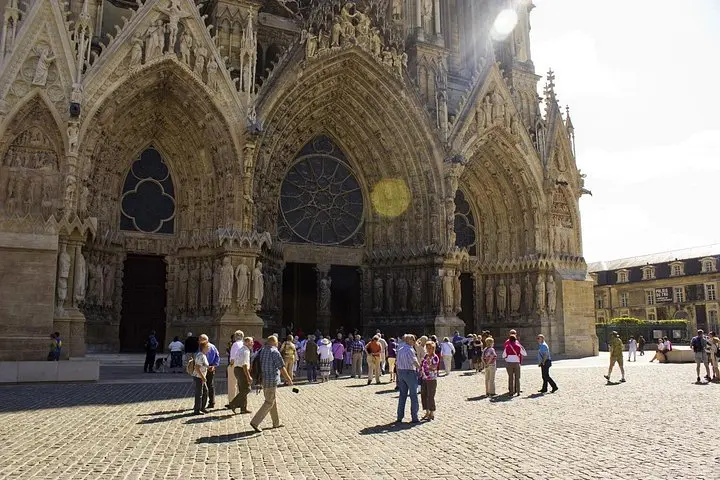
You step onto the plaza and the cathedral’s façade confronts you: carved stone figures watch the square as light leans through a tracery of flying buttresses. Inside, shafts of colored light push through 13th–20th century stained glass, sketching the flagstones with red and blue.
You step onto the plaza and the cathedral’s façade confronts you: carved stone figures watch the square as light leans through a tracery of flying buttresses. Inside, shafts of colored light push through 13th–20th century stained glass, sketching the flagstones with red and blue.
Notre-Dame de Reims is where French kings were anointed for centuries; the building you see largely dates from the 13th century, though foundations and fragments reach deeper into Merovingian and Romanesque layers. The façade’s sculpted kings and angels speak to medieval political ritual, while later stained glass and postwar restorations tell a story of resilience — World War I left scars that conservators have steadily healed.
The tour moves from the nave to the sculpted portals, then to chapels and the archaeological crypt beneath, with a licensed guide outlining coronation rites, Gothic structural logic, and conservation challenges. Geologically, the stone is local limestone that absorbs centuries of city soot and rain; conservators monitor erosion and pollution impact.
Practical notes: the guided tour runs about 90 minutes, requires minimal fitness, and navigates step-free routes in many areas though some corners have thresholds. Photography for personal use is generally permitted without flash; respect services and signage. Best times are early morning or late afternoon to avoid tour overlap and see the stained glass at its most vivid. Wear comfortable shoes, bring a small water bottle, and allow time afterward to visit Palais du Tau or the crypt museum. The experience is equal parts architectural study and quiet ritual — informative, accessible, and grounded in living history.