THE ADVENTURE COLLECTIVE® · Independent discovery and booking for outdoor travel

Walk the mist-lined trails of Victoria Falls on a three-hour guided tour that moves from the Boiling Pot to the Knife-Edge, passing rainforest and dramatic viewpoints. Practical tips on timing, footwear and photography help you make the most of this sensory, accessible experience.
Walk the mist-lined trails of Victoria Falls on a three-hour guided tour that moves from the Boiling Pot to the Knife-Edge, passing rainforest and dramatic viewpoints. Practical tips on timing, footwear and photography help you make the most of this sensory, accessible experience.
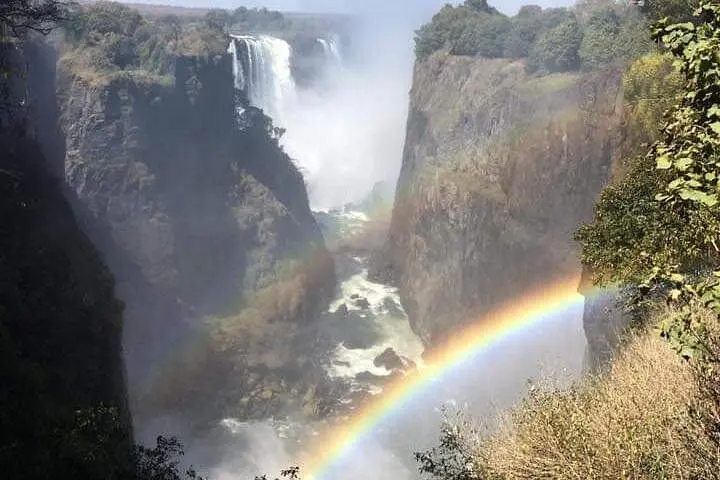
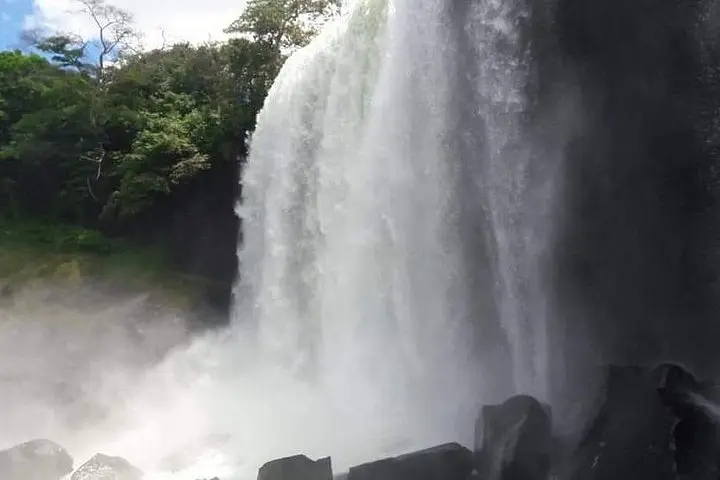
You step into a curtain of spray and sound: the Zambezi roars, mist rising like a living wall and the trail ahead slick with river breath. On this three-hour guided walk visitors move from lower cataract viewpoints up to the higher knife-edge, threading paths through the rainforest where spray beads on leaves and the air smells of wet stone.
Verified experiences and guided adventures in the surrounding area.
Operated by Ramjet Tours And Safaris · Livingstone, Southern Province
You step into a curtain of spray and sound: the Zambezi roars, mist rising like a living wall and the trail ahead slick with river breath. On this three-hour guided walk visitors move from lower cataract viewpoints up to the higher knife-edge, threading paths through the rainforest where spray beads on leaves and the air smells of wet stone.
Geology here is raw and readable — basalt plateaus cut by the Zambezi, a sequence of cataracts formed by volcanic flows and river incision. The falls’ local name, Mosi-oa-Tunya (‘The Smoke That Thunders’), speaks to centuries of human connection: Tonga and Lozi communities used these waterways long before David Livingstone recorded the cascade in 1855.
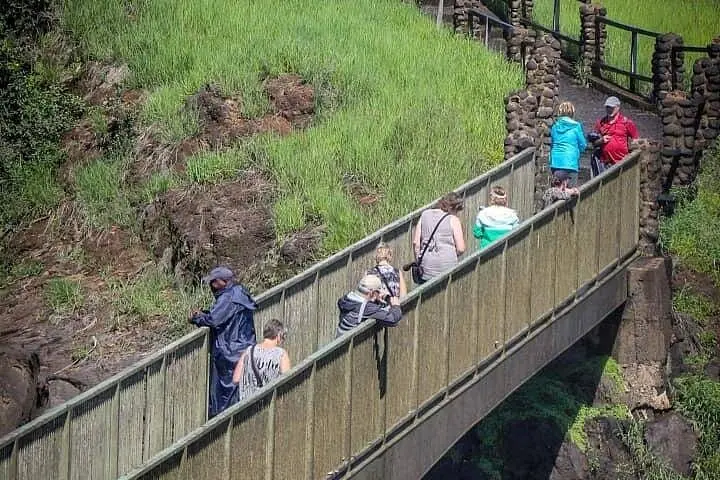
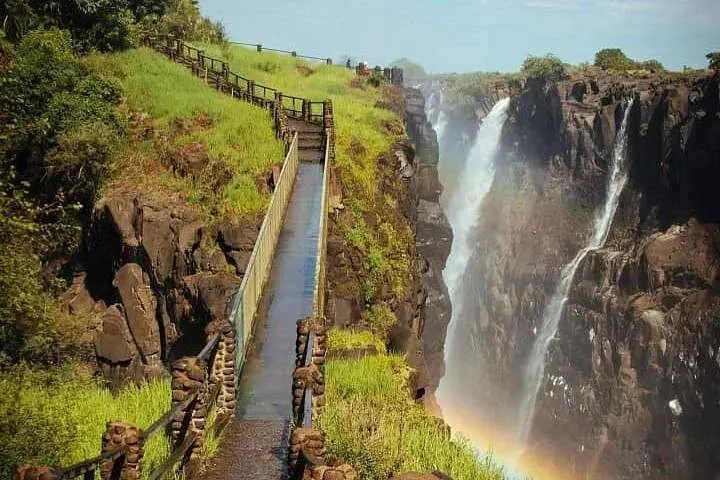
Cultural touches remain visible in nearby Livingstone’s market crafts and in ranger-led interpretation at viewpoints. The tour typically visits the Boiling Pot, crosses the Knife-Edge bridge and guides guests into the rainforest corridor, offering close-up views and interpretation about seasonal flow, erosion, and local ecology.
Practical guidance: wear waterproof outer layers and sturdy, non-slip shoes; the paths are short but steep in places and persistently wet. Morning light reduces backlit photos, while late afternoon emphasizes golden tones and reduced crowding. Bring a waterproof camera bag, refillable water and insect repellent. The route is suitable for most fitness levels, but those with mobility constraints should check accessibility details in advance. Respect roped areas and wildlife; staying on designated paths preserves the rainforest root systems and keeps footing secure. This is an accessible, sensory-rich way to experience one of the planet’s great waterfalls.
The tour runs about three hours and typically covers the main trails from the lower to higher cataracts, including the Boiling Pot and Knife-Edge.
Some viewing areas and paths have accessibility provisions, but steep or slippery sections may be challenging; check with the operator for specific route accessibility.
Admission to Victoria Falls National Park is usually required separately—confirm whether the tour price includes the park fee before booking.
High water (February–May) delivers maximum flow and spray; low water (September–November) offers clearer views of the rock formations and opportunities like Livingstone Island tours.
Ramjet Tours And Safaris operates guided outdoor trips and adventures with an emphasis on safety, stewardship, and memorable experiences.
You step into a curtain of spray and sound: the Zambezi roars, mist rising like a living wall and the trail ahead slick with river breath. On this three-hour guided walk visitors move from lower cataract viewpoints up to the higher knife-edge, threading paths through the rainforest where spray beads on leaves and the air smells of wet stone.
You step into a curtain of spray and sound: the Zambezi roars, mist rising like a living wall and the trail ahead slick with river breath. On this three-hour guided walk visitors move from lower cataract viewpoints up to the higher knife-edge, threading paths through the rainforest where spray beads on leaves and the air smells of wet stone.
Geology here is raw and readable — basalt plateaus cut by the Zambezi, a sequence of cataracts formed by volcanic flows and river incision. The falls’ local name, Mosi-oa-Tunya (‘The Smoke That Thunders’), speaks to centuries of human connection: Tonga and Lozi communities used these waterways long before David Livingstone recorded the cascade in 1855.
Cultural touches remain visible in nearby Livingstone’s market crafts and in ranger-led interpretation at viewpoints. The tour typically visits the Boiling Pot, crosses the Knife-Edge bridge and guides guests into the rainforest corridor, offering close-up views and interpretation about seasonal flow, erosion, and local ecology.
Practical guidance: wear waterproof outer layers and sturdy, non-slip shoes; the paths are short but steep in places and persistently wet. Morning light reduces backlit photos, while late afternoon emphasizes golden tones and reduced crowding. Bring a waterproof camera bag, refillable water and insect repellent. The route is suitable for most fitness levels, but those with mobility constraints should check accessibility details in advance. Respect roped areas and wildlife; staying on designated paths preserves the rainforest root systems and keeps footing secure. This is an accessible, sensory-rich way to experience one of the planet’s great waterfalls.