THE ADVENTURE COLLECTIVE® · Independent discovery and booking for outdoor travel

A six‑hour guided hike from Ushuaia to Laguna Esmeralda takes you through glacial valleys, beaver-altered wetlands and lenga forest to a brilliant turquoise lagoon. This moderate 9 km round‑trip trek includes transport, a boxed lunch and local guiding—ideal for travelers who want a full-day taste of Tierra del Fuego.
A six‑hour guided hike from Ushuaia to Laguna Esmeralda takes you through glacial valleys, beaver-altered wetlands and lenga forest to a brilliant turquoise lagoon. This moderate 9 km round‑trip trek includes transport, a boxed lunch and local guiding—ideal for travelers who want a full-day taste of Tierra del Fuego.
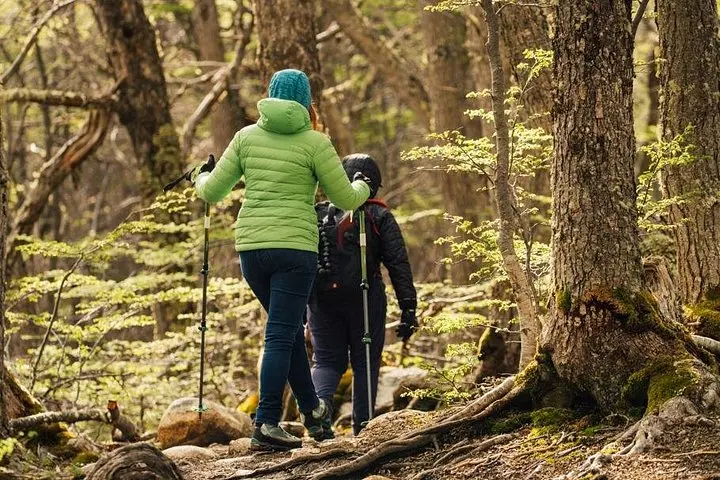
The trail opens like a page in an atlas: a narrow ribbon of mud and roots threading into lenga forest, wind pushing across the valley as if testing your pace. You leave Ushuaia behind in a van, the city shrinking to a smudge of roofs and harbour cranes, then the Andes fold up around you and the air takes on a metallic edge. By the time the guide gathers the group at the Valle de Lobos trailhead, the forest is already speaking—rivers daring you onward, peat bogs holding the day’s damp like memory.
Verified experiences and guided adventures in the surrounding area.
Operated by Info de Ushuaia · Ushuaia, Tierra del Fuego
The trail opens like a page in an atlas: a narrow ribbon of mud and roots threading into lenga forest, wind pushing across the valley as if testing your pace. You leave Ushuaia behind in a van, the city shrinking to a smudge of roofs and harbour cranes, then the Andes fold up around you and the air takes on a metallic edge. By the time the guide gathers the group at the Valle de Lobos trailhead, the forest is already speaking—rivers daring you onward, peat bogs holding the day’s damp like memory.
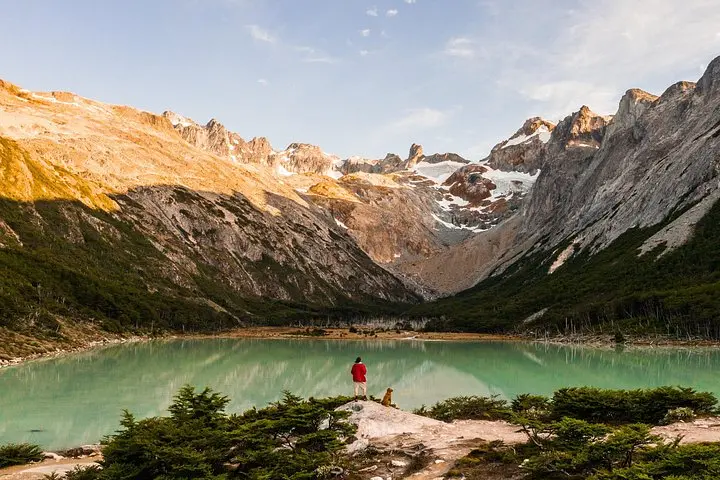
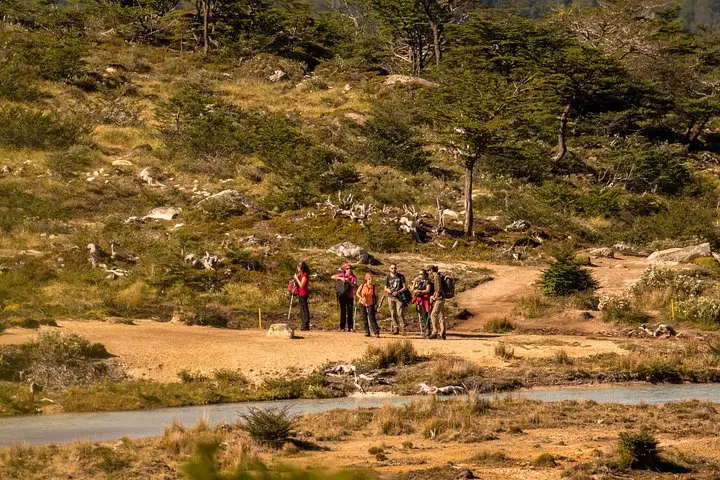
Laguna Esmeralda is a small glacial lake cradled in a shallow amphitheater of moraine and ancient ice. The walk is about 9 km round trip and roughly 6 hours from hotel pickup to return, with a moderate grade and about 200–300 meters of cumulative elevation gain. The path threads through beaver-cut waterways where introduced Castor canadensis has reshaped the lowlands into a patchwork of ponds, and across raised peat bogs that sponge your step if you stray off the wooden planks. Lenga and ñire trees bend to the prevailing wind; mosses and cushion plants carpet the understory in saturated greens.
The geology reads like a short history of the southern Andes: glacial scouring, moraine ridges, and a basin that collects meltwater and silt to give the lagoon its astonishing turquoise. Indigenous Yamana people once navigated these fjords and valleys; later, 19th–20th century settlers introduced beavers and sheep that altered the ecology, a reminder that the Fuegian landscape is still being rewritten.
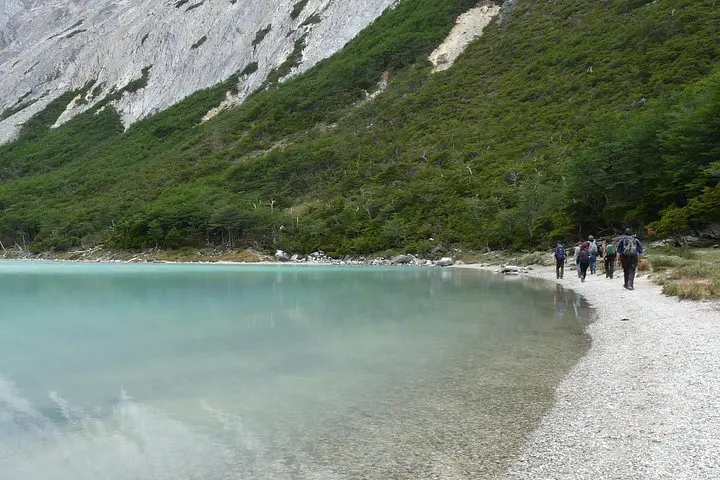
At the lagoon, the guide lays out boxed lunch while you sit on glacial stones and watch light run across the water. The silty, aquamarine colour—Esmeralda—comes from finely ground rock flour suspended in meltwater. After a paced rest the group returns the same way, the trail easing back through the woodland as the wind settles.
Practical edge: wear waterproof boots with good tread—bog and stream crossings are frequent—and layer for wind and sudden sun. Bring at least 1.5 liters of water, a light rain shell, and insect repellent in warmer months. The operator provides transport, a guided group, and lunch; the route is family‑friendly for older children and anyone in decent walking shape, but not recommended for those with serious back or heart conditions.
Timing matters—start midmorning for softer light and calmer weather; in summer the daylight extends long but the wind can be sharp. Respect the fragile peat ecosystems by staying on boardwalks and follow your guide’s notes on beaver-impacted areas. Laguna Esmeralda is a compact, accessible taste of Tierra del Fuego’s rough beauty: glacier-born water, wind-forged trees, and a landscape that both invites and instructs those who pass through it.
The itinerary covers about 9 km round trip with roughly 200–300 meters of cumulative elevation gain; terrain is mostly steady but can be muddy.
Yes—children over 11 are welcome per the operator; younger kids who can manage multi‑hour walks may be fine with parental judgment.
Transport from Ushuaia, a guided hike led by a professional guide, boxed lunch and basic accident insurance are included.
Rated moderate—no technical climbing required, but expect uneven surfaces, bogs, and some stream crossings.
Bring insect repellent in summer months; biting flies can be persistent near wetlands and beaver ponds.
The operator’s policy does not automatically cancel for bad weather, so they may proceed unless conditions are unsafe; check the 24‑hour cancellation policy for refunds.
Info de Ushuaia operates guided outdoor trips and adventures with an emphasis on safety, stewardship, and memorable experiences.
The trail opens like a page in an atlas: a narrow ribbon of mud and roots threading into lenga forest, wind pushing across the valley as if testing your pace. You leave Ushuaia behind in a van, the city shrinking to a smudge of roofs and harbour cranes, then the Andes fold up around you and the air takes on a metallic edge. By the time the guide gathers the group at the Valle de Lobos trailhead, the forest is already speaking—rivers daring you onward, peat bogs holding the day’s damp like memory.
The trail opens like a page in an atlas: a narrow ribbon of mud and roots threading into lenga forest, wind pushing across the valley as if testing your pace. You leave Ushuaia behind in a van, the city shrinking to a smudge of roofs and harbour cranes, then the Andes fold up around you and the air takes on a metallic edge. By the time the guide gathers the group at the Valle de Lobos trailhead, the forest is already speaking—rivers daring you onward, peat bogs holding the day’s damp like memory.
Laguna Esmeralda is a small glacial lake cradled in a shallow amphitheater of moraine and ancient ice. The walk is about 9 km round trip and roughly 6 hours from hotel pickup to return, with a moderate grade and about 200–300 meters of cumulative elevation gain. The path threads through beaver-cut waterways where introduced Castor canadensis has reshaped the lowlands into a patchwork of ponds, and across raised peat bogs that sponge your step if you stray off the wooden planks. Lenga and ñire trees bend to the prevailing wind; mosses and cushion plants carpet the understory in saturated greens.
The geology reads like a short history of the southern Andes: glacial scouring, moraine ridges, and a basin that collects meltwater and silt to give the lagoon its astonishing turquoise. Indigenous Yamana people once navigated these fjords and valleys; later, 19th–20th century settlers introduced beavers and sheep that altered the ecology, a reminder that the Fuegian landscape is still being rewritten.
At the lagoon, the guide lays out boxed lunch while you sit on glacial stones and watch light run across the water. The silty, aquamarine colour—Esmeralda—comes from finely ground rock flour suspended in meltwater. After a paced rest the group returns the same way, the trail easing back through the woodland as the wind settles.
Practical edge: wear waterproof boots with good tread—bog and stream crossings are frequent—and layer for wind and sudden sun. Bring at least 1.5 liters of water, a light rain shell, and insect repellent in warmer months. The operator provides transport, a guided group, and lunch; the route is family‑friendly for older children and anyone in decent walking shape, but not recommended for those with serious back or heart conditions.
Timing matters—start midmorning for softer light and calmer weather; in summer the daylight extends long but the wind can be sharp. Respect the fragile peat ecosystems by staying on boardwalks and follow your guide’s notes on beaver-impacted areas. Laguna Esmeralda is a compact, accessible taste of Tierra del Fuego’s rough beauty: glacier-born water, wind-forged trees, and a landscape that both invites and instructs those who pass through it.