THE ADVENTURE COLLECTIVE® · Independent discovery and booking for outdoor travel

Stand at one of Earth’s most powerful waterfalls on a guided walk through the spray forest of the Zimbabwean side of Victoria Falls. This 3–4 hour tour delivers dramatic viewpoints, geology-rich cliffs, and practical tips for tackling misty trails.
Stand at one of Earth’s most powerful waterfalls on a guided walk through the spray forest of the Zimbabwean side of Victoria Falls. This 3–4 hour tour delivers dramatic viewpoints, geology-rich cliffs, and practical tips for tackling misty trails.
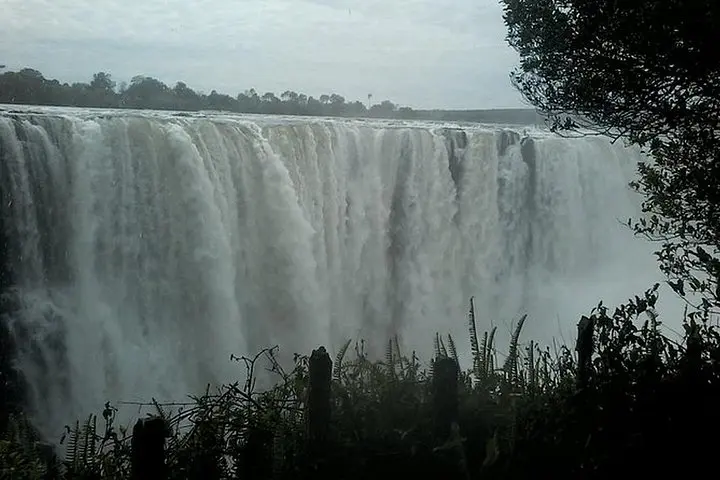
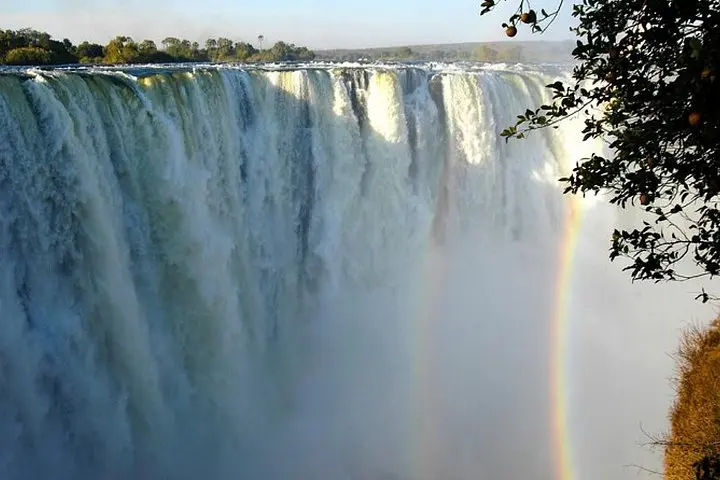
You step onto the lip of the basalt escarpment and the world narrows to thunder and spray. On the Zimbabwean side of Victoria Falls the path threads the rainforest, mist slicing across viewpoints that frame the main sheet of water as it rips into the Zambezi Gorge more than 100 metres below.
Verified experiences and guided adventures in the surrounding area.
Operated by Revival Safaris and Tours · Victoria Falls, Matabeleland North
You step onto the lip of the basalt escarpment and the world narrows to thunder and spray. On the Zimbabwean side of Victoria Falls the path threads the rainforest, mist slicing across viewpoints that frame the main sheet of water as it rips into the Zambezi Gorge more than 100 metres below.
The falls, called Mosi-oa-Tunya—"the smoke that thunders"—have been carving the Batoka basalt for millennia; the geology reveals vertical joints and plunge pools shaped by relentless flow. European explorers like David Livingstone made the site famous in the 19th century, but local communities have long-standing cultural connections to the river and gorge.
Trailside, the rainforest behaves like its own ecosystem: ferns cling to spray-wet rock, and vervet monkeys move with casual intent. Views differ along the loop—lookouts accentuate slices of the falls or give wide panoramas across Zambia’s horizon. Guides on the Zimbabwean route point out seasonal cataracts, access points, and safe observation lines.
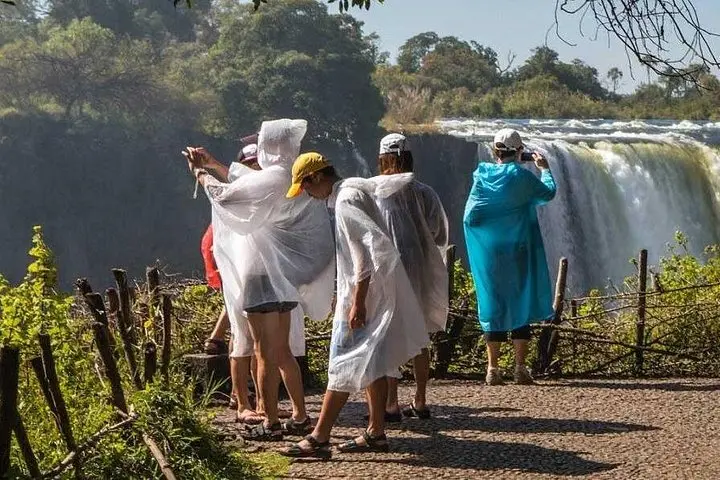
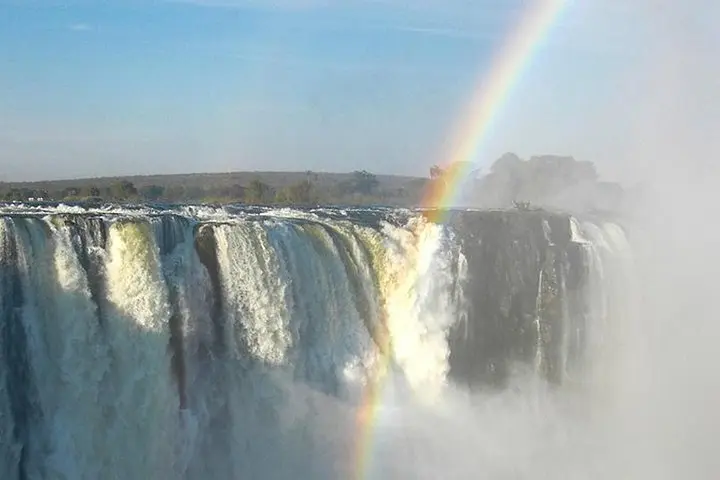
Practically, the experience is a 3–4 hour outing on well-formed paths with steps and boardwalks; expect slippery surfaces, constant mist, and short climbs between viewpoints. Bring a waterproof layer and secure camera protection; plan for changing light if you want rainbows in the spray. Tours usually include bottled water and park fees; wheelchair-accessible sections are available but not all viewpoints are flat. Morning or late afternoon visits reduce crowds and highlight golden light on the basalt cliffs. Stay on marked trails to protect the fragile spray-forest and to keep wildlife and yourself safe.
The guided tour takes about 3–4 hours, covering multiple viewpoints and rainforest boardwalks on the Zimbabwean side.
They offer different perspectives: Zimbabwe provides broad panoramic viewpoints and many formal lookouts, while Zambia offers closer, more intimate angles (including Devil’s Pool seasonally). Both are worth visiting if possible.
Some sections and viewpoints are wheelchair accessible, but not all paths are flat—check with the operator ahead of time for specific access details.
Visitors must pay Zimbabwe National Parks entry fees; visa requirements depend on nationality—verify entry rules before travel.
Revival Safaris and Tours operates guided outdoor trips and adventures with an emphasis on safety, stewardship, and memorable experiences.
You step onto the lip of the basalt escarpment and the world narrows to thunder and spray. On the Zimbabwean side of Victoria Falls the path threads the rainforest, mist slicing across viewpoints that frame the main sheet of water as it rips into the Zambezi Gorge more than 100 metres below.
You step onto the lip of the basalt escarpment and the world narrows to thunder and spray. On the Zimbabwean side of Victoria Falls the path threads the rainforest, mist slicing across viewpoints that frame the main sheet of water as it rips into the Zambezi Gorge more than 100 metres below.
The falls, called Mosi-oa-Tunya—"the smoke that thunders"—have been carving the Batoka basalt for millennia; the geology reveals vertical joints and plunge pools shaped by relentless flow. European explorers like David Livingstone made the site famous in the 19th century, but local communities have long-standing cultural connections to the river and gorge.
Trailside, the rainforest behaves like its own ecosystem: ferns cling to spray-wet rock, and vervet monkeys move with casual intent. Views differ along the loop—lookouts accentuate slices of the falls or give wide panoramas across Zambia’s horizon. Guides on the Zimbabwean route point out seasonal cataracts, access points, and safe observation lines.
Practically, the experience is a 3–4 hour outing on well-formed paths with steps and boardwalks; expect slippery surfaces, constant mist, and short climbs between viewpoints. Bring a waterproof layer and secure camera protection; plan for changing light if you want rainbows in the spray. Tours usually include bottled water and park fees; wheelchair-accessible sections are available but not all viewpoints are flat. Morning or late afternoon visits reduce crowds and highlight golden light on the basalt cliffs. Stay on marked trails to protect the fragile spray-forest and to keep wildlife and yourself safe.