THE ADVENTURE COLLECTIVE® · Independent discovery and booking for outdoor travel

Walk two of Kathmandu’s most iconic Buddhist stupas with a local guide. This easy 2–3 hour private tour pairs panoramic hilltop views at Swayambhunath with the wide, circling kora of Boudhanath.
Walk two of Kathmandu’s most iconic Buddhist stupas with a local guide. This easy 2–3 hour private tour pairs panoramic hilltop views at Swayambhunath with the wide, circling kora of Boudhanath.
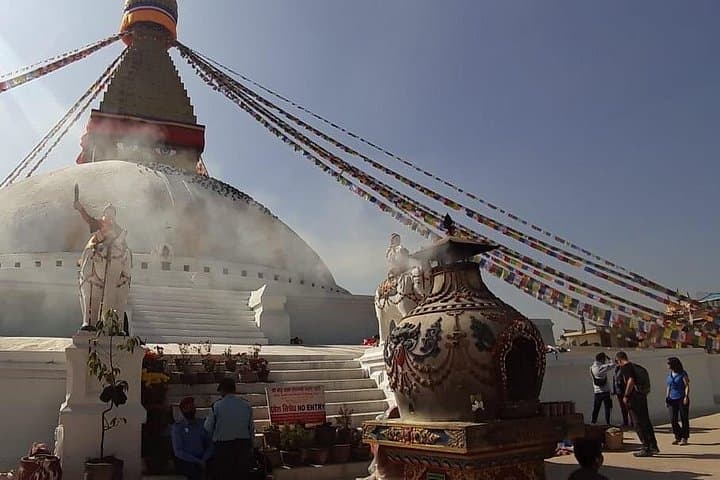
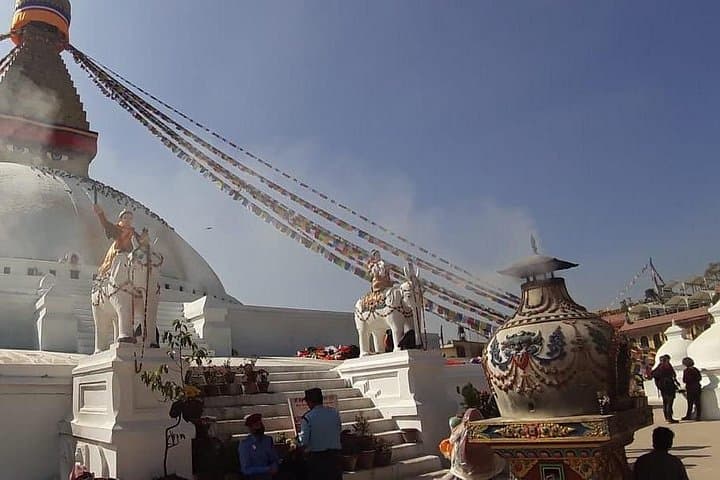
You arrive at a rim of the Kathmandu Valley as prayer flags snap in the wind and pilgrims trace clockwise paths around whitewashed domes. From the rise of Swayambhunath, the city spreads below and the hills press close — stairs and prayer wheels set the rhythm as residents and visitors move through centuries of practice.
Verified experiences and guided adventures in the surrounding area.
Operated by Fewa Trail Treks and Expedition Pvt Ltd · Kathmandu, Bagmati Province
You arrive at a rim of the Kathmandu Valley as prayer flags snap in the wind and pilgrims trace clockwise paths around whitewashed domes. From the rise of Swayambhunath, the city spreads below and the hills press close — stairs and prayer wheels set the rhythm as residents and visitors move through centuries of practice.
Swayambhunath (the Monkey Temple) crowns a small hill and dates back over a thousand years; its gilded stupa and painted eyes watch the valley. Boudhanath, larger and flatter, sits on a historic trade route once threaded by Tibetan caravans; its vast circumambulation path is lined with gompas, butter lamps, and shops selling prayer beads. Geology here is folded valley and river alluvium, which concentrates settlement and sacred sites on accessible rises.
The guide explains iconography, local customs for offerings, and how stupa design encodes Buddhist cosmology. You’ll notice urban sounds soften near shrine walls and that the scent of incense and yak butter mingles with street spice. Monkeys at Swayambhunath are omnipresent and assertive; at Boudhanath, stacked prayer wheels create a subtle mechanical chorus.
Practical guidance: the two-site loop fits a 2–3 hour window with hotel pickup and light walking — expect stair sections at Swayambhunath and a broad, flat kora at Boudhanath. Dress modestly, remove shoes at temple interiors, carry water, and keep small denomination notes for donations or tea. Photography is generally welcome but defer to worshippers. Morning or late afternoon visits offer softer light and cooler temperatures.
Admission is generally free for the stupas; some individual monasteries may request small donations—this tour listing indicates admission is not included.
The operator lists wheelchair accessibility, but Swayambhunath involves stairs; accessible arrangements may limit visiting certain viewpoints—confirm pickup and route when booking.
Photography is usually allowed in external areas; inside shrines or during certain rituals, ask permission and avoid flash.
Early morning or late afternoon offers cooler temperatures and softer light, with fewer crowds during peak tourist seasons.
Fewa Trail Treks and Expedition Pvt Ltd operates guided outdoor trips and adventures with an emphasis on safety, stewardship, and memorable experiences.
You arrive at a rim of the Kathmandu Valley as prayer flags snap in the wind and pilgrims trace clockwise paths around whitewashed domes. From the rise of Swayambhunath, the city spreads below and the hills press close — stairs and prayer wheels set the rhythm as residents and visitors move through centuries of practice.
You arrive at a rim of the Kathmandu Valley as prayer flags snap in the wind and pilgrims trace clockwise paths around whitewashed domes. From the rise of Swayambhunath, the city spreads below and the hills press close — stairs and prayer wheels set the rhythm as residents and visitors move through centuries of practice.
Swayambhunath (the Monkey Temple) crowns a small hill and dates back over a thousand years; its gilded stupa and painted eyes watch the valley. Boudhanath, larger and flatter, sits on a historic trade route once threaded by Tibetan caravans; its vast circumambulation path is lined with gompas, butter lamps, and shops selling prayer beads. Geology here is folded valley and river alluvium, which concentrates settlement and sacred sites on accessible rises.
The guide explains iconography, local customs for offerings, and how stupa design encodes Buddhist cosmology. You’ll notice urban sounds soften near shrine walls and that the scent of incense and yak butter mingles with street spice. Monkeys at Swayambhunath are omnipresent and assertive; at Boudhanath, stacked prayer wheels create a subtle mechanical chorus.
Practical guidance: the two-site loop fits a 2–3 hour window with hotel pickup and light walking — expect stair sections at Swayambhunath and a broad, flat kora at Boudhanath. Dress modestly, remove shoes at temple interiors, carry water, and keep small denomination notes for donations or tea. Photography is generally welcome but defer to worshippers. Morning or late afternoon visits offer softer light and cooler temperatures.