THE ADVENTURE COLLECTIVE® · Independent discovery and booking for outdoor travel

Walk the streets where Portugal began: a full-day guided tour through Guimarães’ UNESCO-listed medieval center, monuments, and local flavors. Small-group pacing and included monument entry make this an efficient way to experience the city’s history and viewpoints.
Walk the streets where Portugal began: a full-day guided tour through Guimarães’ UNESCO-listed medieval center, monuments, and local flavors. Small-group pacing and included monument entry make this an efficient way to experience the city’s history and viewpoints.
You step off the coach and the cobbles seem to exhale—cold granite underfoot, the olive tree at Largo da Oliveira lifting its gnarled branches like an old local greeting. The city’s compact medieval core unfolds in tight lanes, stone houses, and a hilltop castle that still keeps watch over narrow streets where merchants once argued the morning’s price of wool.
Verified experiences and guided adventures in the surrounding area.
Operated by Trek Portugal · Guimarães, Braga
You step off the coach and the cobbles seem to exhale—cold granite underfoot, the olive tree at Largo da Oliveira lifting its gnarled branches like an old local greeting. The city’s compact medieval core unfolds in tight lanes, stone houses, and a hilltop castle that still keeps watch over narrow streets where merchants once argued the morning’s price of wool.
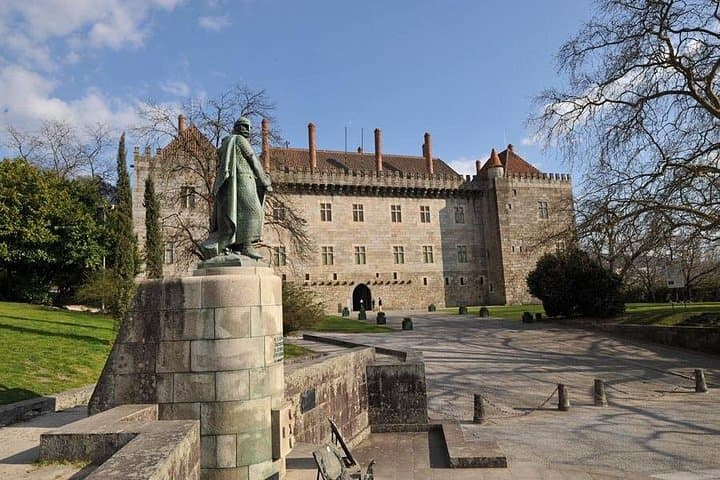
Guimarães is widely regarded as the birthplace of Portugal: a 10th-century settlement that matured through feudal ties, dynastic marriages and battles that shaped a nation. The slate-grey architecture on the UNESCO list preserves plateaus of Portuguese Gothic and Manueline details; the Palace of the Dukes of Bragança demonstrates 15th-century noble ambitions reimagined in the 20th-century restoration. Penha Mountain, rising behind the town, shows the region’s granite backbone and offers panoramic vantage points shaped over millennia.
On this full-day walking tour you’ll move between monuments—São Miguel do Castelo, the collegiate church of Nossa Senhora da Oliveira and the Dukes’ palace—while a local guide frames the political and cultural stories that give those stones context. Expect comfortable walking (city streets, some uneven stone), short climbs and photo stops.
Practical pointers: wear sturdy shoes for slick granite, bring a light waterproof and water bottle, and budget time for a leisurely lunch sampling Minho cuisine in a small group setting (max six travelers). Tours often start from Porto and include pickup/drop-off; check seasonal opening hours for specific monuments. Aim to arrive with an appetite for history and a camera ready—the city rewards slow exploration.
The tour is a full-day experience (about 9 hours) with a relaxed walking pace, multiple monument visits, and time for lunch; expect periods of walking interspersed with guided stops.
Yes—pickup and drop-off are included; check your booking for exact meeting location if you prefer to meet in Guimarães instead of being picked up in Porto.
Entrance to several monuments (up to five) is included in the tour price as stated in the listing; verify timing for any specific sites you particularly want to see.
The tour is family-friendly and rated easy, but the historic center has uneven surfaces and some stairs that may challenge people with limited mobility; contact the operator about accessibility options.
Trek Portugal operates guided outdoor trips and adventures with an emphasis on safety, stewardship, and memorable experiences.


You step off the coach and the cobbles seem to exhale—cold granite underfoot, the olive tree at Largo da Oliveira lifting its gnarled branches like an old local greeting. The city’s compact medieval core unfolds in tight lanes, stone houses, and a hilltop castle that still keeps watch over narrow streets where merchants once argued the morning’s price of wool.
You step off the coach and the cobbles seem to exhale—cold granite underfoot, the olive tree at Largo da Oliveira lifting its gnarled branches like an old local greeting. The city’s compact medieval core unfolds in tight lanes, stone houses, and a hilltop castle that still keeps watch over narrow streets where merchants once argued the morning’s price of wool.
Guimarães is widely regarded as the birthplace of Portugal: a 10th-century settlement that matured through feudal ties, dynastic marriages and battles that shaped a nation. The slate-grey architecture on the UNESCO list preserves plateaus of Portuguese Gothic and Manueline details; the Palace of the Dukes of Bragança demonstrates 15th-century noble ambitions reimagined in the 20th-century restoration. Penha Mountain, rising behind the town, shows the region’s granite backbone and offers panoramic vantage points shaped over millennia.
On this full-day walking tour you’ll move between monuments—São Miguel do Castelo, the collegiate church of Nossa Senhora da Oliveira and the Dukes’ palace—while a local guide frames the political and cultural stories that give those stones context. Expect comfortable walking (city streets, some uneven stone), short climbs and photo stops.
Practical pointers: wear sturdy shoes for slick granite, bring a light waterproof and water bottle, and budget time for a leisurely lunch sampling Minho cuisine in a small group setting (max six travelers). Tours often start from Porto and include pickup/drop-off; check seasonal opening hours for specific monuments. Aim to arrive with an appetite for history and a camera ready—the city rewards slow exploration.