THE ADVENTURE COLLECTIVE® · Independent discovery and booking for outdoor travel

Traverse 2,000 years of history and varied landscapes on a seven-day extension from Ahmedabad that moves from temple complexes and Harappan ruins to salt plains, lion country, and Portuguese coastal towns. Expect long drives, early safaris, and rich cultural encounters.
Traverse 2,000 years of history and varied landscapes on a seven-day extension from Ahmedabad that moves from temple complexes and Harappan ruins to salt plains, lion country, and Portuguese coastal towns. Expect long drives, early safaris, and rich cultural encounters.
You step out of the car on a sun-baked road and the landscape immediately changes: carved stone, dry salt plains, and a coastline that smells faintly of seaweed and spice. The tour unfolds like chapters — Ahmedabad’s busy streets give way to the quiet geometry of Modhera’s Sun Temple and the descending shadows of Rani ki Vav.
Verified experiences and guided adventures in the surrounding area.
Operated by Agora Voyages Pvt. Ltd. · Ahmedabad, Gujarat
You step out of the car on a sun-baked road and the landscape immediately changes: carved stone, dry salt plains, and a coastline that smells faintly of seaweed and spice. The tour unfolds like chapters — Ahmedabad’s busy streets give way to the quiet geometry of Modhera’s Sun Temple and the descending shadows of Rani ki Vav.
This seven-day extension threads history and geology together. Modhera and Patan showcase Solanki-era sandstone carving; Dholavira sits on the raised platforms of a 4,500-year-old Harappan town, its engineered reservoirs revealing advanced urban planning. The Little Rann of Kutch is a saline plain where wind and salt have sculpted a peculiar ecology that supports the Asiatic wild ass. Sasan Gir preserves Gujarat’s last Asiatic lions, while Diu’s Portuguese fort and rock-cut Naida Caves recall colonial and natural forces at work.
Culture here is tactile: tribal crafts in Dasada and Rabari villages, street-side dhabas serving thin, spiced rotis, and coastal fishing communities on Diu’s shores. Expect early mornings for safaris, dusty drives between sites, and short guided walks through ruins and heritage lanes.
Practical guidance: travel light with breathable layers, carry at least 2–3 liters of water per person for long drives, and pack sunscreen and a wide-brim hat — the sun is relentless in winter and summer alike. Wildlife encounters require patience and quiet; follow guides’ instructions on jeep safaris and maintain distance. Cash helps in smaller towns, and a camera with extra batteries will serve you well as light shifts dramatically at dawn and dusk.
Winter (November–February) is best for comfortable temperatures and reliable wildlife viewing; spring and fall are also pleasant, while summer can be very hot.
Sightings are likely but not guaranteed; safaris increase your chances—early morning jeep trips with a forest naturalist are standard and recommended.
Expect several multi-hour road transfers (the itinerary includes 2–8 hour drives between destinations); days combine driving with guided visits and short walks.
The tour offers 6 nights of accommodation if that option is selected, across a range of 3–5 star properties listed in the itinerary details.
Agora Voyages Pvt. Ltd. operates guided outdoor trips and adventures with an emphasis on safety, stewardship, and memorable experiences.


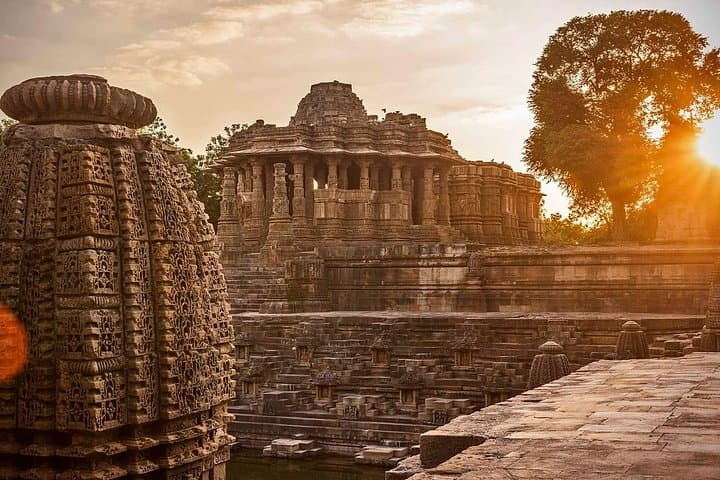
You step out of the car on a sun-baked road and the landscape immediately changes: carved stone, dry salt plains, and a coastline that smells faintly of seaweed and spice. The tour unfolds like chapters — Ahmedabad’s busy streets give way to the quiet geometry of Modhera’s Sun Temple and the descending shadows of Rani ki Vav.
You step out of the car on a sun-baked road and the landscape immediately changes: carved stone, dry salt plains, and a coastline that smells faintly of seaweed and spice. The tour unfolds like chapters — Ahmedabad’s busy streets give way to the quiet geometry of Modhera’s Sun Temple and the descending shadows of Rani ki Vav.
This seven-day extension threads history and geology together. Modhera and Patan showcase Solanki-era sandstone carving; Dholavira sits on the raised platforms of a 4,500-year-old Harappan town, its engineered reservoirs revealing advanced urban planning. The Little Rann of Kutch is a saline plain where wind and salt have sculpted a peculiar ecology that supports the Asiatic wild ass. Sasan Gir preserves Gujarat’s last Asiatic lions, while Diu’s Portuguese fort and rock-cut Naida Caves recall colonial and natural forces at work.
Culture here is tactile: tribal crafts in Dasada and Rabari villages, street-side dhabas serving thin, spiced rotis, and coastal fishing communities on Diu’s shores. Expect early mornings for safaris, dusty drives between sites, and short guided walks through ruins and heritage lanes.
Practical guidance: travel light with breathable layers, carry at least 2–3 liters of water per person for long drives, and pack sunscreen and a wide-brim hat — the sun is relentless in winter and summer alike. Wildlife encounters require patience and quiet; follow guides’ instructions on jeep safaris and maintain distance. Cash helps in smaller towns, and a camera with extra batteries will serve you well as light shifts dramatically at dawn and dusk.